Fresh Greek Salad Recipe
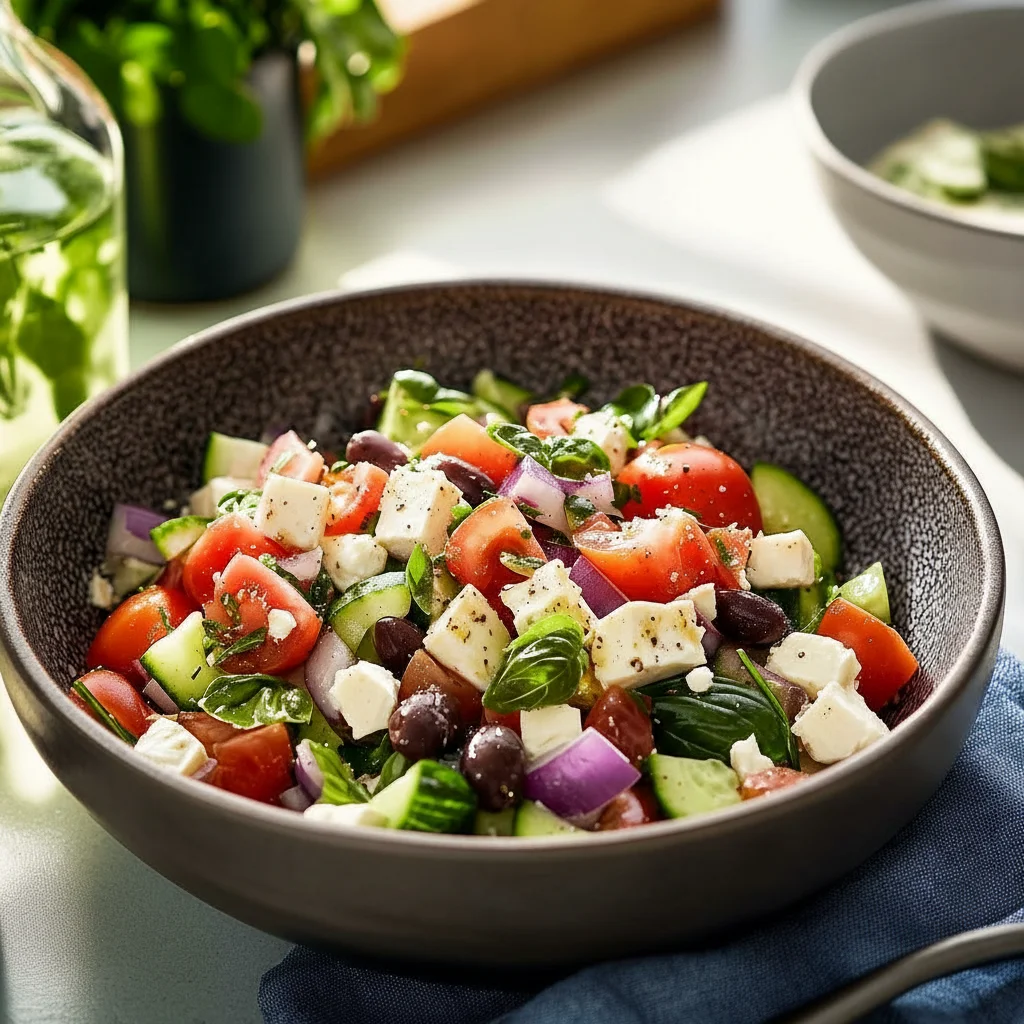
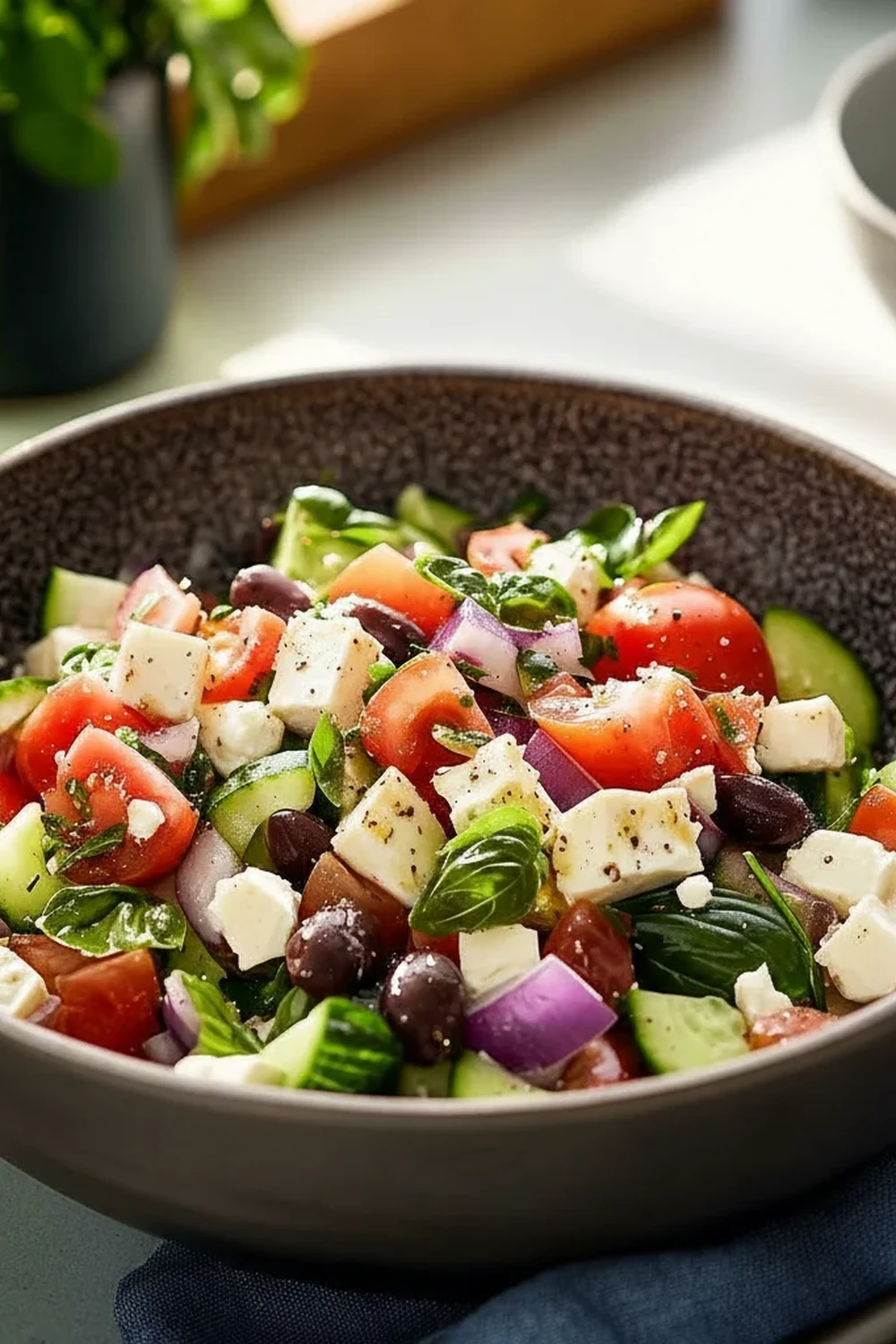
There’s something truly special about a proper Greek Salad. Not the limp, lettuce-filled versions you often find, but the real, authentic Horiatiki salad you’d be served on a sun-drenched terrace in Crete. It’s a dish built on the principle of simplicity, where the quality of each component is allowed to shine. The crunch of a fresh cucumber, the sweet burst of a ripe tomato, the salty tang of good feta, and the fruity bite of a Kalamata olive – it’s a combination that transports me straight to the Aegean Sea.
I used to struggle with my salads turning watery at the bottom until I discovered a simple technique to draw out the excess moisture from the cucumbers and tomatoes. This small step makes all the difference, ensuring every bite is as vibrant and flavourful as the first. This Greek Salad recipe is the result of years of tweaking, and it’s become a cornerstone of our summer dining. It’s a wonderfully robust side dish for a barbecue, but it’s also substantial enough to be a light lunch on its own with some crusty bread.
This is the kind of recipe that celebrates fresh produce. It’s ideal for anyone who appreciates straightforward cooking that delivers big on flavour. Whether you’re hosting a garden party or just want a refreshing, healthy meal, this Mediterranean salad is one you’ll come back to again and again.
Recipe Overview
This is my definitive Greek Salad recipe, focusing on authentic ingredients and techniques. Expect a chunky, refreshing salad with distinct flavours and textures – crisp vegetables, briny olives, and a creamy block of feta, all brought together by a simple but potent red wine vinaigrette. I’ve found that letting the chopped vegetables sit with a pinch of salt for a few minutes is the secret to a non-watery, intensely flavourful result.
- Prep Time: 20 minutes
- Marinating Time: 15 minutes
- Total Time: 35 minutes
- Servings: 4 people (as a side)
- Difficulty: Easy
Why You’ll Love This Greek Salad Recipe
- Genuine Flavour: This salad is a powerful mix of textures and tastes. You get the sharp bite from the red onion, the crisp coolness of the cucumber, the deep, salty notes from the Kalamata olives, and the creamy richness of a proper block of feta.
- Ready in Under 40 Minutes: Most of the time is hands-off while the vegetables marinate. The active preparation comes together in about 20 minutes, making it brilliant for a speedy lunch or dinner side.
- A Flexible Foundation: While we stick to tradition here, you can easily add a tin of drained chickpeas for more protein or a handful of fresh parsley for an extra herby note.
- Works Beautifully for Gatherings: This salad is a fantastic companion to grilled meats and fish. It cuts through the richness of my Steak Bites With Garlic Butter Recipe and is a perfect match for a summer barbecue.
- Family Tested: This recipe always gets compliments whenever I serve it. Even my kids, who can be wary of salads, love picking out the chunks of feta and juicy tomatoes.
Ingredients You’ll Need
For a truly exceptional Greek salad, the quality of your ingredients is paramount. Use the ripest tomatoes you can find and a good quality block of Greek feta packed in brine. I always use a robust Greek Extra Virgin Olive Oil for the dressing; the flavour is noticeably richer and more peppery, which stands up well to the other strong ingredients.
- 4 large, ripe vine tomatoes (about 500g), cut into irregular chunks
- 1 large cucumber (about 300g), partially peeled, deseeded, and sliced into thick half-moons
- 1 small red onion (about 100g), very thinly sliced
- 1 green bell pepper, deseeded and cut into thin rings or chunks
- 150g Kalamata olives, pitted
- 200g block of Greek feta cheese, kept whole
- 1 teaspoon dried Greek oregano
- ½ teaspoon sea salt flakes
- Freshly ground black pepper
- For the Dressing:
- 60ml extra virgin olive oil
- 30ml red wine vinegar
- ½ teaspoon dried Greek oregano
Kira’s Tip: Look for feta cheese that is sold in a block and stored in brine. It has a far superior creamy texture and tangy flavour compared to pre-crumbled varieties, which are often dry.
How to Make This Greek Salad Recipe
The process for this salad is straightforward. The key is in the preparation of the vegetables to ensure they stay crisp and the final dish isn’t swimming in water. We build the salad in stages to protect the integrity of each ingredient.
- Prepare the Vegetables: In a large, wide bowl, combine the chopped tomatoes, cucumber, green pepper, and thinly sliced red onion. Sprinkle over the ½ teaspoon of sea salt flakes, toss gently, and set aside for 15-20 minutes. This process, called maceration, draws out excess water and concentrates the vegetables’ flavour.
- Drain the Vegetables: After 15 minutes, you’ll see a pool of liquid at the bottom of the bowl. Carefully tip the bowl to drain away all this excess water. This is the crucial step for a crisp, not soggy, salad.
- Make the Vinaigrette: While the vegetables are resting, prepare the dressing. In a small jar or bowl, whisk together the 60ml of extra virgin olive oil, 30ml of red wine vinegar, and the ½ teaspoon of dried oregano. Season with a pinch of salt and a few grinds of black pepper. Shaking it in a sealed jar is what works best for me as it emulsifies beautifully.
- Dress the Salad: Pour about two-thirds of the dressing over the drained vegetables in the bowl. Add the Kalamata olives and toss everything together very gently. You want to coat the ingredients, not bruise them.
- Add the Feta: Place the entire 200g block of feta right on top of the salad. Don’t crumble it in yet! This is how it’s traditionally served and it looks fantastic.
- Final Touches: Drizzle the remaining dressing directly over the block of feta. Sprinkle the 1 teaspoon of dried oregano over the feta and the rest of the salad. Finish with a final drizzle of good olive oil and serve immediately.
Tips From My Kitchen
- Room Temperature Ingredients: For the best flavour, make sure your tomatoes and cucumber aren’t fridge-cold. I learned that letting them sit on the counter for 30 minutes before chopping makes a huge difference to their taste.
- The Secret Step: Don’t skip the salting and draining step for the vegetables. I can’t stress this enough. It prevents a watery dressing and is a technique used in many Mediterranean preparations to intensify flavour, as explained in this guide to macerating fruit and vegetables.
- Make-Ahead: You can chop all the vegetables and store them in a sealed container in the fridge for up to a day. The dressing can be made and kept in a jar. Combine everything and add the feta just before you plan to serve it.
- Storage: This salad is best enjoyed fresh on the day it’s made. If you have leftovers, store them in an airtight container in the fridge for up to 24 hours. The vegetables will soften, but the flavours will still be lovely.
Common Mistakes to Avoid
- Adding Lettuce: A traditional Greek village salad, or Horiatiki, does not contain lettuce. Adding it bulks out the salad but dilutes the intense, fresh flavours of the core ingredients.
- Crumbling the Feta Prematurely: Tossing crumbled feta through the salad makes it cloudy and a bit mushy. Serving the block on top allows guests to break off creamy chunks, keeping the salad fresh and visually appealing.
- Dressing Too Early: The vinegar in the dressing will start to “cook” and soften the vegetables if left to sit for too long. For the crispiest result, dress the salad right before it heads to the table.
What to Serve With This Greek Salad
This Mediterranean salad is incredibly versatile. It’s a star side dish but can also be the main event with the right accompaniments.
- Grilled Meats and Fish: It’s the perfect counterpoint to anything from the barbecue. It works wonderfully with simple grilled chicken skewers, lamb chops, or a piece of my Grilled Salmon With Lemon Butter Sauce Recipe.
- Warm Pitta Bread: Serve with a basket of warm pitta or crusty sourdough to mop up the delicious, tomato-infused dressing at the bottom of the bowl.
- Wine Pairing: A crisp, dry white wine with good acidity is a classic match. Try a Greek Assyrtiko if you can find it, or a Sauvignon Blanc. A light rosé also works beautifully on a summer’s day.
Frequently Asked Questions
Greek Salad Recipe
Ingredients
Method
- Prepare the Vegetables: In a large, wide bowl, combine the chopped tomatoes, cucumber, green pepper, and thinly sliced red onion. Sprinkle over the ½ teaspoon of sea salt flakes, toss gently, and set aside for 15-20 minutes. This process, called maceration, draws out excess water and concentrates the vegetables' flavour.
- Drain the Vegetables: After 15 minutes, you'll see a pool of liquid at the bottom of the bowl. Carefully tip the bowl to drain away all this excess water. This is the crucial step for a crisp, not soggy, salad.
- Make the Vinaigrette: While the vegetables are resting, prepare the dressing. In a small jar or bowl, whisk together the 60ml of extra virgin olive oil, 30ml of red wine vinegar, and the ½ teaspoon of dried oregano. Season with a pinch of salt and a few grinds of black pepper. Shaking it in a sealed jar is what works best for me as it emulsifies beautifully.
- Dress the Salad: Pour about two-thirds of the dressing over the drained vegetables in the bowl. Add the Kalamata olives and toss everything together very gently. You want to coat the ingredients, not bruise them.
- Add the Feta: Place the entire 200g block of feta right on top of the salad. Don't crumble it in yet! This is how it's traditionally served and it looks fantastic.
- Final Touches: Drizzle the remaining dressing directly over the block of feta. Sprinkle the 1 teaspoon of dried oregano over the feta and the rest of the salad. Finish with a final drizzle of good olive oil and serve immediately.
Notes
I really hope you enjoy making this authentic Greek Salad recipe. It’s a true taste of summer for me, and a simple way to enjoy beautiful, fresh ingredients. Let me know how you get on in the comments below – I’d love to hear about it!
– Kira