Classic Chicken Alfredo
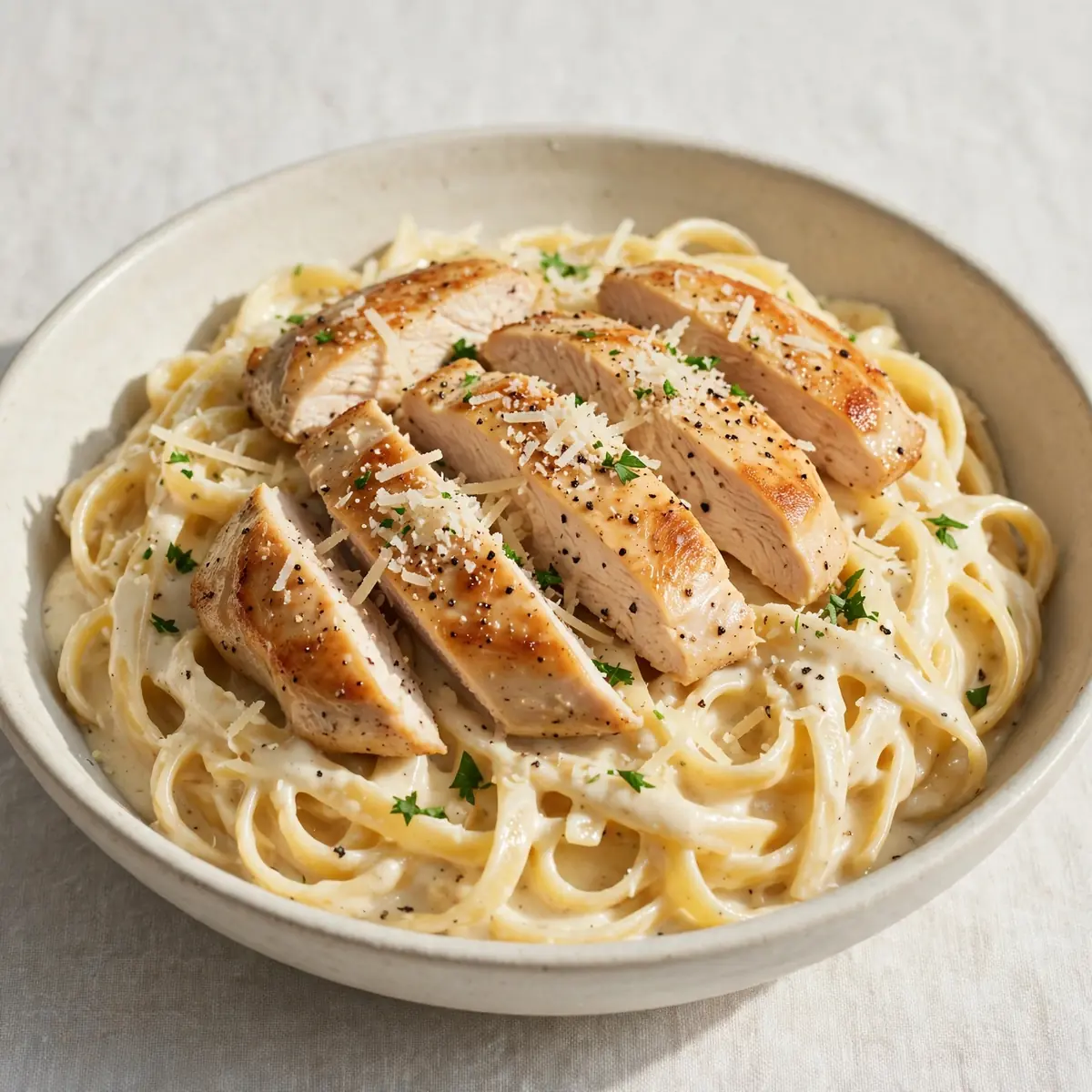
There’s something undeniably impressive about a plate of Classic Chicken Alfredo that arrives at the table looking like it belongs in a trattoria in Rome, not your home kitchen. I’ve spent years perfecting this dish, moving beyond the simple weeknight staple to a version that commands attention with its silky, glossy sauce and perfectly seared chicken. This is my go-to recipe when I need something quick but impressive, transforming humble ingredients into a meal that makes guests lean in a little closer and ask for the recipe before dessert.
Recipe Overview
- Prep time: 15 minutes
- Cooking time: 25 minutes
- Total time: 40 minutes
- Servings: 4
- Difficulty: Medium
Why You’ll Love This Classic Chicken Alfredo
- Restaurant-quality plating: The techniques I share focus on creating a glossy, emulsified sauce that clings beautifully to each strand of pasta, and golden, juicy chicken that slices perfectly.
- Foolproof, creamy sauce: No more grainy or broken sauces. This method uses a gentle heat and the right ratio of cream to cheese to ensure a velvety texture every time.
- Simple yet sophisticated ingredients: With just a handful of high-quality components, you can create a dish that tastes far more complex than its parts suggest.
- Perfect for entertaining: This dish holds well for a few minutes, allowing you to finish it just as guests are seated, making you look like a culinary hero with minimal last-minute stress.
- Endlessly customisable: The base recipe is a blank canvas for your own touches, from adding a pinch of nutmeg to incorporating seasonal vegetables for colour and flavour.
Ingredients You’ll Need
- 400g dried fettuccine pasta
- 2 large boneless, skinless chicken breasts (about 500g total)
- 2 tablespoons olive oil
- 3 cloves garlic, finely minced
- 300ml double cream
- 100g unsalted butter, cut into cubes
- 120g freshly grated Parmesan cheese (plus extra for serving)
- 1 teaspoon sea salt (plus more for pasta water)
- ½ teaspoon freshly ground black pepper
- ¼ teaspoon freshly grated nutmeg (optional, but highly recommended)
- 2 tablespoons fresh flat-leaf parsley, finely chopped (for garnish)
- 2 tablespoons chicken stock (to loosen the sauce, if needed)
Tip: Please, I beg you, buy a block of Parmesan and grate it yourself. The pre-grated stuff contains anti-caking agents that will sabotage your sauce, leaving it grainy rather than luxuriously smooth.
How to Make Classic Chicken Alfredo
- Prepare the chicken: Place the chicken breasts between two sheets of cling film and gently bash them with a rolling pin until they are an even thickness of about 2cm. Season both sides generously with salt and pepper. This ensures even cooking and a tender result.
- Cook the pasta: Bring a large pot of generously salted water to a rolling boil. Add the fettuccine and cook until al dente, about 1 minute less than the packet instructions. You want the pasta to have a slight bite at its centre. Drain it, reserving about 250ml of the starchy pasta water. The pasta water is liquid gold for your sauce.
- Sear the chicken: While the pasta cooks, heat the olive oil in a large, heavy-based frying pan over a medium-high heat until it shimmers. Carefully lay the chicken breasts in the pan. You should hear a satisfying sizzle. Cook for 5-6 minutes on one side, without moving them, until the underside is a deep golden brown and releases easily from the pan. Flip and cook for another 4-5 minutes, until the internal temperature reaches 74°C and the chicken feels firm to the touch. The scent of browning butter and chicken will fill your kitchen.
- Rest the chicken: Transfer the cooked chicken to a cutting board and let it rest for at least 5 minutes. This step is non-negotiable. The fibres relax, and the juices redistribute, ensuring every slice is moist.
- Build the sauce base: Reduce the heat under the same frying pan to low. Add the butter and let it melt slowly, swirling the pan occasionally. Once it is foaming but not browning, add the minced garlic. Cook, stirring constantly, for about 30 seconds until it is fragrant but not coloured. The aroma will be sweet and pungent.
- Create the creamy sauce: Pour in the double cream and add the nutmeg, salt, and pepper. Stir gently with a wooden spoon, scraping up any browned bits from the bottom of the pan. Let the cream heat through for 1-2 minutes until it is gently steaming and has thickened slightly, enough to coat the back of a spoon. Do not let it boil.
- Emulsify with cheese and pasta water: Remove the pan from the heat. Add the grated Parmesan in a steady stream, whisking vigorously until it is completely melted and the sauce is smooth and glossy. The sauce will be thick. Now, add a splash of the reserved pasta water and stir. Watch as the sauce loosens and becomes beautifully emulsified, coating the spoon in a silky, unbroken layer.
- Combine everything: Add the drained fettuccine to the pan with the sauce. Use tongs to toss the pasta, coating every strand evenly. If the sauce seems too thick, add more pasta water, a tablespoon at a time, until it flows like thick cream.
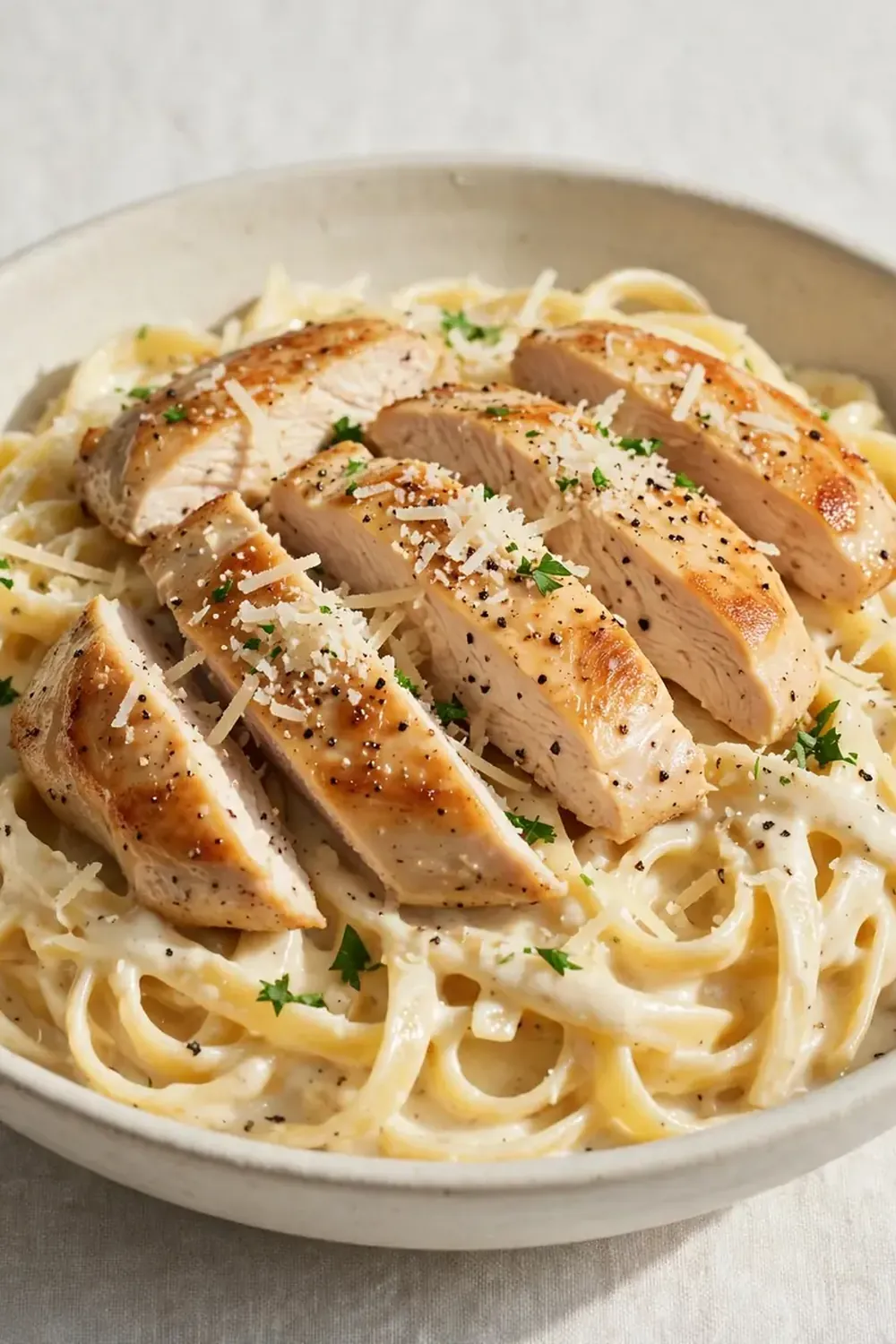
- Slice and serve: Slice the rested chicken breasts against the grain into thick, even pieces. Using tongs, twirl a portion of pasta into a neat nest in the centre of a warmed plate. Fan the sliced chicken over the top. Sprinkle with a generous amount of freshly grated Parmesan and a scattering of chopped parsley.
Tips From My Kitchen
- Grate your own Parmesan: This is the single most important tip. Pre-shredded cheese is coated in cellulose and potato starch to prevent clumping, which prevents it from melting smoothly into your sauce. A finely grated, high-quality Parmigiano-Reggiano will dissolve into the cream, creating a silky, cohesive sauce rather than a gritty mess. The difference is night and day.
- Don’t boil the cream: The double cream should only be gently heated until it steams and thickens slightly. If you let it come to a rolling boil, the fat will separate from the liquid, and your sauce will become greasy and thin. Keep the heat low and patient. You want a gentle warmth that encourages the cheese to melt without breaking the emulsion.
- Use starchy pasta water as your secret weapon: This is the simplest way to elevate your sauce from good to restaurant-quality. The starch in the water acts as a binder, helping the sauce cling to the pasta and giving it a beautiful, glossy sheen. It also allows you to adjust the consistency without thinning out the flavour, as you would with plain water or milk.
- Rest the chicken for moist slices: I cannot stress this enough. Cutting into a hot chicken breast immediately forces all the juices to run out onto your cutting board, leaving you with dry meat. Letting it rest for at least five minutes allows the muscle fibres to relax and reabsorb the liquid. When you slice it, the meat will be tender and succulent, creating a beautiful contrast with the creamy pasta.
- Warm your plates: This is a small, professional touch that makes a massive difference. A cold plate will cool your perfect sauce in seconds, causing it to congeal. Pop your serving plates in a low oven (100°C) for 5 minutes, or run them under hot water and dry them thoroughly. The pasta and sauce will stay hot and glossy from the first bite to the last.
- Season your pasta water like the sea: The pasta itself is the backbone of the dish, and it needs to be seasoned from the inside out. The water should taste briny, like seawater. This is the only chance you have to season the pasta itself, and it creates a foundational layer of flavour that no amount of salt added later can replicate.
Equipment You’ll Need
- Large frying pan or skillet (preferably heavy-bottomed)
- Sharp knife and cutting board
- Large pot for boiling pasta
- Mixing bowls
- Wooden spoon or silicone spatula
- Whisk
- Cheese grater (microplane or box grater)
- Tongs for tossing pasta
- Rolling pin (for flattening chicken)
Common Mistakes to Avoid
- Overcrowding the pan: When searing the chicken, make sure the pieces are not touching. If the pan is too crowded, the chicken will steam instead of sear, resulting in a pale, grey exterior and less flavour. The browning creates a crust that is packed with savoury flavour. Cook in a single layer, and if necessary, cook the chicken in two batches.
- Wrong temperature: The sauce is a delicate emulsion that demands respect. High heat will cause the cream to split and the cheese to clump into stringy bits. Always cook the sauce on a low heat, and remove the pan from the heat source before adding the cheese. The residual heat is more than enough to melt it perfectly.
- Skipping the rest time: I’ve said it before, but it bears repeating. Slicing the chicken immediately after cooking is the fastest route to a dry, disappointing texture. The resting period is not a suggestion; it is a critical step in the cooking process that ensures your finished dish is juicy and tender, complementing the creamy pasta rather than fighting against it.
Delicious Variations to Try
- Spicy Version: Add ½ teaspoon of red pepper flakes to the butter and garlic as they cook. For an extra kick, finish the dish with a light drizzle of chilli oil before serving. The gentle heat cuts through the richness of the cream beautifully.
- Vegetarian Option: Omit the chicken entirely and serve with a generous portion of sautéed mushrooms (cremini or a mix of wild mushrooms) and wilted spinach. The earthy mushrooms provide a wonderful savoury depth that mimics the umami of the chicken.
- Different Protein: This creamy sauce is a fantastic companion to other proteins. Try serving it with pan-seared scallops for a special occasion, or with juicy grilled prawns. For a completely different take, use thinly sliced steak, seasoned simply with salt and pepper, and cooked to medium-rare.
What to Serve With Classic Chicken Alfredo
- A simple green salad with a sharp lemon vinaigrette to cut through the richness.
- Creamy Mashed Potatoes Side – a classic pairing for sopping up any leftover sauce.
- Steamed or roasted broccoli, or a side of Crispy Sweet Potato Fries Recipe for a touch of sweetness and crunch.
- Garlic bread or a crusty baguette to mop up every last drop of that glorious sauce.
Still hungry for ideas? You might also love Classic Chicken Alfredo Bake Recipe, Spicy Blackened Cajun Chicken Alfredo Recipe from our sister kitchens.
Frequently Asked Questions
Classic Chicken Alfredo
Ingredients
Method
- Prepare the chicken: Place the chicken breasts between two sheets of cling film and gently bash them with a rolling pin until they are an even thickness of about 2cm. Season both sides generously with salt and pepper. This ensures even cooking and a tender result.
- Cook the pasta: Bring a large pot of generously salted water to a rolling boil. Add the fettuccine and cook until al dente, about 1 minute less than the packet instructions. You want the pasta to have a slight bite at its centre. Drain it, reserving about 250ml of the starchy pasta water. The pasta water is liquid gold for your sauce.
- Sear the chicken: While the pasta cooks, heat the olive oil in a large, heavy-based frying pan over a medium-high heat until it shimmers. Carefully lay the chicken breasts in the pan. You should hear a satisfying sizzle. Cook for 5-6 minutes on one side, without moving them, until the underside is a deep golden brown and releases easily from the pan. Flip and cook for another 4-5 minutes, until the internal temperature reaches 74°C and the chicken feels firm to the touch. The scent of browning butter and chicken will fill your kitchen.
- Rest the chicken: Transfer the cooked chicken to a cutting board and let it rest for at least 5 minutes. This step is non-negotiable. The fibres relax, and the juices redistribute, ensuring every slice is moist.
- Build the sauce base: Reduce the heat under the same frying pan to low. Add the butter and let it melt slowly, swirling the pan occasionally. Once it is foaming but not browning, add the minced garlic. Cook, stirring constantly, for about 30 seconds until it is fragrant but not coloured. The aroma will be sweet and pungent.
- Create the creamy sauce: Pour in the double cream and add the nutmeg, salt, and pepper. Stir gently with a wooden spoon, scraping up any browned bits from the bottom of the pan. Let the cream heat through for 1-2 minutes until it is gently steaming and has thickened slightly, enough to coat the back of a spoon. Do not let it boil.
- Emulsify with cheese and pasta water: Remove the pan from the heat. Add the grated Parmesan in a steady stream, whisking vigorously until it is completely melted and the sauce is smooth and glossy. The sauce will be thick. Now, add a splash of the reserved pasta water and stir. Watch as the sauce loosens and becomes beautifully emulsified, coating the spoon in a silky, unbroken layer.
- Combine everything: Add the drained fettuccine to the pan with the sauce. Use tongs to toss the pasta, coating every strand evenly. If the sauce seems too thick, add more pasta water, a tablespoon at a time, until it flows like thick cream.
- Slice and serve: Slice the rested chicken breasts against the grain into thick, even pieces. Using tongs, twirl a portion of pasta into a neat nest in the centre of a warmed plate. Fan the sliced chicken over the top. Sprinkle with a generous amount of freshly grated Parmesan and a scattering of chopped parsley.
Notes
I hope this recipe helps you create a truly memorable meal for your family and friends. My kids absolutely devour this every time I make it, and I love seeing their eyes light up when I bring the plates to the table. The magic is in the details, from the golden sear on the chicken to the glossy, emulsified sauce. I would love to hear how your plating turned out, or if you added your own special touch. Please share your experience in the comments below.