Classic American Pot Roast With Vegetables
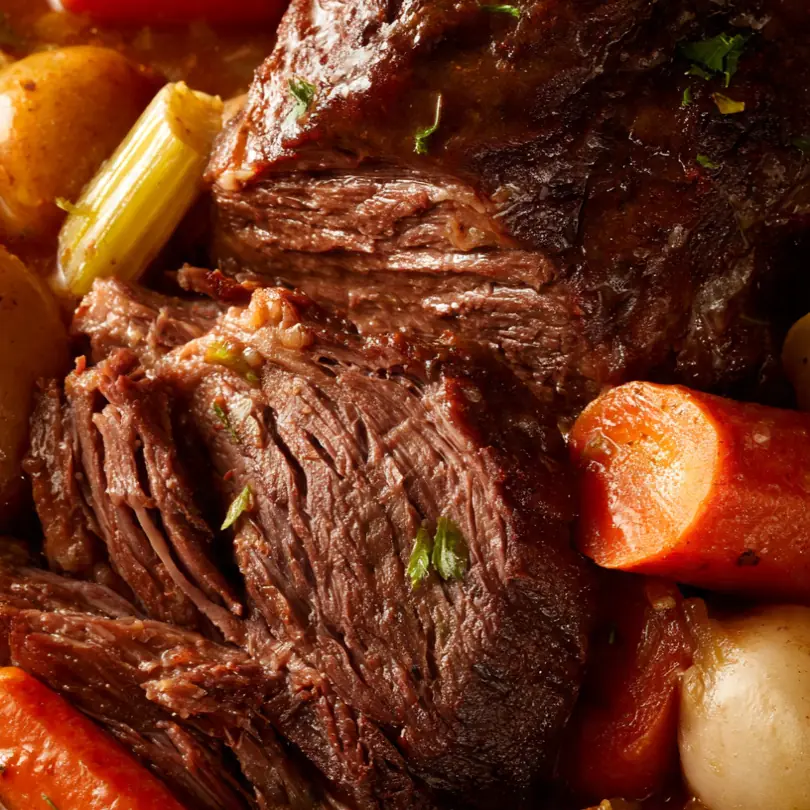
I remember the first time I attempted a pot roast; I ended up with dry, stringy meat and vegetables that had turned to mush. It was a deflating experience, to say the least. After years of trial and error, and a few quiet conversations with butchers who knew their craft, I finally cracked the code. This Classic American Pot Roast with Vegetables is the result of that journey—a dish that fills your home with the most incredible, savoury aroma and delivers meltingly tender beef every single time.
Recipe Overview
- Prep Time: 25 minutes
- Cook Time: 3 hours 30 minutes
- Total Time: 3 hours 55 minutes
- Servings: 6-8
- Difficulty: Medium
Why You’ll Love This Classic American Pot Roast with Vegetables
- Deep, Rich Flavour: The slow braising process transforms a simple cut of beef into something truly special, with a gravy that coats every single bite.
- Tender, Never Dry Meat: By following the proper searing and low-temperature cooking method, the beef becomes so tender it practically falls apart with a fork.
- One-Pot Wonder: This entire meal comes together in a single heavy pot, which means less washing up and more time enjoying your dinner.
- Customisable Vegetables: Feel free to swap in your favourite root vegetables or what you have on hand; the cooking method works beautifully with carrots, parsnips, or even sweet potatoes.
- Leftovers are a Gift: The flavours only get better the next day, making this ideal for a Sunday dinner that keeps giving through the week.
Ingredients You’ll Need
- 1.5 kg beef chuck roast (or brisket)
- 2 tablespoons olive oil
- 2 large onions, roughly chopped
- 4 cloves garlic, minced
- 3 tablespoons tomato purée
- 500 ml beef stock (good quality, low salt)
- 1 tablespoon Worcestershire sauce
- 2 bay leaves
- 4 sprigs fresh thyme (or 1 teaspoon dried)
- 4 large carrots, peeled and cut into large chunks
- 3 celery stalks, cut into large chunks
- 600 g waxy potatoes (like Maris Piper), peeled and halved
- 2 tablespoons cornflour mixed with 3 tablespoons cold water (optional, for thickening)
- Salt and freshly ground black pepper, to taste
Tip: For the best results, take your beef out of the fridge 30-40 minutes before you start cooking. This helps it brown more evenly and prevents it from cooling down the pan too much when you sear it.
How to Make Classic American Pot Roast with Vegetables
- Sear the Beef for Deep Colour: Pat the beef chuck roast dry with kitchen paper. Season it generously on all sides with salt and pepper. Heat the olive oil in a large, heavy-based pot (like a Dutch oven) over a medium-high heat until it shimmers. Carefully place the beef in the hot oil and let it sear undisturbed for 4-5 minutes until the underside is a deep, rich mahogany brown. Turn it with tongs and repeat on all sides. You are building the foundation of flavour here—the smell of browning beef is utterly irresistible.
- Sweat the Aromatics: Remove the seared beef to a plate. Reduce the heat to medium. Add the chopped onions to the pot and cook for 5-7 minutes, stirring often, until they soften and turn translucent, releasing a sweet, pungent aroma. Add the minced garlic and cook for another minute until fragrant, but take care not to let it burn.
- Create the Braising Base: Stir in the tomato purée and cook for 2 minutes, stirring constantly. You will notice the paste darken slightly and smell richer. Pour in a splash of the beef stock and scrape the bottom of the pot with a wooden spoon to lift all the browned bits—this is pure flavour. Then, add the remaining stock, Worcestershire sauce, bay leaves, and thyme. Bring this to a gentle simmer; you should see small bubbles breaking the surface but not a rolling boil.
- Return the Beef and Braise: Place the seared beef back into the pot, along with any juices that have collected on the plate. The liquid should come about halfway up the sides of the meat. Put the lid on and transfer the pot to an oven preheated to 160°C (140°C fan). Let it braise for 2 hours. The kitchen will slowly fill with a deep, savoury fragrance.
- Add the Vegetables: After 2 hours, carefully remove the pot from the oven. The beef should be starting to become tender when prodded with a fork. Add the carrots, celery, and potatoes to the pot, nestling them around the beef. Spoon some of the cooking liquid over the vegetables. Return the pot to the oven, covered, for another 1 to 1.5 hours. The vegetables should be tender when pierced with a knife, and the beef should shred easily with a fork.
- Finish the Gravy (Optional): Using a slotted spoon, carefully transfer the beef and vegetables to a serving platter and keep warm. Place the pot on the hob over a medium heat. If you prefer a thicker gravy, whisk in the cornflour slurry and simmer for 2-3 minutes, stirring constantly, until the liquid thickens to a glossy, rich sauce. You will see it change from a thin broth to a velvety gravy. Season to taste with salt and pepper.
- Rest and Serve: Let the meat rest for 10 minutes before slicing or shredding. This allows the juices to redistribute throughout the beef. Serve the beef with the tender vegetables and a generous ladle of the rich gravy over the top. The meat will be so tender it barely needs a knife.
Tips From My Kitchen
- Choose the Right Cut: A tough, well-exercised cut like chuck or brisket is your best friend here. These cuts have a lot of connective tissue (collagen) that slowly breaks down during the long, moist braising, turning into gelatin and creating that unctuous, fork-tender texture. Leaner cuts like sirloin will dry out and become tough.
- Don’t Skip the Searing: This is non-negotiable. The Maillard reaction—the browning of proteins—creates hundreds of complex flavour compounds that a simple simmer can never achieve. A pale piece of meat will result in a pale, lacklustre gravy. Take your time and get a deep, dark sear.
- Low and Slow is Key: The oven temperature of 160°C is the sweet spot. If it’s too high, the liquid will boil, the meat will seize up and become tough, and the vegetables will disintegrate. If it’s too low, the collagen won’t break down properly, and you’ll be left with a tough roast. Patience is your greatest ingredient here.
- Don’t Overcrowd the Vegetables: When you add the vegetables in step 5, make sure they are mostly submerged in the liquid but not piled on top of each other. If they are crammed in, they will steam rather than braise, leading to a mushy texture. Use a pot that is wide enough to hold everything in a single layer.
- Rest the Meat: Just like a good steak, a pot roast needs to rest after its long journey. If you slice into it immediately, all the precious juices will run out onto the cutting board, leaving the meat dry. A 10-minute rest under a loose tent of foil allows the juices to redistribute, ensuring every bite is moist and full of flavour.
Equipment You’ll Need
- Large, heavy-based pot or Dutch oven with a tight-fitting lid
- Large frying pan or skillet (if not using a Dutch oven)
- Sharp knife and cutting board
- Mixing bowls
- Wooden spoon or spatula
- Tongs
- Measuring spoons and jug
Delicious Variations to Try
- Spicy Version: Add 1-2 dried chipotle peppers or 1 teaspoon of smoked paprika and a pinch of cayenne pepper to the pot along with the stock. The smoky heat complements the rich beef beautifully without overpowering it.
- Vegetarian/Vegan Option: Replace the beef with large, meaty portobello mushrooms or thick slices of celeriac. Use a rich vegetable stock and add a splash of soy sauce or tamari for extra umami depth. The braising time will be significantly shorter—about 45 minutes for the vegetables.
- Different Protein: This method works wonderfully with lamb shoulder or even a large, bone-in chicken thigh portion. For lamb, use lamb stock and add a sprig of rosemary. For chicken, reduce the braising time to about 1 hour and 15 minutes and check for doneness with an internal meat thermometer.
What to Serve With Classic American Pot Roast with Vegetables
- Buttered egg noodles or wide pappardelle pasta
- Mashed potatoes or creamy polenta
- A simple green salad with a sharp vinaigrette to cut through the richness
- Crusty bread or Yorkshire puddings for soaking up the gravy
Frequently Asked Questions
Classic American Pot Roast with Vegetables
Ingredients
Method
- Sear the Beef for Deep Colour: Pat the beef chuck roast dry with kitchen paper. Season it generously on all sides with salt and pepper. Heat the olive oil in a large, heavy-based pot (like a Dutch oven) over a medium-high heat until it shimmers. Carefully place the beef in the hot oil and let it sear undisturbed for 4-5 minutes until the underside is a deep, rich mahogany brown. Turn it with tongs and repeat on all sides. You are building the foundation of flavour here—the smell of browning beef is utterly irresistible.
- Sweat the Aromatics: Remove the seared beef to a plate. Reduce the heat to medium. Add the chopped onions to the pot and cook for 5-7 minutes, stirring often, until they soften and turn translucent, releasing a sweet, pungent aroma. Add the minced garlic and cook for another minute until fragrant, but take care not to let it burn.
- Create the Braising Base: Stir in the tomato purée and cook for 2 minutes, stirring constantly. You will notice the paste darken slightly and smell richer. Pour in a splash of the beef stock and scrape the bottom of the pot with a wooden spoon to lift all the browned bits—this is pure flavour. Then, add the remaining stock, Worcestershire sauce, bay leaves, and thyme. Bring this to a gentle simmer; you should see small bubbles breaking the surface but not a rolling boil.
- Return the Beef and Braise: Place the seared beef back into the pot, along with any juices that have collected on the plate. The liquid should come about halfway up the sides of the meat. Put the lid on and transfer the pot to an oven preheated to 160°C (140°C fan). Let it braise for 2 hours. The kitchen will slowly fill with a deep, savoury fragrance.
- Add the Vegetables: After 2 hours, carefully remove the pot from the oven. The beef should be starting to become tender when prodded with a fork. Add the carrots, celery, and potatoes to the pot, nestling them around the beef. Spoon some of the cooking liquid over the vegetables. Return the pot to the oven, covered, for another 1 to 1.5 hours. The vegetables should be tender when pierced with a knife, and the beef should shred easily with a fork.
- Finish the Gravy (Optional): Using a slotted spoon, carefully transfer the beef and vegetables to a serving platter and keep warm. Place the pot on the hob over a medium heat. If you prefer a thicker gravy, whisk in the cornflour slurry and simmer for 2-3 minutes, stirring constantly, until the liquid thickens to a glossy, rich sauce. You will see it change from a thin broth to a velvety gravy. Season to taste with salt and pepper.
- Rest and Serve: Let the meat rest for 10 minutes before slicing or shredding. This allows the juices to redistribute throughout the beef. Serve the beef with the tender vegetables and a generous ladle of the rich gravy over the top. The meat will be so tender it barely needs a knife.
Notes
I hope this recipe brings as much warmth and comfort to your table as it has to mine. My husband, who’s usually picky, asked for seconds the first time I made this! If you give this Classic American Pot Roast with Vegetables a try, I’d love to hear how you get on. For another hearty meal that’s sure to satisfy, you might enjoy my Creamy Lemon Herb Chicken Thighs or perhaps a lighter option like this Fresh Greek Salad Recipe. Drop a comment below and share your experience!