Ingredients
Method
- First, prepare the potatoes. Place the halved or quartered potatoes in a medium saucepan and cover them with cold water. Add a generous pinch of salt. Bring to a boil over high heat, then reduce to a simmer. Cook for 8-10 minutes until the potatoes are just tender when pierced with a fork — they should offer slight resistance but not feel hard. You'll notice the water turning slightly cloudy and the potato edges beginning to soften. Drain them well in a colander and let them steam dry for a couple of minutes; this helps them crisp up later.
- Season the steak while the potatoes cook. Pat the steaks dry with kitchen paper — this is crucial for a good sear. Season generously on all sides with the salt, black pepper, smoked paprika, dried thyme, and onion powder. Rub the seasonings into the meat with your fingertips. You'll see the spices forming a fragrant, dark crust even before cooking. Set the steaks aside at room temperature for 10 minutes; this takes the chill off and promotes even cooking.
- Get the skillet screaming hot. Place your cast iron skillet over medium-high heat and add 1 tablespoon of olive oil. Wait until the oil shimmers and a single wisp of smoke rises — you should hear a sharp sizzle if you flick a drop of water into the pan. Carefully lay the steaks in the skillet, pressing down gently with tongs to ensure maximum contact. You'll hear a loud, satisfying hiss as the steak hits the heat. Cook for 4-5 minutes without moving the steak. The underside should turn a deep mahogany brown and develop a crisp crust. Flip the steaks and cook for another 3-4 minutes for medium-rare, or until the internal temperature reaches 52°C (125°F) on your meat thermometer. For medium, aim for 57°C (135°F). The aroma at this point is rich, savoury, and deeply beefy.
- Rest the steak and start the potatoes. Transfer the cooked steaks to a plate and tent loosely with foil. Do not skip this step — the juices need time to redistribute. You'll see a small pool of reddish juice collecting on the plate, which is a good sign. In the same skillet, reduce the heat to medium and add the remaining 1 tablespoon of olive oil. Carefully add the drained potatoes in a single layer — don't crowd them. Let them cook undisturbed for 4-5 minutes until the undersides turn a golden brown and feel crisp to the touch. Flip them and continue cooking for another 5-6 minutes, shaking the pan occasionally, until all sides are beautifully browned and the potatoes have a thin, shattering crust. You'll hear a gentle crackle as they fry.
- Make the garlic butter. Push the potatoes to one side of the skillet. Add the 4 tablespoons of butter to the empty space and let it melt completely. As the butter foams, add the minced garlic and, if using, the rosemary sprigs. Stir the garlic constantly for 30-45 seconds until it becomes fragrant and just begins to turn a pale golden colour — be careful not to let it burn, as burnt garlic turns bitter. The kitchen will fill with a nutty, buttery, herby aroma that's absolutely intoxicating. Remove the rosemary sprigs if you used them.
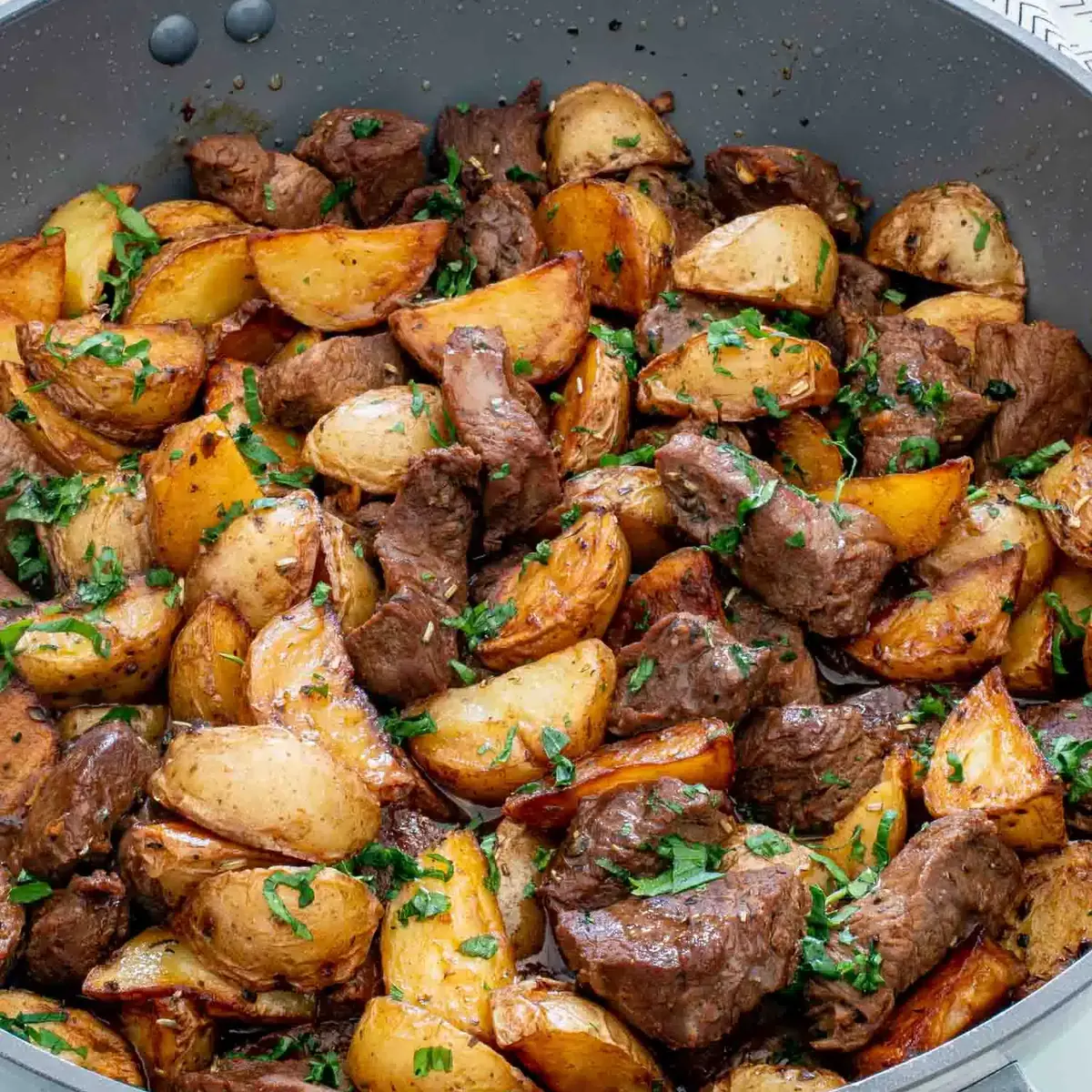
- Slice the steak and bring it all together. While the garlic butter is still sizzling, slice the rested steaks against the grain into thick strips, about 1cm wide. You'll see the interior is perfectly cooked — a rosy pink centre for medium-rare, with the juices staying locked in. Return the sliced steak to the skillet with the potatoes and garlic butter. Toss everything gently with tongs until every piece of steak and every potato wedge is glistening and coated. Drizzle over the fresh lemon juice and sprinkle with the chopped parsley. Toss once more, then remove from the heat immediately. The final dish should look glossy, fragrant, and deeply appetising.
Notes
Patting the steak dry is crucial for a good sear. Allowing the steak to rest is essential for juicy results. Don't crowd the pan when cooking potatoes to ensure maximum crispness.