Ingredients
Method
- Prepare the Roast: Remove the prime rib from the refrigerator at least 1-2 hours before roasting to bring it closer to room temperature. This is crucial for even cooking. Pat the roast thoroughly dry with paper towels – a dry surface is essential for achieving that beautiful, crispy crust.
- Create the Herb Rub: In a small bowl, combine the minced garlic, chopped rosemary, thyme, sage, olive oil, Dijon mustard, sea salt, and black pepper. Mix until a fragrant, thick paste forms. The aroma will be quite invigorating at this stage, a promise of the flavours to come.
- Apply the Rub: Generously spread the garlic herb paste all over the entire surface of the prime rib. Don't be shy; ensure every crevice is covered. Gently massage the rub into the meat. This will create a wonderful, aromatic coating that will crisp up beautifully in the oven.
- Sear the Roast: Preheat a large, oven-safe frying pan or skillet over medium-high heat until it's very hot and just begins to smoke. Place the roast fat-side down in the hot pan. Sear for 3-4 minutes until a deep golden-brown crust forms on the bottom. Turn the roast and sear all sides, including the ends, until each side has developed a rich, caramelised colour. You'll hear a satisfying sizzle as the meat makes contact with the hot pan, and the kitchen will fill with a savoury, roasted aroma.
- Roast in the Oven: Transfer the seared prime rib to a large roasting tin, fat side up. Scatter the chopped onion, carrots, and celery around the base of the tin. Pour the beef broth into the tin, around the vegetables, not over the roast. Place the roasting tin into a preheated oven at 190°C (375°F) for 15 minutes, then reduce the temperature to 135°C (275°F) and continue to roast. For a medium-rare roast, cook until an internal temperature of 52-54°C (125-130°F) is reached; for medium, aim for 57-60°C (135-140°F). Use a meat thermometer inserted into the thickest part of the roast, avoiding bone. This slow roasting method ensures incredibly tender results. The meat will develop a deeper brown exterior, and the vegetables will soften and sweeten in the broth.
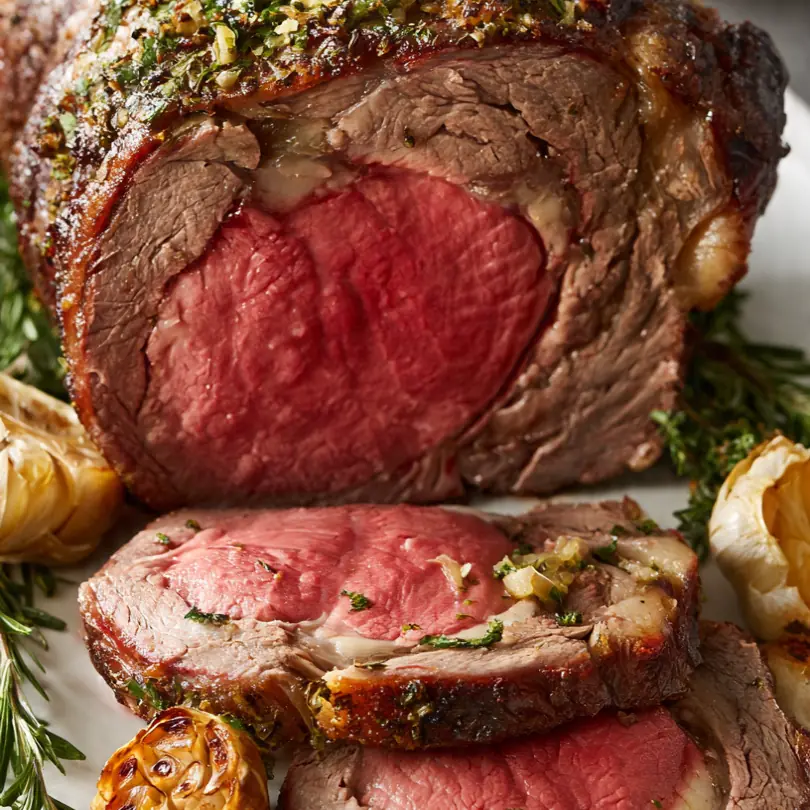
- Rest and Serve: Once the desired internal temperature is reached, remove the prime rib from the oven. Transfer it to a clean cutting board, tent loosely with foil, and let it rest for at least 20-30 minutes. This resting period is absolutely critical; it allows the juices to redistribute throughout the meat, ensuring every slice is wonderfully tender and moist. While resting, you can make a gravy from the pan drippings. After resting, carve the roast against the grain into thick, impressive slices. The interior will reveal a beautiful rosy hue, and the meat will be exceptionally tender as your knife glides through it.
Notes
Ensure the prime rib is at room temperature before searing for even cooking. A meat thermometer is essential for achieving the desired doneness. The resting period is crucial for juicy results; do not skip it. For the optional gravy, deglaze the pan with a little liquid, then whisk in flour to thicken, adding more broth/water as needed.