Ingredients
Method
- Heat the oven and prep the dish. Preheat the oven to 190°C (fan 170°C). Lightly grease your baking dish with a little of the olive oil. You want the oven fully hot before the dish goes in, so start this first.
- Soften the onions. Warm the remaining oil in a large frying pan over medium heat. Add the onion and cook for 4–5 minutes until translucent and glossy, stirring now and then. You'll smell that sweet, mellow onion aroma the moment they're ready.
- Brown the beef. Add the minced beef and break it apart with a wooden spoon. Cook for 6–8 minutes until no pink remains and the meat starts to caramelise in spots. Listen for the gentle sizzle — that's the sign your pan is hot enough.
- Build the sauce. Stir in the garlic, oregano, smoked paprika, salt, and pepper, and cook for 30 seconds until fragrant. Add the tomato purée and beef stock, scraping up the browned bits. Simmer for 3–4 minutes until the mixture thickens slightly and coats the spoon.
- Layer the casserole. Arrange half the potato slices in an even layer in the baking dish. Spoon the beef mixture over the top and spread it flat. Finish with the remaining potatoes, overlapping them slightly like roof tiles.
- Add the cream and cheese. Pour the double cream evenly over the potatoes — it should seep into the gaps between the slices. Scatter the cheddar across the top and dot with the cubed butter.
- Bake covered. Cover tightly with aluminium foil and bake for 40 minutes. The trapped steam is what cooks the potatoes through without drying out the beef underneath.
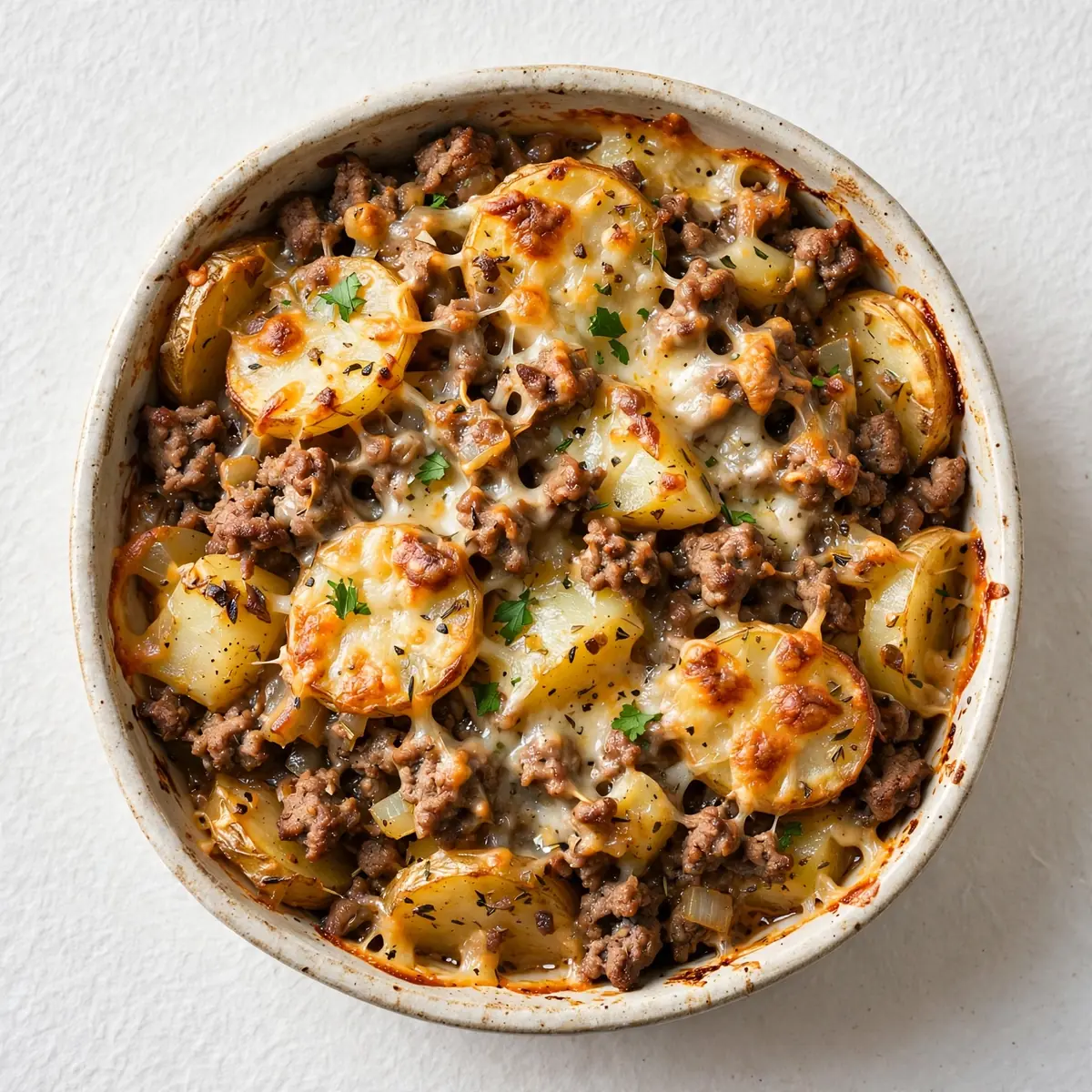
- Uncover and brown. Remove the foil and bake for a further 15 minutes, until the cheese is bubbling and golden at the edges. The top should look deeply bronzed in places — that's exactly what you want.
- Rest before serving. Let the casserole sit for 10 minutes before cutting into it. This brief rest lets the cream and juices settle, so portions hold together instead of sliding apart. Scatter with parsley if you like.
Notes
Ensure potatoes are sliced uniformly for even cooking. The resting period is crucial for the casserole to set properly before serving.