Classic French Toast
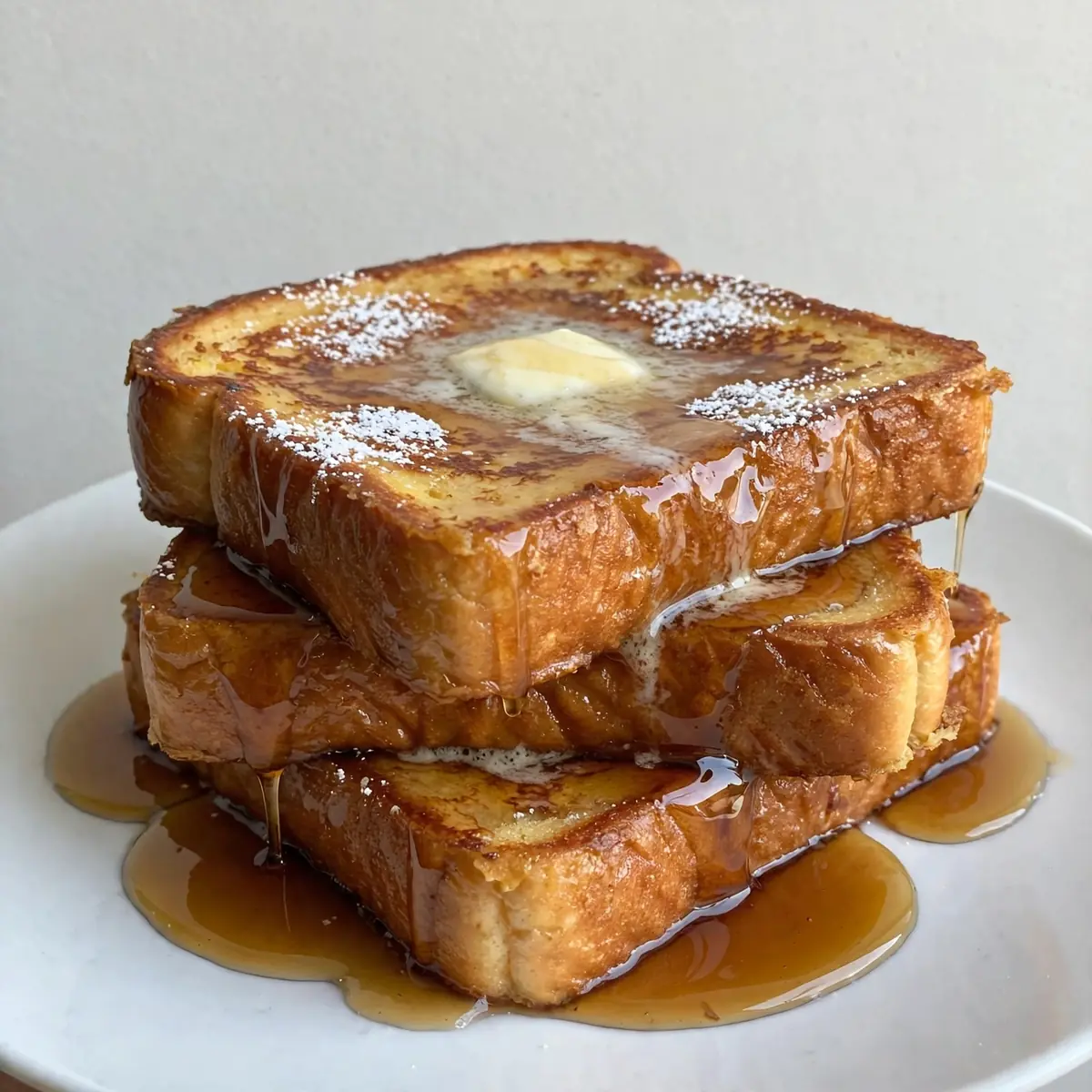
I still remember the first time I served my Classic French Toast to guests and watched their forks hover mid-air, stunned by its glossy, caramelised crust and custard-soft centre. That evening taught me something important: this humble breakfast dish can become a showstopper when you treat it with the same care you’d give a fine dining dessert. Today, I’m sharing the exact techniques I use to turn simple bread, eggs, and milk into a restaurant-worthy centrepiece that feels special without demanding hours in the kitchen.
Recipe Overview
- Prep Time: 10 minutes
- Cook Time: 12 minutes
- Total Time: 22 minutes
- Servings: 4
- Difficulty: Easy
Why You’ll Love This Classic French Toast
- Restaurant-quality finish at home: The golden, caramelised crust and pillowy interior rival any brunch spot, thanks to a few clever tricks with heat and timing.
- No soggy bread ever: A precise custard ratio and a brief resting period ensure every slice stays crisp on the outside and luscious within.
- Simple ingredients, impressive results: You likely have everything in your fridge already, yet the final dish looks and tastes like you spent hours preparing.
- Easily customisable for guests: Whether you’re catering to dietary needs or just fancy a twist, the base recipe adapts beautifully to toppings and spices.
- Make-ahead friendly: The custard can be prepared the night before, and the cooked slices reheat beautifully in the oven for stress-free entertaining.
Ingredients You’ll Need
- 8 thick slices of brioche or challah bread (about 2.5 cm thick)
- 4 large free-range eggs
- 240 ml full-fat milk
- 60 ml double cream
- 2 tablespoons caster sugar
- 1 teaspoon vanilla extract
- ½ teaspoon ground cinnamon
- ¼ teaspoon freshly grated nutmeg
- Pinch of fine sea salt
- 30 g unsalted butter, for frying
- 1 tablespoon neutral oil (sunflower or rapeseed)
- Icing sugar, for dusting
- Fresh berries, for serving
- Maple syrup, warmed, for drizzling
Tip: Use day-old bread if you can — it absorbs the custard without turning to mush. Fresh bread works, but let the slices sit uncovered on the counter for an hour before dipping.
How to Make Classic French Toast
- Prepare the custard: In a wide, shallow bowl, whisk together the eggs, milk, double cream, caster sugar, vanilla extract, cinnamon, nutmeg, and salt until the mixture is completely smooth and pale yellow. You’ll notice the sugar has dissolved when you can’t feel any graininess between your fingers.
- Soak the bread: Place one slice of bread into the custard and let it sit for 20 seconds on each side. The bread should feel heavy and fully saturated but still hold its shape — if it starts to fall apart, you’ve left it too long. Lift it gently, letting excess custard drip back into the bowl.
- Rest the soaked slices: Transfer each soaked slice to a wire rack set over a baking tray and leave them untouched for 2 minutes. This crucial step allows the custard to penetrate the bread’s centre evenly. You’ll see the surface become slightly tacky, which helps create that beautiful golden crust.
- Heat the pan: Place a large non-stick frying pan or cast-iron skillet over medium heat. Add the butter and oil together, swirling until the butter melts, foams, then subsides to a quiet sizzle. The oil prevents the butter from burning, and you’ll smell a nutty, toasted aroma when the pan is ready.
- Cook the first side: Gently lay 2 slices into the hot pan, leaving space between them. Cook for 3 to 4 minutes without moving them. Listen for a steady, gentle sizzle — if it’s too loud, reduce the heat. The underside should turn deep golden brown with darker, caramelised edges when you peek with a spatula.
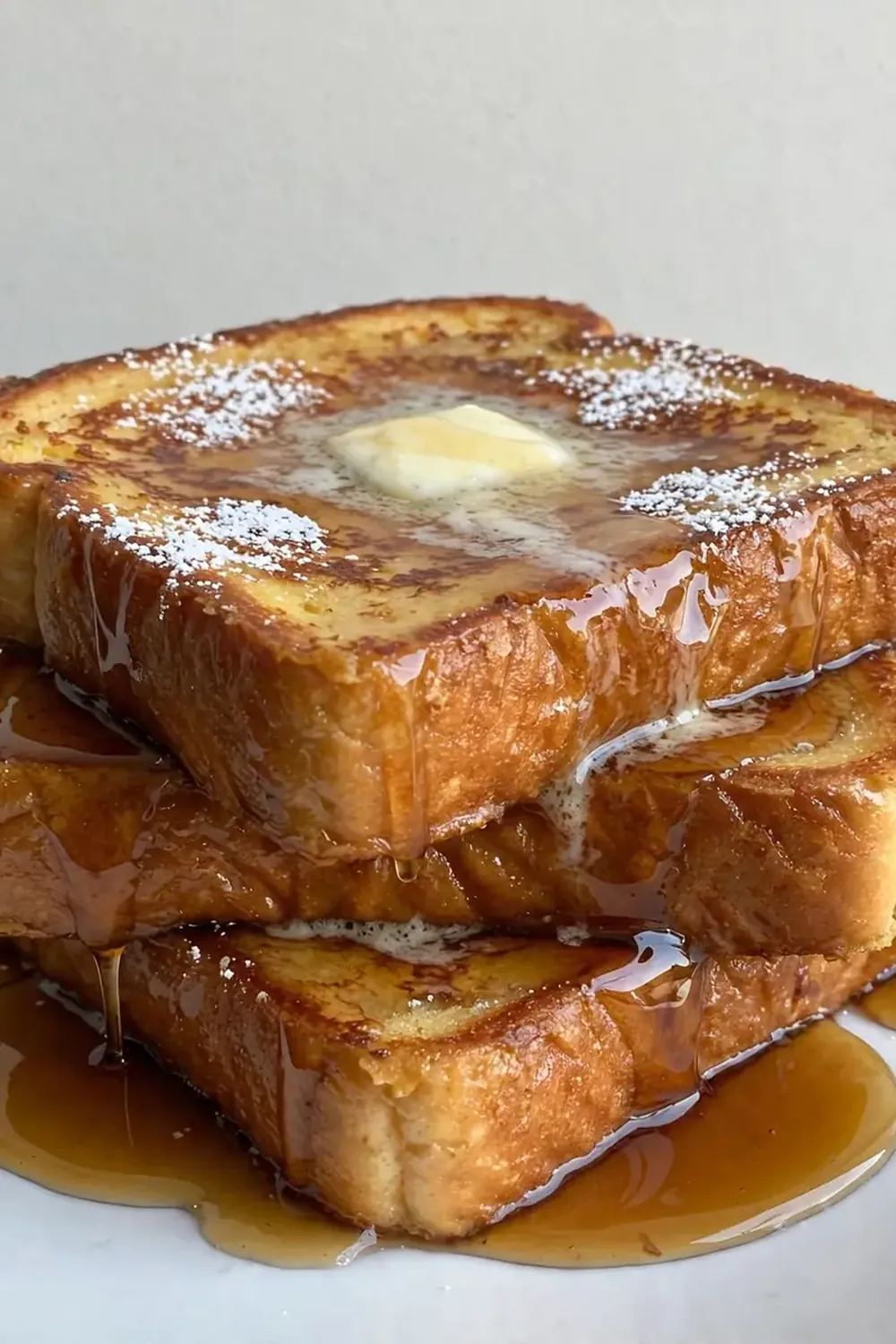
- Flip and finish: Flip each slice carefully using a thin spatula. Cook for another 2 to 3 minutes. The second side will cook faster because the pan is already hot. Press down lightly with the spatula for 10 seconds to ensure even browning. When done, the French toast should feel firm but springy when pressed, and the crust will look glossy and lacquered.
- Keep warm in the oven: Transfer the cooked slices to a baking sheet lined with parchment paper and place them in a 100°C oven while you cook the remaining batches. This keeps them crisp and warm without drying them out.
- Serve immediately: Dust generously with icing sugar through a fine sieve, then top with fresh berries and a drizzle of warm maple syrup. For an extra touch, add a dollop of crème fraîche or a sprinkle of flaked almonds.
Tips From My Kitchen
- Use stale bread for better absorption: Bread that’s a day or two old has a drier, more porous crumb that soaks up custard like a sponge without disintegrating. If you only have fresh bread, slice it and leave it on the counter for an hour, or pop the slices in a 150°C oven for 5 minutes to dry them out slightly.
- Don’t skip the cream: The double cream adds richness that milk alone can’t achieve. It creates a silkier custard that yields a softer, more luxurious interior. For a lighter version, use all milk, but the texture won’t be quite as decadent.
- Rest the soaked bread on a rack: Placing the dipped slices on a wire rack rather than a plate allows any excess custard to drip away, preventing a soggy, eggy result. It also lets the surface dry slightly, which promotes better browning in the pan.
- Control your heat carefully: Medium heat is your friend here. Too high, and the outside burns before the centre cooks through. Too low, and the butter soaks into the bread, making it greasy rather than crisp. The butter should sizzle quietly, not spit aggressively.
- Work in small batches: Frying more than two slices at once lowers the pan’s temperature, leading to uneven cooking and steaming rather than frying. Patience pays off — the extra few minutes are worth the perfect golden crust.
- Season the custard generously: Don’t be shy with the salt and spices. A pinch of salt balances the sweetness and enhances the egg flavour, while freshly grated nutmeg adds a warmth that pre-ground nutmeg simply can’t match.
Common Mistakes to Avoid
- Overcrowding the pan: When you cram too many slices into the pan, the temperature drops sharply. Instead of frying, the bread steams, resulting in a pale, soggy exterior. Always leave a finger’s width of space between slices, and cook in batches if necessary.
- Wrong temperature: Cooking on high heat burns the exterior while leaving the inside raw and custardy. Aim for a steady medium heat — around 160°C if you have an infrared thermometer. The butter should foam gently, not brown instantly.
- Skipping the rest time: Placing soaked bread directly into the pan forces the custard to cook unevenly. The 2-minute rest on a rack allows the custard to migrate inward, giving you a uniform, tender centre from edge to edge.
Delicious Variations to Try
- Spicy Version: Add ¼ teaspoon of cayenne pepper and ½ teaspoon of ground ginger to the custard. The subtle heat contrasts beautifully with the sweet maple syrup and berries, creating a grown-up twist that surprises and delights.
- Vegetarian/Vegan Option: Replace the eggs with 120 ml of aquafaba (chickpea brine) and use oat milk and coconut cream instead of dairy. The texture is slightly less rich but still wonderfully custardy, and the cinnamon helps mask any bean-like notes.
- Different Protein: For a savoury-sweet balance, serve the French toast alongside grilled turkey sausages or crispy Creamy Chicken Patties Recipe. The savoury, juicy patties pair surprisingly well with the sweet, spiced bread.
What to Serve With Classic French Toast
- Warm maple syrup and fresh seasonal berries
- A dollop of crème fraîche or Greek yoghurt
- Grilled turkey sausages or Turkey Sandwiches With Mozzarella for a heartier spread
- A side of Fresh Tomato And Avocado Salad for a bright, acidic contrast
- A refreshing glass of Refreshing Fresh Lemonade Recipe to cleanse the palate
Still hungry for ideas? You might also love Cinnamon Roll French Toast Bites, Gourmet Creme Brulee French Toast Recipe from our sister kitchens.
Frequently Asked Questions
Classic French Toast
Ingredients
Method
- Prepare the custard: In a wide, shallow bowl, whisk together the eggs, milk, double cream, caster sugar, vanilla extract, cinnamon, nutmeg, and salt until the mixture is completely smooth and pale yellow. You'll notice the sugar has dissolved when you can't feel any graininess between your fingers.
- Soak the bread: Place one slice of bread into the custard and let it sit for 20 seconds on each side. The bread should feel heavy and fully saturated but still hold its shape — if it starts to fall apart, you've left it too long. Lift it gently, letting excess custard drip back into the bowl.
- Rest the soaked slices: Transfer each soaked slice to a wire rack set over a baking tray and leave them untouched for 2 minutes. This crucial step allows the custard to penetrate the bread's centre evenly. You'll see the surface become slightly tacky, which helps create that beautiful golden crust.
- Heat the pan: Place a large non-stick frying pan or cast-iron skillet over medium heat. Add the butter and oil together, swirling until the butter melts, foams, then subsides to a quiet sizzle. The oil prevents the butter from burning, and you'll smell a nutty, toasted aroma when the pan is ready.
- Cook the first side: Gently lay 2 slices into the hot pan, leaving space between them. Cook for 3 to 4 minutes without moving them. Listen for a steady, gentle sizzle — if it's too loud, reduce the heat. The underside should turn deep golden brown with darker, caramelised edges when you peek with a spatula.
- Flip and finish: Flip each slice carefully using a thin spatula. Cook for another 2 to 3 minutes. The second side will cook faster because the pan is already hot. Press down lightly with the spatula for 10 seconds to ensure even browning. When done, the French toast should feel firm but springy when pressed, and the crust will look glossy and lacquered.
- Keep warm in the oven: Transfer the cooked slices to a baking sheet lined with parchment paper and place them in a 100°C oven while you cook the remaining batches. This keeps them crisp and warm without drying them out.
- Serve immediately: Dust generously with icing sugar through a fine sieve, then top with fresh berries and a drizzle of warm maple syrup. For an extra touch, add a dollop of crème fraîche or a sprinkle of flaked almonds.
Notes
I’d love to hear how you style your Classic French Toast for guests — do you pile on the berries, or prefer a dusting of cocoa and a drizzle of honey? Drop your favourite presentation ideas in the comments below, and don’t forget to share a photo of your golden, restaurant-worthy creation.