Ingredients
Method
- Proof the Yeast: In a small bowl, combine the lukewarm milk (it should feel like a warm bath, not hot), a pinch of the caster sugar, and the active dry yeast. Give it a gentle stir and let it sit for 5-10 minutes. You are looking for a creamy, foamy layer on top, a sign that the yeast is alive and happy. If it doesn't foam, your liquid was likely too hot or too cold, and you'll need to start again.
- Mix the Dough: In the bowl of a stand mixer fitted with the dough hook, whisk together the remaining sugar, the whole egg, the egg yolk, the cooled melted butter, and the vanilla. Pour in the foamy yeast mixture and stir briefly. Add the strong white bread flour and the salt. Mix on low speed until the dough comes together into a shaggy, lumpy mass. Stop the mixer, scrape down the sides with a spatula—you'll see streaks of butter and flour.
- Knead Until Silky: Turn the mixer up to medium-low speed and knead for 6-8 minutes. The dough will first look rough and sticky, clinging to the bowl. As you knead, it will transform. You'll feel the resistance change through the machine, and the dough will start to pull away from the sides of the bowl, forming a smooth, elastic ball. It should feel soft, supple, and slightly tacky to the touch, but not wet. You should be able to stretch a small piece into a thin "windowpane" without it tearing.
- First Rise: Shape the dough into a neat ball and place it in a lightly greased bowl, turning once to coat the surface. Cover the bowl tightly with cling film or a damp tea towel. Leave it in a warm, draught-free place (like a turned-off oven with the light on) for 1 to 1.5 hours, or until it has doubled in size. You'll know it's ready when you poke it gently with a floured finger and the indentation remains, springing back only slowly.
- Roll and Fill: Punch the risen dough down gently to release the air. On a lightly floured surface, roll it out into a large rectangle, roughly 30cm x 40cm. The dough should be about 1cm thick. Spread the very soft butter evenly over the entire surface, leaving a 2cm border at the far long edge. In a small bowl, mix the brown sugar, cinnamon, and cardamom. Sprinkle this mixture generously over the butter, pressing it down lightly with your fingers so it adheres.
- Shape the Rolls: Starting from the long edge closest to you, roll the dough up tightly into a log, using the unbuttered border to seal the seam. You'll see the spiral of sugar and cinnamon beginning to form. Using a sharp serrated knife or unflavoured dental floss, cut the log into 9 even slices, each about 4-5cm wide. Place the rolls cut-side up in a greased 23cm x 33cm baking dish, leaving a little space between each one—they will expand.
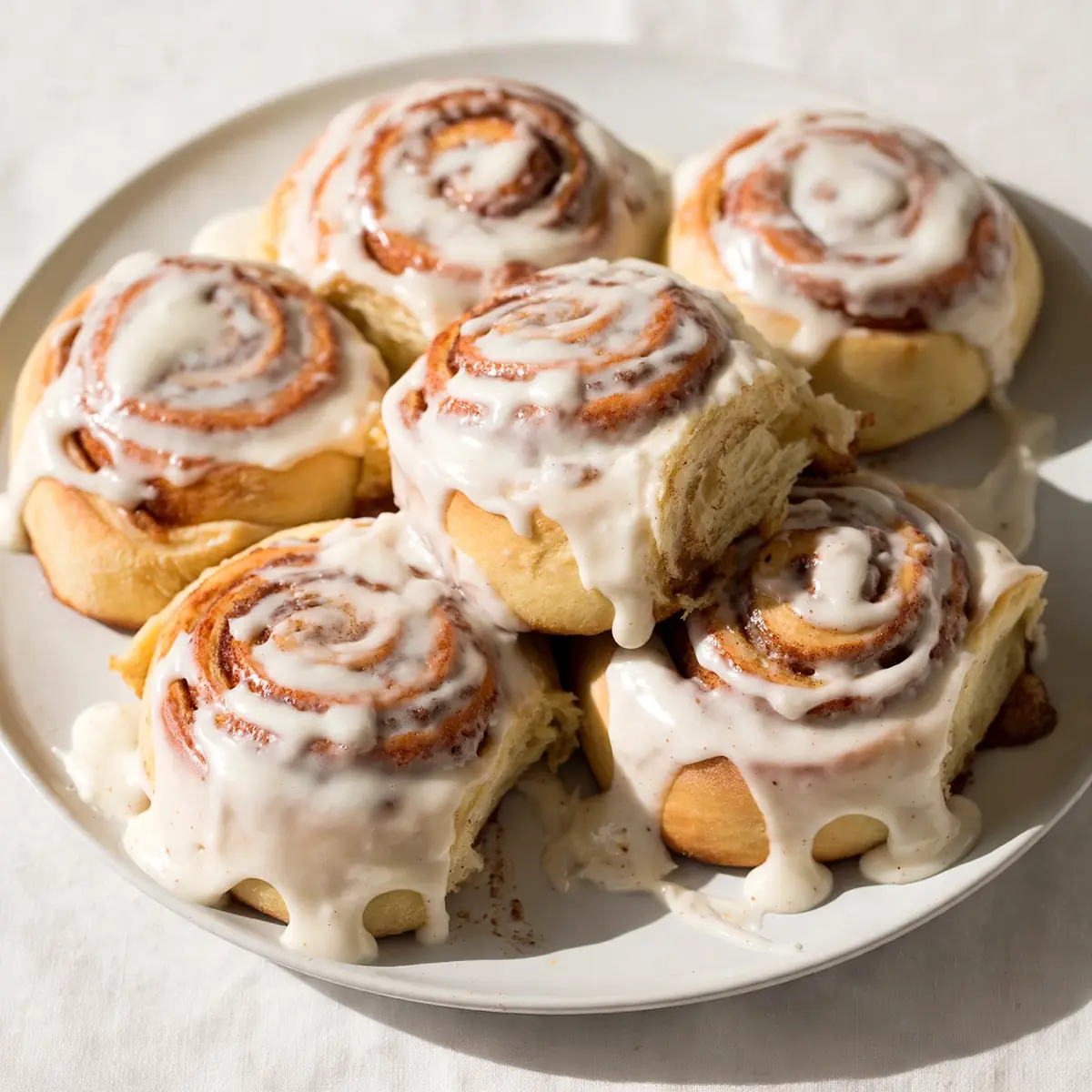
- Second Rise and Bake: Cover the dish with cling film and let the rolls rise again for about 30-45 minutes. They will puff up and become pillowy, pressing gently against one another. Preheat your oven to 180°C (160°C fan). Bake the rolls for 22-25 minutes. You are looking for a deep golden brown colour on top, and the edges of the centre roll should feel set, not doughy. The smell of cinnamon and toasted butter will be absolutely intoxicating.
- Frost While Warm: While the rolls bake, make the frosting. Beat the softened cream cheese and butter together until completely smooth and fluffy, about 2 minutes. Add the sifted icing sugar and vanilla, and beat on low until combined, then increase speed and beat for another minute. Add the milk one tablespoon at a time until you reach a thick but pourable consistency. As soon as the rolls come out of the oven, pour the frosting over the top. The heat will melt it slightly, creating that signature, glossy glaze that seeps into every crevice.
Notes
For the most authentic results, use full-fat cream cheese and do not skip the cardamom in the filling. Let rolls cool slightly before frosting for the perfect glaze.