The Coziest Copycat Cinnabon Cinnamon Rolls
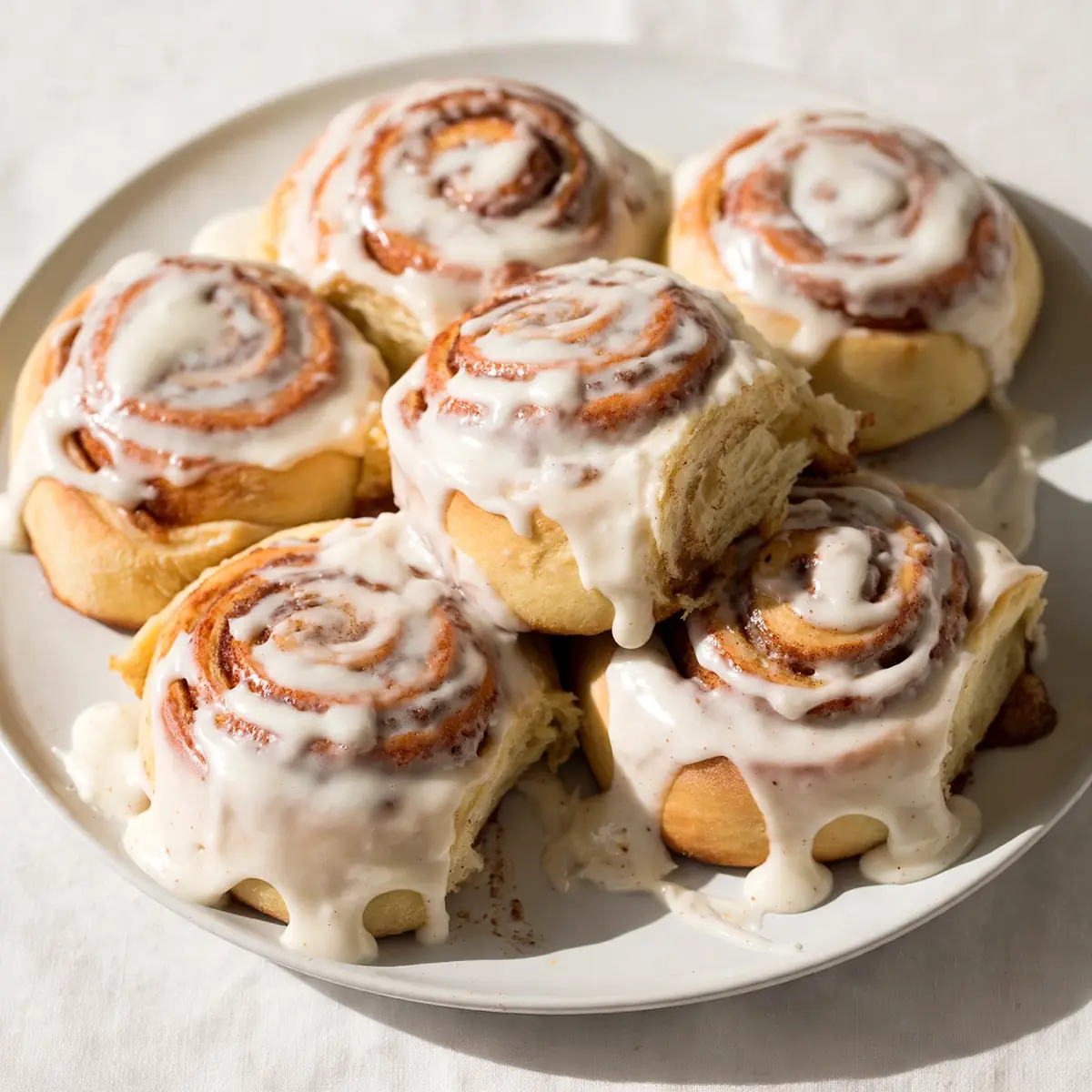
There are certain weekend afternoons that call for nothing more than a slow, deliberate project in the kitchen, one that fills the house with a sweet, yeasty warmth and promises a reward that is entirely worth the wait. This Copycat Cinnabon Cinnamon Rolls recipe is that project, a ritual of flour, butter, and sugar that transforms a quiet Saturday into something memorable. After testing this recipe five times, I finally got it just right, and I’ve been making this for over 7 years, and it never disappoints when I crave that soft, pillowy dough and that iconic, tangy cream cheese frosting.
Recipe Overview
- Prep Time: 30 minutes (plus 1 hour 30 minutes rising time)
- Cook Time: 22-25 minutes
- Total Time: Approximately 2 hours 30 minutes
- Servings: 9 large rolls
- Difficulty: Medium
Why You’ll Love This Copycat Cinnabon Cinnamon Rolls
- The dough is incredibly soft, light, and fluffy, staying that way for days thanks to a special ingredient.
- The filling is a generous, gooey swirl of brown sugar and cinnamon that caramelises beautifully during baking.
- The cream cheese frosting is the perfect balance of sweet and tangy, with a luscious, pourable consistency.
- It makes your entire home smell like a bakery, creating an atmosphere of pure comfort and anticipation.
- The recipe is designed for home bakers, with clear cues so you know exactly when each stage is ready, from the sponge to the final golden brown.
Ingredients You’ll Need
- For the Dough:
- 240ml whole milk, lukewarm (about 38°C)
- 7g (1 packet) active dry yeast
- 80g caster sugar
- 1 large egg, at room temperature
- 1 large egg yolk, at room temperature
- 60g unsalted butter, melted and cooled
- 1 teaspoon vanilla extract
- 450g strong white bread flour, plus more for dusting
- 1 teaspoon fine sea salt
- For the Filling:
- 115g unsalted butter, very soft but not melted
- 200g light brown sugar, firmly packed
- 2 tablespoons ground cinnamon
- ¼ teaspoon ground cardamom (optional, but authentic)
- For the Cream Cheese Frosting:
- 115g full-fat cream cheese, softened
- 60g unsalted butter, softened
- 200g icing sugar, sifted
- 1 teaspoon vanilla extract
- 1-2 tablespoons whole milk
Tip: Using whole milk in both the dough and the frosting is key. The fat content contributes to a tender crumb and a richer, glossier finish on the icing. Skimmed milk will result in a drier, less luxurious roll.
How to Make Copycat Cinnabon Cinnamon Rolls
- Proof the Yeast: In a small bowl, combine the lukewarm milk (it should feel like a warm bath, not hot), a pinch of the caster sugar, and the active dry yeast. Give it a gentle stir and let it sit for 5-10 minutes. You are looking for a creamy, foamy layer on top, a sign that the yeast is alive and happy. If it doesn’t foam, your liquid was likely too hot or too cold, and you’ll need to start again.
- Mix the Dough: In the bowl of a stand mixer fitted with the dough hook, whisk together the remaining sugar, the whole egg, the egg yolk, the cooled melted butter, and the vanilla. Pour in the foamy yeast mixture and stir briefly. Add the strong white bread flour and the salt. Mix on low speed until the dough comes together into a shaggy, lumpy mass. Stop the mixer, scrape down the sides with a spatula—you’ll see streaks of butter and flour.
- Knead Until Silky: Turn the mixer up to medium-low speed and knead for 6-8 minutes. The dough will first look rough and sticky, clinging to the bowl. As you knead, it will transform. You’ll feel the resistance change through the machine, and the dough will start to pull away from the sides of the bowl, forming a smooth, elastic ball. It should feel soft, supple, and slightly tacky to the touch, but not wet. You should be able to stretch a small piece into a thin “windowpane” without it tearing.
- First Rise: Shape the dough into a neat ball and place it in a lightly greased bowl, turning once to coat the surface. Cover the bowl tightly with cling film or a damp tea towel. Leave it in a warm, draught-free place (like a turned-off oven with the light on) for 1 to 1.5 hours, or until it has doubled in size. You’ll know it’s ready when you poke it gently with a floured finger and the indentation remains, springing back only slowly.
- Roll and Fill: Punch the risen dough down gently to release the air. On a lightly floured surface, roll it out into a large rectangle, roughly 30cm x 40cm. The dough should be about 1cm thick. Spread the very soft butter evenly over the entire surface, leaving a 2cm border at the far long edge. In a small bowl, mix the brown sugar, cinnamon, and cardamom. Sprinkle this mixture generously over the butter, pressing it down lightly with your fingers so it adheres.
- Shape the Rolls: Starting from the long edge closest to you, roll the dough up tightly into a log, using the unbuttered border to seal the seam. You’ll see the spiral of sugar and cinnamon beginning to form. Using a sharp serrated knife or unflavoured dental floss, cut the log into 9 even slices, each about 4-5cm wide. Place the rolls cut-side up in a greased 23cm x 33cm baking dish, leaving a little space between each one—they will expand.
- Second Rise and Bake: Cover the dish with cling film and let the rolls rise again for about 30-45 minutes. They will puff up and become pillowy, pressing gently against one another. Preheat your oven to 180°C (160°C fan). Bake the rolls for 22-25 minutes. You are looking for a deep golden brown colour on top, and the edges of the centre roll should feel set, not doughy. The smell of cinnamon and toasted butter will be absolutely intoxicating.
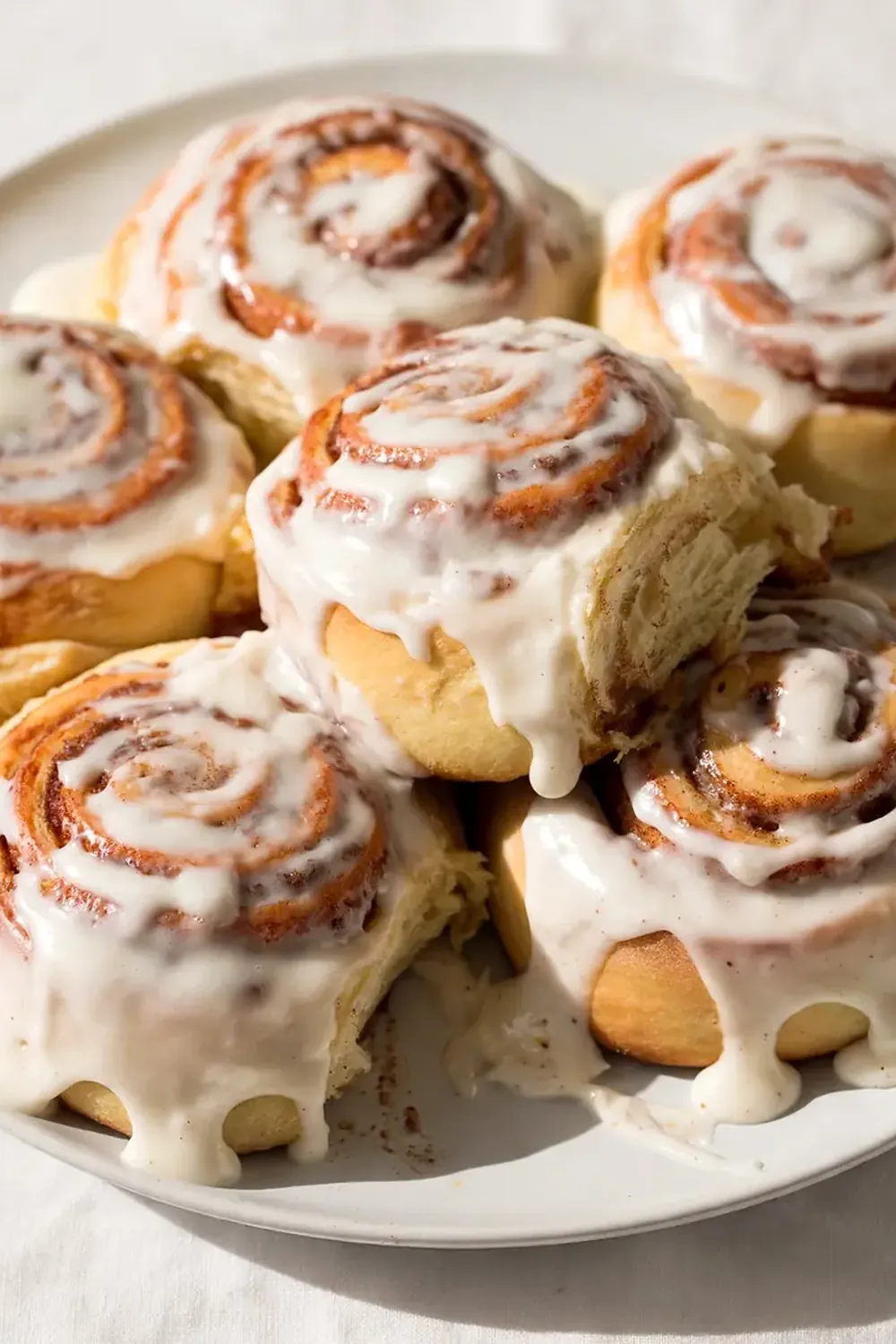
- Frost While Warm: While the rolls bake, make the frosting. Beat the softened cream cheese and butter together until completely smooth and fluffy, about 2 minutes. Add the sifted icing sugar and vanilla, and beat on low until combined, then increase speed and beat for another minute. Add the milk one tablespoon at a time until you reach a thick but pourable consistency. As soon as the rolls come out of the oven, pour the frosting over the top. The heat will melt it slightly, creating that signature, glossy glaze that seeps into every crevice.
Tips From My Kitchen
- Use Bread Flour for Structure: Strong white bread flour has a higher protein content than plain flour, which creates more gluten. This gives the rolls their characteristic chewy, pull-apart texture. Using plain flour will result in a softer, more cake-like roll that doesn’t hold its shape as well and can be denser.
- Don’t Skimp on the Soft Butter: The butter for the filling must be very soft, almost like a spreadable paste, but not melted. If it’s too hard, it will tear the dough when you spread it. If it’s melted, it will soak into the dough and make the bottom of the rolls soggy. The correct consistency ensures a clean, even layer that creates those distinct, gooey layers when baked.
- Why the Second Rise is Non-Negotiable: After you cut and arrange the rolls, they need time to puff up again. This second proof is crucial for light, airy rolls. If you skip it or rush it, the rolls will bake up dense and heavy, with a tight crumb. You want them to be touching each other in the pan before they go into the oven, as this encourages them to rise upwards rather than outwards.
- Cool Slightly Before Frosting: Pouring the cream cheese frosting over piping hot rolls will cause it to melt into a thin, watery puddle and slide right off. Waiting just 5-7 minutes allows the rolls to set slightly but remain very warm. The heat will then gently melt the frosting, creating that perfect, thick, glossy layer that clings to every swirl.
- Use a Serrated Knife for Clean Cuts: A sharp serrated knife cuts through the dough log cleanly without squashing the beautiful spiral shape you’ve created. A dull knife will drag and compress the dough, resulting in misshapen rolls. For the absolute cleanest cut, use a piece of unflavoured dental floss: slide it under the log, cross the ends over the top, and pull.
Equipment You’ll Need
- Stand mixer with dough hook attachment (or a large bowl and strong arm for kneading)
- Large mixing bowls
- 23cm x 33cm baking dish (or similar 9×13 inch pan)
- Rolling pin
- Sharp serrated knife or unflavoured dental floss
- Measuring cups and spoons
- Small saucepan (for melting butter)
- Fine-mesh sieve (for sifting icing sugar)
- Electric hand mixer or whisk (for the frosting)
- Cling film or a damp tea towel for covering
Common Mistakes to Avoid
- Overcrowding the pan: While you want the rolls to be snug after the second rise, they should not be jammed in so tightly that they have no room to expand. If using a smaller pan, reduce the number of rolls or make two batches. Overcrowding leads to uneven baking, where the centre rolls remain doughy while the edges burn. Leave about 1cm of space between each raw roll.
- Wrong temperature: The oven temperature is critical. If your oven runs hot, the outside of the rolls will brown too quickly, while the inside remains undercooked and raw. Use an oven thermometer to ensure it is at a true 180°C. Conversely, an oven that is too cool will produce pale, dry, and tough rolls that never achieve that golden colour.
- Skipping the rest time: Both the first and second rises are periods of active fermentation that develop flavour and texture. Rushing these steps is the single biggest mistake. The dough needs time for the yeast to produce gas, creating the airy structure. Skipping the rest time will result in dense, flat, and heavy rolls that lack the characteristic soft, fluffy interior.
Delicious Variations to Try
- Spiced Apple Version: After spreading the butter and cinnamon sugar, scatter 150g of finely diced peeled apple (such as Braeburn or Granny Smith) over the filling. The apple will soften and release juice during baking, creating pockets of fruity, tender sweetness within the swirls.
- Chocolate Hazelnut Swirl: Replace the brown sugar and cinnamon filling with 200g of chocolate hazelnut spread. Spread it evenly over the buttered dough, then roll and bake as usual. The frosting can be made with a tablespoon of cocoa powder sifted into the icing sugar for a double-chocolate hit.
- Savory Herb and Cheese Rolls: Omit the sugar and cinnamon from the filling. Instead, spread the butter with 2 tablespoons of Dijon mustard, then sprinkle with 100g of grated mature cheddar cheese, 1 tablespoon of chopped fresh rosemary, and ½ teaspoon of black pepper. Bake as directed, then top with a simple garlic butter glaze (30g melted butter mixed with 1 crushed garlic clove and a pinch of salt).
What to Serve With Copycat Cinnabon Cinnamon Rolls
- A strong cup of black coffee or an espresso to cut through the sweetness.
- A glass of cold whole milk for a classic, nostalgic pairing.
- A simple side of fresh fruit, such as a bowl of raspberries or sliced strawberries, to add a bright, tart contrast.
- For a more substantial brunch, serve alongside scrambled eggs or a Fresh Tomato And Avocado Salad for a savoury counterpoint.
Still hungry for ideas? You might also love Classic Cinnamon Rolls, Texas Roadhouse Rolls Copycat Recipe from our sister kitchens.
Frequently Asked Questions
Copycat Cinnabon Cinnamon Rolls
Ingredients
Method
- Proof the Yeast: In a small bowl, combine the lukewarm milk (it should feel like a warm bath, not hot), a pinch of the caster sugar, and the active dry yeast. Give it a gentle stir and let it sit for 5-10 minutes. You are looking for a creamy, foamy layer on top, a sign that the yeast is alive and happy. If it doesn't foam, your liquid was likely too hot or too cold, and you'll need to start again.
- Mix the Dough: In the bowl of a stand mixer fitted with the dough hook, whisk together the remaining sugar, the whole egg, the egg yolk, the cooled melted butter, and the vanilla. Pour in the foamy yeast mixture and stir briefly. Add the strong white bread flour and the salt. Mix on low speed until the dough comes together into a shaggy, lumpy mass. Stop the mixer, scrape down the sides with a spatula—you'll see streaks of butter and flour.
- Knead Until Silky: Turn the mixer up to medium-low speed and knead for 6-8 minutes. The dough will first look rough and sticky, clinging to the bowl. As you knead, it will transform. You'll feel the resistance change through the machine, and the dough will start to pull away from the sides of the bowl, forming a smooth, elastic ball. It should feel soft, supple, and slightly tacky to the touch, but not wet. You should be able to stretch a small piece into a thin "windowpane" without it tearing.
- First Rise: Shape the dough into a neat ball and place it in a lightly greased bowl, turning once to coat the surface. Cover the bowl tightly with cling film or a damp tea towel. Leave it in a warm, draught-free place (like a turned-off oven with the light on) for 1 to 1.5 hours, or until it has doubled in size. You'll know it's ready when you poke it gently with a floured finger and the indentation remains, springing back only slowly.
- Roll and Fill: Punch the risen dough down gently to release the air. On a lightly floured surface, roll it out into a large rectangle, roughly 30cm x 40cm. The dough should be about 1cm thick. Spread the very soft butter evenly over the entire surface, leaving a 2cm border at the far long edge. In a small bowl, mix the brown sugar, cinnamon, and cardamom. Sprinkle this mixture generously over the butter, pressing it down lightly with your fingers so it adheres.
- Shape the Rolls: Starting from the long edge closest to you, roll the dough up tightly into a log, using the unbuttered border to seal the seam. You'll see the spiral of sugar and cinnamon beginning to form. Using a sharp serrated knife or unflavoured dental floss, cut the log into 9 even slices, each about 4-5cm wide. Place the rolls cut-side up in a greased 23cm x 33cm baking dish, leaving a little space between each one—they will expand.
- Second Rise and Bake: Cover the dish with cling film and let the rolls rise again for about 30-45 minutes. They will puff up and become pillowy, pressing gently against one another. Preheat your oven to 180°C (160°C fan). Bake the rolls for 22-25 minutes. You are looking for a deep golden brown colour on top, and the edges of the centre roll should feel set, not doughy. The smell of cinnamon and toasted butter will be absolutely intoxicating.
- Frost While Warm: While the rolls bake, make the frosting. Beat the softened cream cheese and butter together until completely smooth and fluffy, about 2 minutes. Add the sifted icing sugar and vanilla, and beat on low until combined, then increase speed and beat for another minute. Add the milk one tablespoon at a time until you reach a thick but pourable consistency. As soon as the rolls come out of the oven, pour the frosting over the top. The heat will melt it slightly, creating that signature, glossy glaze that seeps into every crevice.
Notes
There is a profound satisfaction in pulling a tray of these golden, fragrant rolls from the oven, the air thick with the scent of caramelised sugar and butter. It is more than just baking; it is an act of slowing down, of creating something with your hands that brings tangible joy. I encourage you to set aside an afternoon, invite the family into the kitchen, and lose yourself in the process. When you finally pull apart that first, warm, frosting-laden spiral, you will know it was time well spent. I would love to hear how your baking adventure goes—please share your thoughts and any questions in the comments below.