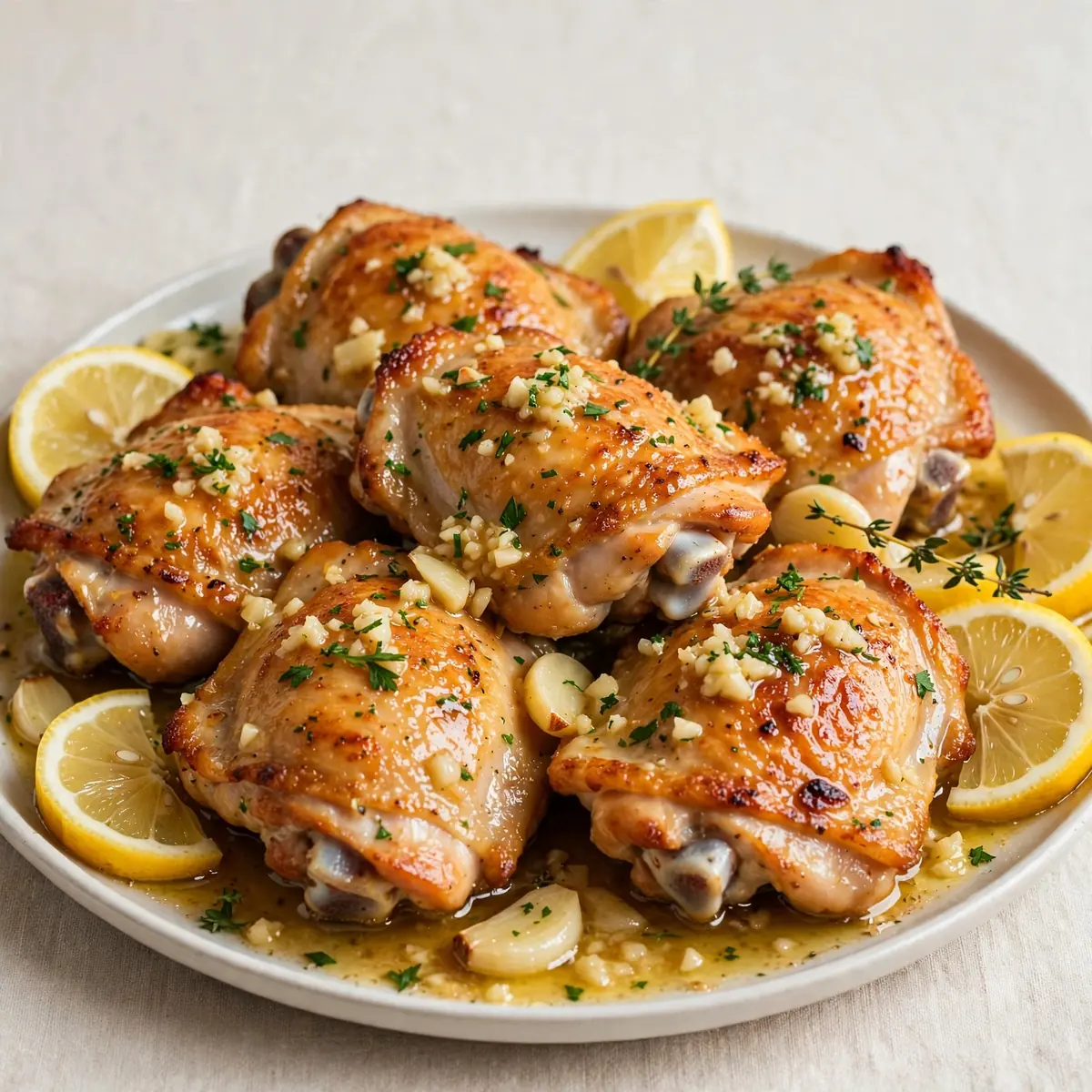
Ingredients
Method
- Pat the chicken thighs thoroughly dry with kitchen paper. Season generously on both sides with the sea salt and black pepper. Let them sit at room temperature for 10 minutes — this helps the skin dry out further, which is the first secret to achieving that crackling crispiness.
- Heat the olive oil in a large frying pan or skillet over medium-high heat until it shimmers and you see the first wisp of smoke. Place the chicken thighs skin-side down in a single layer, being careful not to overcrowd the pan. You should hear an immediate, vigorous sizzle — that sound tells you the skin is searing correctly. Cook for 6–8 minutes, until the skin is a deep, burnished gold and releases easily from the pan.
- Flip the chicken thighs using tongs. The cooked side should be a rich amber colour with a few darker spots, which is exactly what we want for flavour. Cook for a further 4 minutes, then transfer the chicken to a plate. The pan will have a fond (those browned bits) stuck to the bottom — do not discard this, as it is pure flavour.
- Reduce the heat to medium-low and add the butter to the pan. Let it melt, then add the sliced garlic. Stir constantly for about 1 minute, until the garlic is fragrant and just beginning to turn a pale straw colour. The smell will shift from raw to sweet and nutty — this is your cue to move to the next step before the garlic burns.
- Pour in the chicken stock and the juice of one lemon. Using a wooden spoon, scrape up all the browned bits from the bottom of the pan. The liquid will start to bubble gently and reduce. Let it simmer for 2–3 minutes, until it has thickened slightly and looks glossy. You will see the bubbles become larger and slower, and the sauce will coat the back of a spoon.
- Return the chicken thighs to the pan, skin-side up, nestling them into the sauce. Add the lemon slices around the chicken, tucking them into the liquid. Sprinkle the fresh thyme leaves over everything. Bring the sauce to a gentle simmer, then cover the pan with a lid and cook for 15 minutes. The chicken should be cooked through, with the internal temperature reaching 75°C, and the sauce will have reduced to a rich, buttery consistency.
- Remove the lid and increase the heat to medium-high for the final 2 minutes. Spoon the hot butter sauce over the chicken thighs repeatedly to glaze the skin. The skin will become sticky and shiny, and the sauce will emulsify further. The chicken is ready when the sauce clings to the meat and the skin looks lacquered.
- Let the chicken rest in the pan off the heat for 5 minutes. This allows the juices to redistribute, ensuring each thigh is succulent when you cut into it. Sprinkle with the fresh parsley and a pinch of flaky sea salt just before serving.
Notes
For maximum crispiness, pat chicken very dry and let rest after seasoning. Use a heavy skillet for even browning. Let chicken rest off heat for 5 minutes before serving to keep it juicy.