Ingredients
Method
- Activate the yeast: In a small bowl, combine the lukewarm water, caster sugar, and dried yeast. Give it a gentle stir and leave it for 5–10 minutes. You'll see the mixture become foamy and fragrant, with a smell like fresh bread, and tiny bubbles breaking the surface. This tells you the yeast is alive and hungry.
- Mix the dough: In a large mixing bowl, combine the flour and salt. Make a well in the centre and pour in the yeasty water and the olive oil. Using your hands (the best tool for the job), bring the mixture together into a rough, shaggy ball. It will feel sticky and look quite lumpy at this stage — that's perfectly normal.
- Knead with purpose: Turn the dough out onto a lightly floured surface. Knead for a full 8–10 minutes. Use the heel of your hand to push the dough away, then fold it back over itself. The texture will transform from sticky and rough to smooth, silky, and elastic. You'll know it's ready when you press a finger into the dough and it springs back, and the surface feels as smooth as a baby's skin.
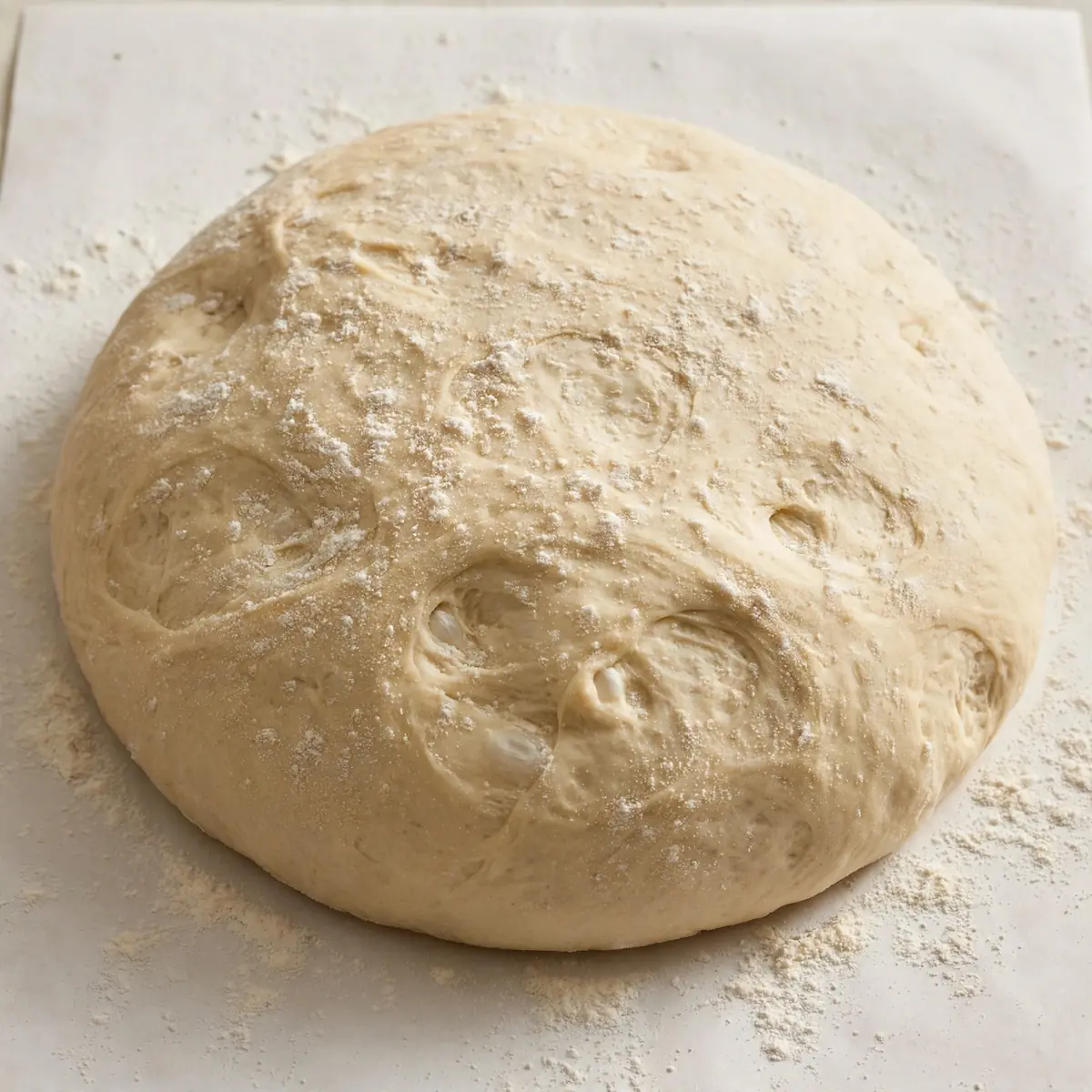
- First prove (bulk fermentation): Drizzle a clean bowl with a little olive oil, place the dough ball inside, and turn it to coat. Cover tightly with cling film and leave at room temperature for 2 hours, or until it has doubled in size. The dough will feel airy and puffy, and the bowl will feel lighter when you lift it.
- Divide and shape into balls: Gently tip the risen dough onto a floured surface. Divide it into 4 equal pieces (roughly 210g each). Cup your hand over each piece and roll it in a circular motion on the work surface to form a tight, smooth ball. You should see the surface tension stretch taut, like a drum skin. Place these balls on a floured tray, cover with oiled cling film, and refrigerate for at least 24 hours, or up to 48 hours. The dough will slowly rise and develop a wonderful, yeasty aroma.
- Bring to room temperature: About 2 hours before you plan to bake, remove the dough balls from the fridge. Leave them covered on the counter. They will soften and relax, becoming pliable and losing their chill. A properly rested ball will feel soft and supple, not tight and resistant.
- Stretch, don't roll: Place a dough ball on a floured surface, pressing it flat with your fingertips, leaving a slightly thicker rim. Then, using your knuckles and the backs of your hands, gently stretch the dough from the centre outwards, rotating it. Let gravity help you. You want a thin, even base with a distinct, puffy border. The dough should be so thin you can almost see through the centre, but it shouldn't tear. It should look like a rustic, irregular circle.
- Bake to perfection: Slide the stretched dough onto a semolina-dusted pizza peel. Add your toppings. Bake in a preheated oven at the highest possible temperature (250°C/500°F or as high as your oven will go) on a preheated pizza stone or heavy baking tray. Bake for 8–12 minutes, until the crust is deeply golden and the cheese is bubbling with brown spots. The bottom should be crisp and sound hollow when tapped, and the kitchen will smell of a proper pizzeria.
Notes
Total time includes 2 hours first proof, 24-48 hours cold fermentation, and 2 hours bringing to room temperature before baking. The minimum total time is about 48 hours (2880 minutes) plus prep and bake time.