Ingredients
Method
- Dry brine the beef. Pat the chuck roast completely dry with paper towels until the surface feels tacky, not wet. Apply the yellow mustard evenly as a binder — it should look glossy and thin. Combine the salt, black pepper, smoked paprika, garlic powder, onion powder, and cayenne in a small bowl. Coat the entire roast generously, pressing the rub into every crevice. Place the seasoned roast on a wire rack over a baking sheet and refrigerate uncovered for 8–12 hours. The surface will develop a dry, leathery sheen — that's the pellicle forming, which helps the smoke adhere.
- Prepare the smoker. Remove the roast from the fridge 45 minutes before cooking to take the chill off. Set your smoker to 110°C (225°F). Add your soaked hickory or oak wood. The first wisps of smoke should be thin and blue, not thick and white — you're looking for a clean, subtle fragrance, not an acrid cloud.
- Start the smoke. Place the roast fat-side up on the smoker grates. Insert a probe thermometer into the thickest part of the meat, avoiding any large pockets of fat. Close the lid and let the smoke work. After the first hour, you should see a deep mahogany colour developing on the surface — the bark is beginning to form.
- Spritz for moisture and shine. After 2 hours, begin spritzing the roast every 45 minutes with the mixture of beef stock and balsamic vinegar. Each spritz should sizzle lightly on contact — you'll hear it hit the hot surface. This keeps the bark from drying out and adds layers of tangy, savoury flavour. The surface should look tacky and dark, like polished leather.
- Watch for the stall. Around the 4-hour mark, the internal temperature will likely plateau between 68°C and 74°C (155°F–165°F). This is the stall — the meat is sweating moisture, and the evaporative cooling is keeping the temperature steady. Don't panic. The bark will feel firm and dry to the touch, and the smoker will smell intensely of roasted beef. This stage can last 1–2 hours.
- Wrap and finish. Once the internal temperature reaches 71°C (160°F) and you're past the stall, lay out a large double sheet of heavy-duty foil. Place the roast in the centre, add the smashed garlic cloves and rosemary sprigs, and pour in 60 ml (¼ cup) of beef stock. Wrap tightly, ensuring no steam can escape. Return to the smoker and increase the temperature to 135°C (275°F). Continue cooking until the internal temperature hits 93°C (200°F) — the probe should slide in like room-temperature butter with almost no resistance. The wrapped meat will feel heavy and soft when you lift it.
- Rest before serving. Remove the wrapped roast from the smoker and place it in a dry cooler or a warm, draft-free spot. Let it rest undisturbed for at least 1 hour, ideally 2 hours. During this time, the juices redistribute and the collagen fully sets into silky tenderness. When you unwrap it, the aroma will be intensely beefy with herbal notes from the rosemary — a clear sign you've nailed it.
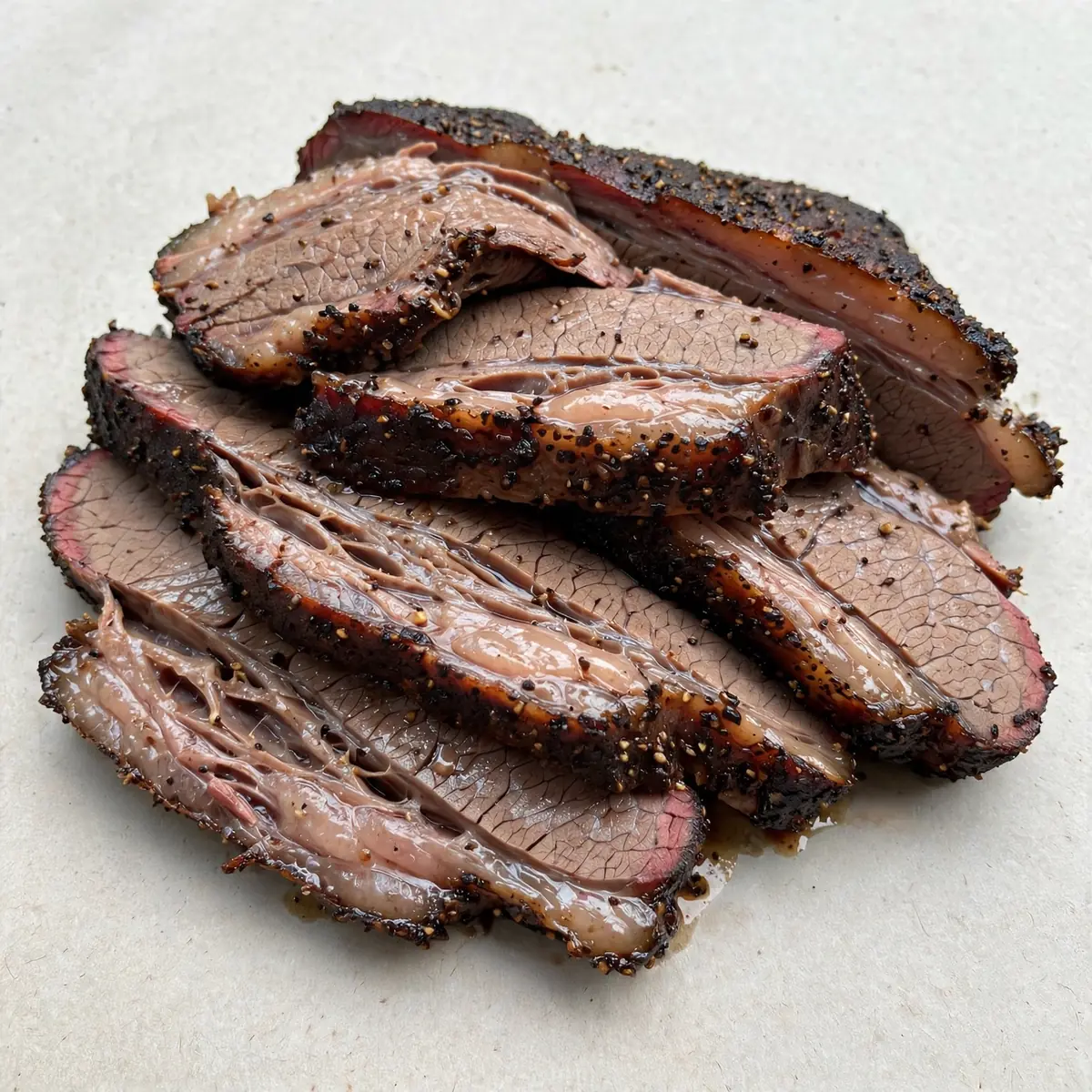
- Slice and plate. Transfer the roast to a cutting board and strain the juices from the foil into a small saucepan. Warm the juices gently over low heat — they should smell rich and glossy. Slice the roast against the grain into 1.5 cm (½-inch) thick slices. Each slice should hold together but yield easily to a fork. Arrange the slices on a warmed platter, slightly overlapping, and drizzle with the reserved juices. Garnish with fresh rosemary sprigs and flaky sea salt for that final restaurant touch.
Notes
The dry brining step is crucial for developing a pellicle, which helps the smoke adhere and creates a better bark. Monitoring the internal temperature with a reliable probe thermometer is key to success, especially through the stall phase. Don't rush the rest period; it's essential for redistributing juices and achieving maximum tenderness.