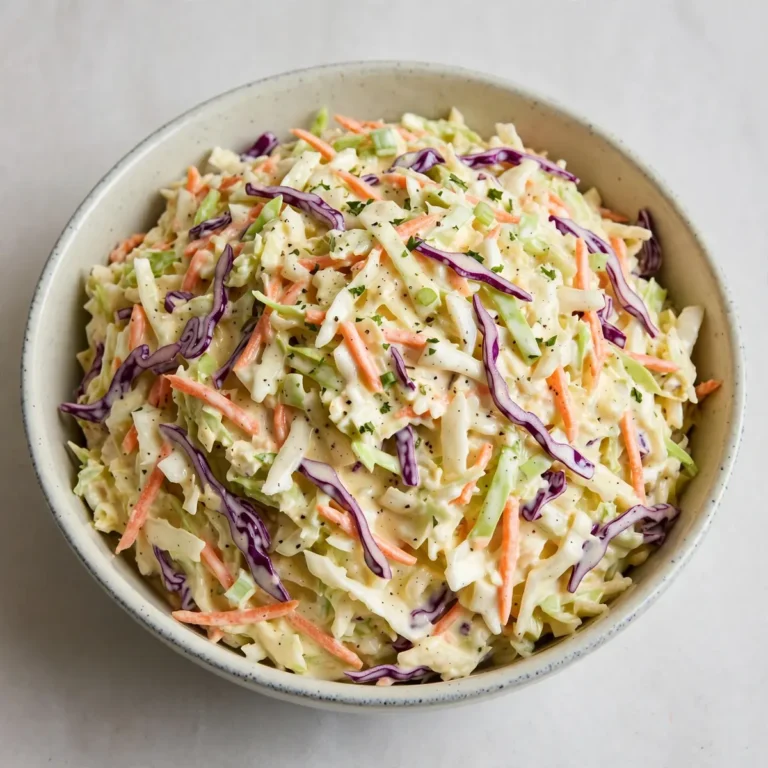
Classic Coleslaw
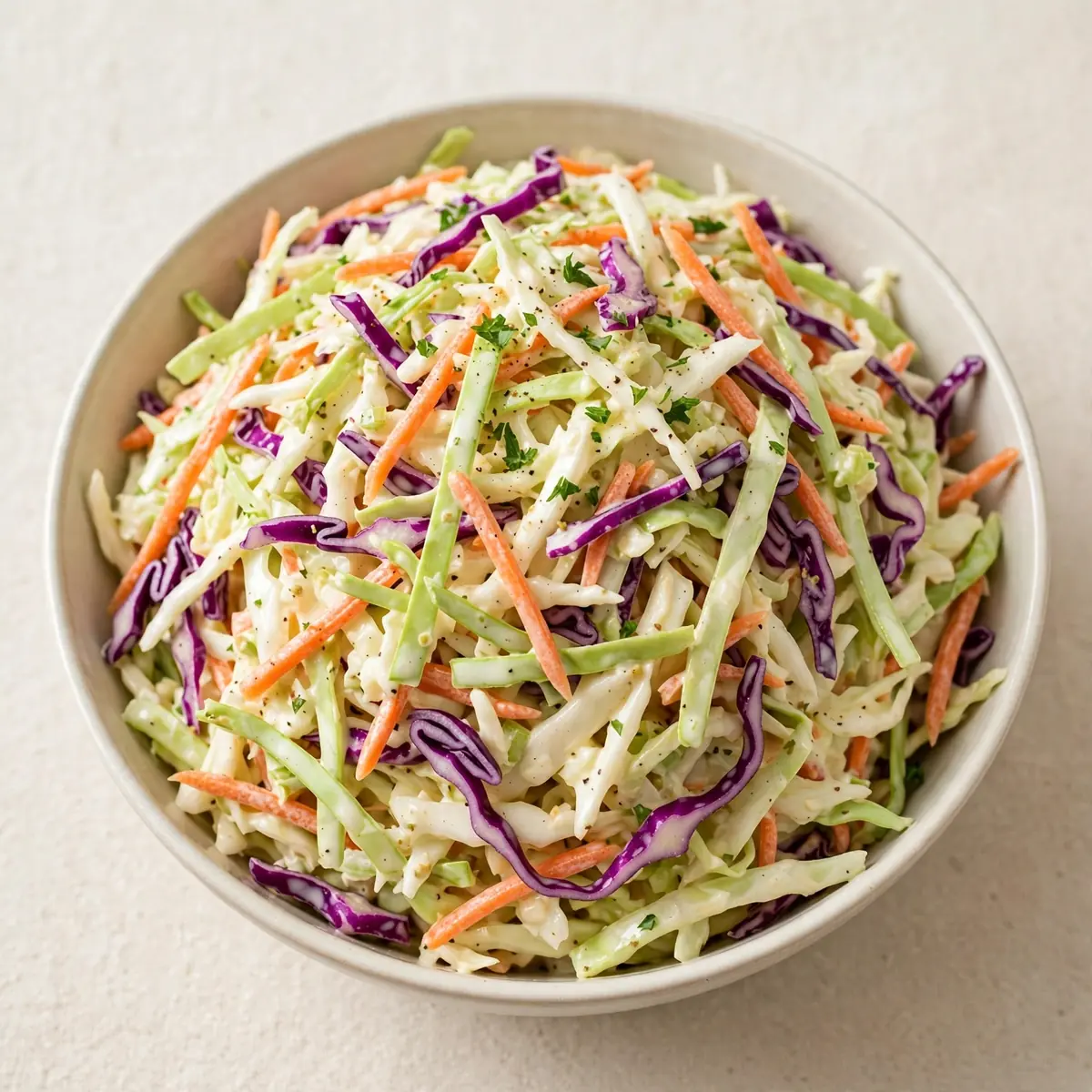
I still remember the first time I served my Classic Coleslaw to guests, expecting it to be a mere afterthought on the plate. Instead, it drew gasps and compliments, with one friend asking for the recipe before she’d even finished her main course. This is my go-to recipe when I need something quick but impressive, transforming humble cabbage into a dish that looks and tastes like it came from a smart restaurant kitchen.
Recipe Overview
- Prep time: 20 minutes
- Cook time: 0 minutes
- Total time: 20 minutes (plus 1 hour resting)
- Servings: 6–8 as a side
- Difficulty: Easy
Why You’ll Love This Classic Coleslaw
- Presentation that wows: The fine shredding and vibrant colour contrast of green and red cabbage, topped with a delicate drizzle of dressing, makes this coleslaw a centrepiece on any table.
- Perfect texture every time: The salting and resting technique ensures the vegetables stay crunchy without releasing watery liquid onto the plate, so your coleslaw remains crisp and beautiful for hours.
- Customisable for any palate: You can adjust the creaminess, tang, or sweetness of the dressing to suit your guests, making it versatile for everything from a summer barbecue to a festive dinner.
- Make-ahead convenience: This coleslaw actually improves after an hour in the fridge, allowing the flavours to meld and the vegetables to soften slightly while retaining their structure.
- A healthy side that steals the show: Packed with vitamins from cabbage and carrots, it feels light and fresh, yet satisfying enough that even those who claim not to like salad will reach for seconds.
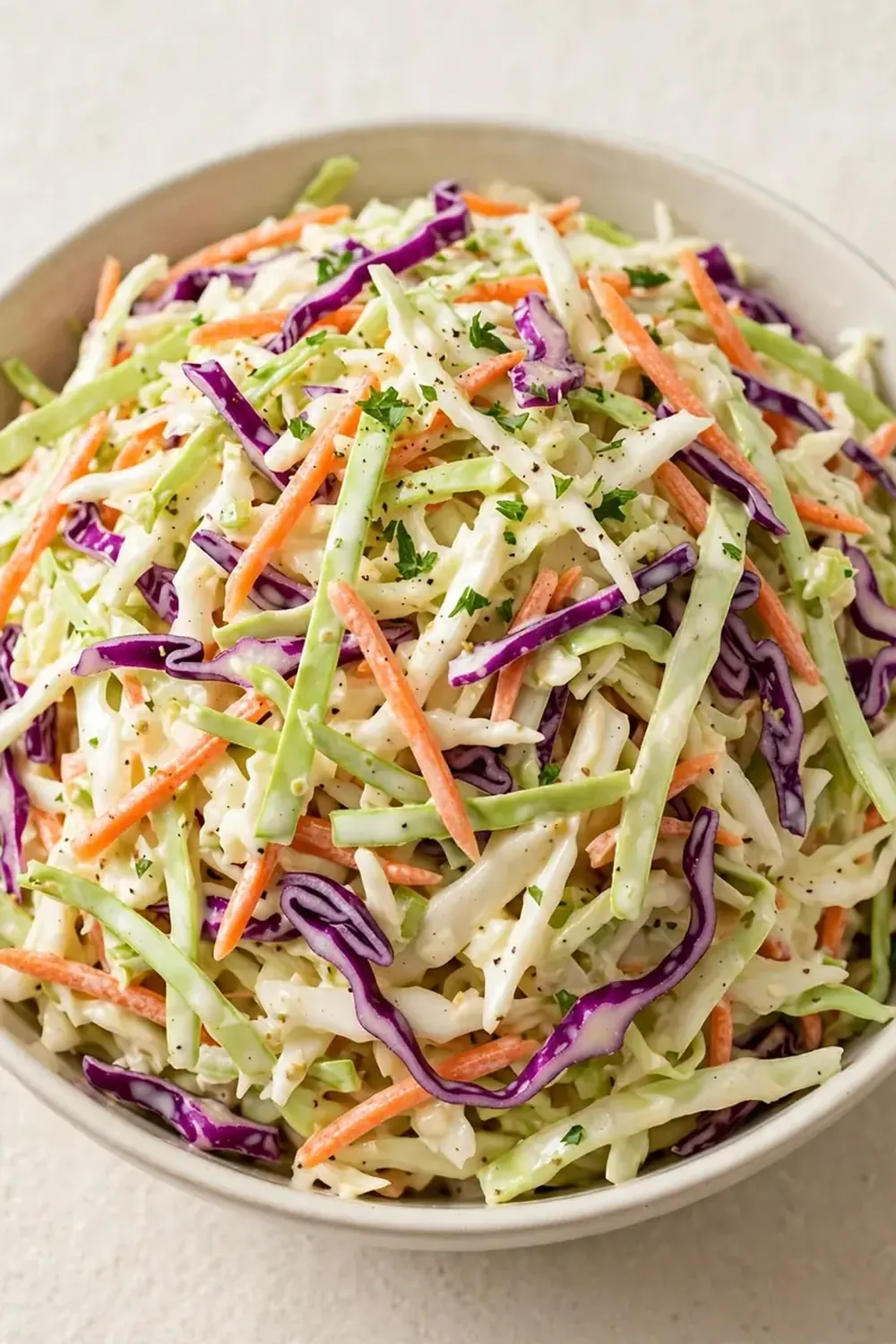
Ingredients You’ll Need
- 1 small green cabbage (about 600g)
- ¼ small red cabbage (about 150g)
- 2 large carrots (about 200g)
- 1 small red onion (about 100g)
- 200ml mayonnaise (full-fat preferred)
- 2 tablespoons apple cider vinegar
- 1 tablespoon Dijon mustard
- 1 tablespoon caster sugar
- ½ teaspoon celery salt
- ¼ teaspoon freshly ground black pepper
- 2 tablespoons finely chopped fresh parsley
- 1 tablespoon poppy seeds (optional, for garnish)
Tip: Use a food processor with a shredding disc if you have one — it creates uniform, thin strands that look professional and hold the dressing beautifully. If shredding by hand, take your time to cut the cabbage as finely as possible for that delicate, restaurant-style texture.
How to Make Classic Coleslaw
- Prepare the cabbage: Remove any wilted outer leaves from both cabbages. Cut each quarter in half, then cut away the hard core. Shred the cabbage as thinly as possible — you want strands that are about 2–3mm wide. You should hear a satisfying, clean crunch as the knife cuts through. Place the shredded cabbage in a large colander.
- Salt and rest: Sprinkle 1 teaspoon of fine salt over the shredded cabbage and toss well with your hands. Let it sit in the colander for 20 minutes. You’ll notice small beads of moisture forming on the leaves — this is the salt drawing out excess water. After 20 minutes, rinse the cabbage under cold water and squeeze it firmly in a clean tea towel to remove as much liquid as possible. The cabbage should feel dry and almost squeaky to the touch.
- Shred the carrots and onion: Peel the carrots and grate them on the large holes of a box grater or use the shredding disc of your food processor. The carrots should look like bright orange ribbons. Finely slice the red onion into half-moons — aim for paper-thin slices so they aren’t overpowering. You want the onion to be translucent and delicate.
- Combine the vegetables: In a large bowl, toss together the dried cabbage, shredded carrots, and sliced red onion. The colours should pop — deep green, vibrant orange, and pale purple. Set aside while you make the dressing.
- Make the dressing: In a small jar with a tight-fitting lid, combine the mayonnaise, apple cider vinegar, Dijon mustard, caster sugar, celery salt, and black pepper. Screw on the lid and shake vigorously for about 30 seconds, until the dressing is pale, creamy, and completely smooth. The aroma should be tangy and slightly sweet.
- Dress and rest: Pour the dressing over the vegetables and toss thoroughly with salad servers until every strand is evenly coated. The coleslaw should look glossy but not swimming in dressing. Cover the bowl with cling film and refrigerate for at least 1 hour. During this time, the flavours will meld and the vegetables will soften just slightly while retaining their crunch.
- Finish and serve: Just before serving, give the coleslaw a final toss. Sprinkle with the finely chopped parsley and poppy seeds, if using. The parsley adds flecks of fresh green, while the poppy seeds provide tiny bursts of nutty texture. Transfer to a clean serving bowl, or for a restaurant-style presentation, mound it in a ring mould on each plate and lift carefully for a perfect round shape.
Tips From My Kitchen
- Salt the cabbage — don’t skip this: This step is the secret to a coleslaw that stays crunchy for hours without becoming watery. Salt draws out excess moisture from the cabbage cells, which would otherwise dilute the dressing and make the coleslaw soggy. Rinsing and drying afterwards ensures you don’t end up with a salty result. My husband, who’s usually picky, asked for seconds the first time I used this method!
- Use a mandoline for perfect shreds: If you don’t have a food processor, a mandoline slicer set to 2mm thickness will give you restaurant-quality, uniform shreds. It’s faster than a knife and produces those delicate, ribbon-like strands that look stunning on the plate. Just watch your fingers!
- Let the coleslaw rest in the fridge: That hour of resting isn’t optional — it’s when the magic happens. The dressing absorbs into the vegetables, softening them just enough while the flavours marry together. Without this rest, the coleslaw will taste like separate components rather than a harmonious dish.
- Dress lightly at first: You can always add more dressing, but you can’t take it away. Start with about two-thirds of the dressing, toss well, and then add more only if needed. The coleslaw should look glossy and well-coated, but not drenched. Any leftover dressing keeps for a week in the fridge.
- Garnish right before serving: Fresh herbs and seeds lose their appeal if they sit on the coleslaw too long. Parsley will wilt and poppy seeds can become soft. Sprinkle them on just before you bring the dish to the table for maximum visual impact and texture contrast.
Equipment You’ll Need
- Large salad bowl
- Sharp knife and cutting board
- Salad servers
- Small jar for dressing
- Colander
- Clean tea towel or kitchen paper
- Box grater or food processor with shredding disc
- Mixing spoon
What to Serve With Classic Coleslaw
- Grilled chicken or fish: The creamy, tangy coleslaw cuts beautifully through smoky, charred meats. Try it alongside our Slow Cooker Peanut Butter Chicken Recipe for a surprisingly delicious pairing.
- Pulled beef or lamb: The crunch and acidity of coleslaw balances rich, slow-cooked meats perfectly. It’s also a fantastic topping for loaded jackets or flatbreads.
- Barbecue sides: Serve it next to baked beans, corn on the cob, or potato wedges for a complete summer spread. The coleslaw adds freshness to an otherwise heavy meal.
- Sandwiches and wraps: Use it as a crunchy filling in chicken wraps or alongside a Fluffy Egg White Omelette for a light lunch with texture.
- As a topping: Pile it high on hot dogs or burgers for a refreshing, creamy element that elevates the whole dish.
Frequently Asked Questions
Classic Coleslaw
Ingredients
Method
- Prepare the cabbage: Remove any wilted outer leaves from both cabbages. Cut each quarter in half, then cut away the hard core. Shred the cabbage as thinly as possible — you want strands that are about 2–3mm wide. You should hear a satisfying, clean crunch as the knife cuts through. Place the shredded cabbage in a large colander.
- Salt and rest: Sprinkle 1 teaspoon of fine salt over the shredded cabbage and toss well with your hands. Let it sit in the colander for 20 minutes. You’ll notice small beads of moisture forming on the leaves — this is the salt drawing out excess water. After 20 minutes, rinse the cabbage under cold water and squeeze it firmly in a clean tea towel to remove as much liquid as possible. The cabbage should feel dry and almost squeaky to the touch.
- Shred the carrots and onion: Peel the carrots and grate them on the large holes of a box grater or use the shredding disc of your food processor. The carrots should look like bright orange ribbons. Finely slice the red onion into half-moons — aim for paper-thin slices so they aren’t overpowering. You want the onion to be translucent and delicate.
- Combine the vegetables: In a large bowl, toss together the dried cabbage, shredded carrots, and sliced red onion. The colours should pop — deep green, vibrant orange, and pale purple. Set aside while you make the dressing.
- Make the dressing: In a small jar with a tight-fitting lid, combine the mayonnaise, apple cider vinegar, Dijon mustard, caster sugar, celery salt, and black pepper. Screw on the lid and shake vigorously for about 30 seconds, until the dressing is pale, creamy, and completely smooth. The aroma should be tangy and slightly sweet.
- Dress and rest: Pour the dressing over the vegetables and toss thoroughly with salad servers until every strand is evenly coated. The coleslaw should look glossy but not swimming in dressing. Cover the bowl with cling film and refrigerate for at least 1 hour. During this time, the flavours will meld and the vegetables will soften just slightly while retaining their crunch.
- Finish and serve: Just before serving, give the coleslaw a final toss. Sprinkle with the finely chopped parsley and poppy seeds, if using. The parsley adds flecks of fresh green, while the poppy seeds provide tiny bursts of nutty texture. Transfer to a clean serving bowl, or for a restaurant-style presentation, mound it in a ring mould on each plate and lift carefully for a perfect round shape.
Notes
I’d love to hear how this Classic Coleslaw turns out for you — especially if you try the ring mould trick for a dinner party! Drop a comment below and tell me how your guests reacted. Did anyone ask for the recipe before they’d finished their plate? I’m willing to bet they did.