Slow Cooker Pulled Pork Loaded Nachos
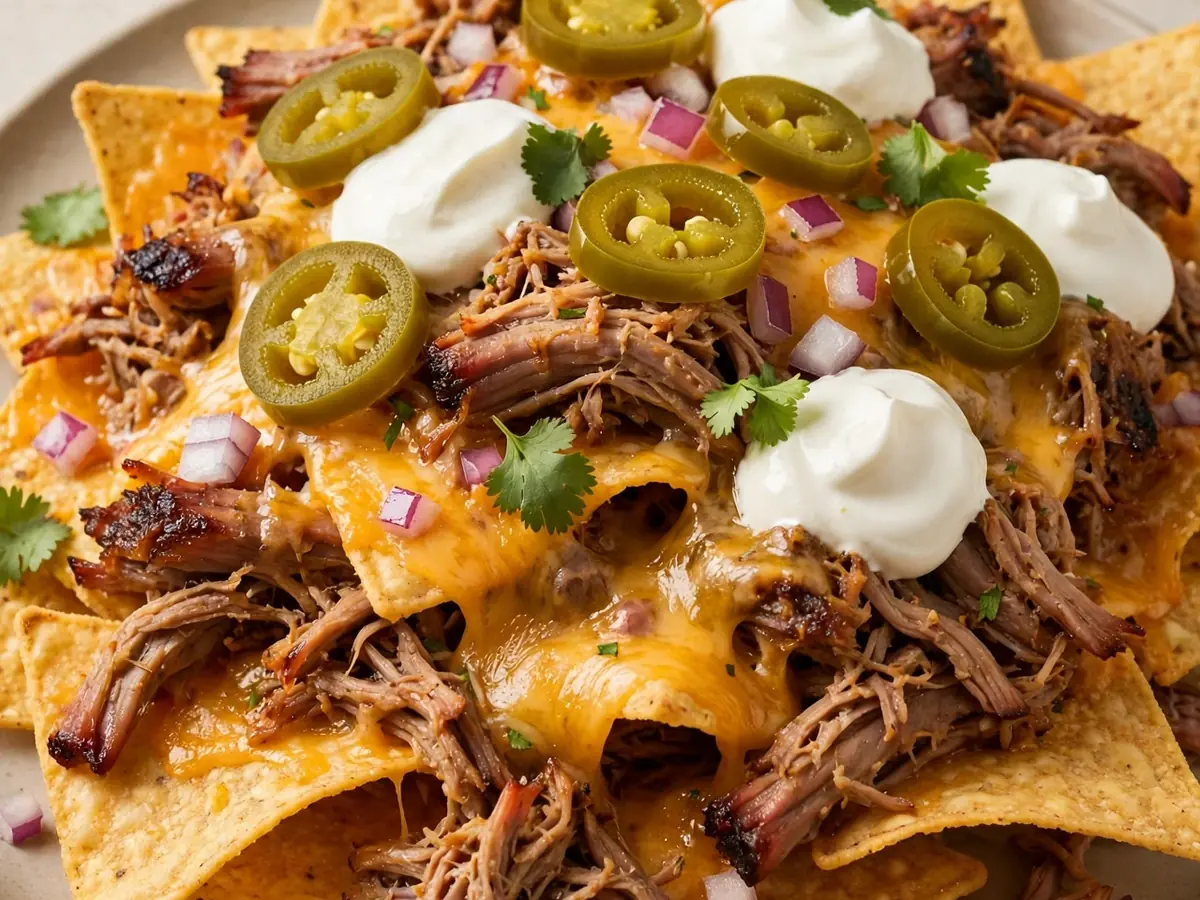
There’s a particular kind of magic that happens when tender, smoky pulled pork meets a mountain of crunchy tortilla chips, melted cheese, and bright, fresh toppings. Slow Cooker Pulled Pork Loaded Nachos take everything you love about game-day food and turn it into a genuinely satisfying meal you can assemble in minutes — because the hardest work, the pork, is done for you hours in advance by the slow cooker. The result is a sheet pan (or two) of nachos with layers of flavor: savory pork, gooey cheese, creamy avocado, tangy pickled onions, and a drizzle of sauce that ties it all together.
This article walks through the whole process, from a hands-off pork shoulder that shreds like a dream to the exact layering technique that keeps every chip loaded instead of leaving you with a sad pile of bare tortilla chips at the bottom. You’ll get precise quantities, equipment notes, substitutions, storage guidance, and answers to the questions that come up most often. Whether you’re feeding a crowd on a weekend or meal-prepping pork for easy weeknight dinners, this recipe is built to be flexible and forgiving.
Why This Recipe Works
Pulled pork is one of the best candidates for the slow cooker because pork shoulder (also called pork butt or Boston butt) is full of connective tissue that breaks down over low, slow heat into silky, shreddable meat. A dry rub applied the night before — or even just an hour ahead — seasons the meat deeply, while a small amount of liquid in the cooker creates steam that keeps everything moist. The pork finishes with a quick toss in its own defatted juices plus a touch of barbecue sauce, so it’s flavorful enough to eat on its own but not so saucy that it turns your chips soggy.
The nachos themselves are all about construction. Layering — chips, cheese, pork, more cheese, more chips — rather than piling everything on top is what separates great nachos from mediocre ones. We also bake the nachos briefly to melt the cheese properly, then add cold, fresh toppings afterward so they stay crisp and bright. The final drizzle of crema and barbecue sauce is optional but highly recommended; it’s the detail that makes these feel like restaurant nachos.
Ingredients
For the Slow Cooker Pulled Pork
- 1 bone-in or boneless pork shoulder (Boston butt), about 3 to 3.5 pounds (1.4 to 1.6 kg), trimmed of excess surface fat but leaving some fat cap intact
- 2 tablespoons packed brown sugar
- 1 tablespoon smoked paprika
- 1 tablespoon kosher salt
- 2 teaspoons garlic powder
- 2 teaspoons onion powder
- 1 teaspoon ground cumin
- 1 teaspoon chili powder
- 1 teaspoon freshly ground black pepper
- 1/2 teaspoon cayenne pepper (optional, for heat)
- 1 medium yellow onion, sliced into 1/2-inch wedges
- 4 garlic cloves, smashed
- 1/2 cup low-sodium chicken broth or water
- 1 tablespoon apple cider vinegar
- 1/2 cup barbecue sauce, plus more for drizzling
For the Nachos
- 1 large bag (about 12 to 14 ounces / 340 to 400 g) thick-cut tortilla chips, sturdy restaurant-style preferred
- 12 ounces (340 g) shredded cheese blend — a mix of Monterey Jack and sharp cheddar works well
- 2 cups shredded pulled pork (from the recipe above; you’ll have leftovers)
- 1 cup canned black beans, drained and rinsed
- 1 cup fresh or frozen corn kernels, thawed if frozen
- 1/2 cup pickled red onions (store-bought or homemade)
- 1 ripe avocado, diced
- 1/2 cup sour cream or Mexican crema
- 1/4 cup chopped fresh cilantro
- 1 jalapeño, thinly sliced (optional)
- 1 lime, cut into wedges, for serving
Yield: The pork recipe makes about 6 to 7 cups of shredded meat, enough for 3 generous batches of nachos. Each batch of nachos serves 4 as a main dish or 6 to 8 as an appetizer. Prep time: 20 minutes active (plus 8 to 10 hours slow cooking). Cook time for nachos: 10 to 12 minutes.
Equipment
- 5- to 6-quart slow cooker
- Large sheet pan (18 by 13 inches) or two smaller rimmed baking sheets
- Small bowl for the spice rub
- Two forks or meat claws for shredding
- Fine-mesh strainer or fat separator (for defatting the cooking liquid)
- Aluminum foil (optional, for easier cleanup)
- Cutting board and chef’s knife
Step-by-Step Instructions
Part 1: Slow Cooker Pulled Pork
- Mix the rub. In a small bowl, combine the brown sugar, smoked paprika, kosher salt, garlic powder, onion powder, cumin, chili powder, black pepper, and cayenne if using. Stir until evenly blended.
- Season the pork. Pat the pork shoulder dry with paper towels — moisture prevents the rub from adhering. Rub the spice mixture all over the meat, pressing it in so it coats every surface. If you have time, cover and refrigerate for 1 hour or up to overnight; if not, proceed directly.
- Build the slow cooker base. Scatter the sliced onion and smashed garlic in the bottom of the slow cooker. Pour in the chicken broth and apple cider vinegar. Place the seasoned pork on top, fat side up if there’s a fat cap.
- Cook low and slow. Cover and cook on LOW for 8 to 10 hours, or on HIGH for 5 to 6 hours, until the pork is completely tender and shreds easily with a fork. A bone-in roast is done when the bone twists out cleanly with almost no resistance.
- Rest and defat. Transfer the pork to a large cutting board or bowl and let it rest for 10 to 15 minutes. Meanwhile, strain the cooking liquid through a fine-mesh strainer into a measuring cup or fat separator. Discard the solids. Let the liquid settle, then skim off and discard the fat that rises to the top. You should have roughly 1 to 1 1/2 cups of defatted juices.
- Shred and season. Shred the pork with two forks, discarding any large pieces of fat or the bone. Return the shredded meat to the slow cooker (or a bowl) and toss with 1/2 cup of the defatted cooking juices and the 1/2 cup barbecue sauce. Add more juices a splash at a time if the pork seems dry. Taste and adjust salt. Keep warm on the LOW setting until ready to assemble nachos.
Part 2: Assembling and Baking the Nachos
- Preheat the oven to 400°F (200°C). Line a large sheet pan with aluminum foil for easier cleanup, if desired.
- First layer. Spread half the tortilla chips in a single, slightly overlapping layer across the pan. Scatter half the black beans and half the corn over the chips, then sprinkle with one-third of the shredded cheese.
- Add the pork. Distribute the 2 cups of shredded pulled pork evenly over the first layer, breaking up any clumps. Sprinkle with another third of the cheese.
- Second layer. Add the remaining chips on top, followed by the rest of the beans and corn, and finish with the remaining cheese. This double-layer structure is what keeps every chip covered.
- Bake. Bake for 10 to 12 minutes, until the cheese is fully melted, bubbling at the edges, and the chips at the perimeter are just beginning to toast. Watch closely in the final 2 minutes — thin chips can scorch quickly.
- Finish with fresh toppings. Remove the pan from the oven and immediately scatter over the pickled red onions, diced avocado, sliced jalapeño, and chopped cilantro. Drizzle with sour cream or crema and a light zigzag of barbecue sauce. Serve right away with lime wedges on the side.
Tips for the Best Loaded Nachos
- Use sturdy chips. Thin, fragile chips collapse under the weight of pork and cheese. Thick-cut restaurant-style chips hold up best.
- Shred cheese yourself if you can. Pre-shredded cheese is coated in anti-caking agents that can prevent smooth melting. Grating a block of Monterey Jack and cheddar takes five minutes and makes a noticeable difference.
- Don’t over-sauce the pork. Excess sauce makes chips soggy. The pork should be moist and flavorful but not dripping.
- Warm the pork before assembling. Cold pork cools the cheese and extends baking time, which dries out the chips. Heat it briefly in the microwave or a skillet if it has been refrigerated.
- Assemble on the pan you’ll bake on, and serve from it. Transferring loaded nachos from pan to platter usually results in a landslide. Set the hot pan on a trivet and let people serve themselves.
- Keep fresh toppings separate if serving a crowd. Set out avocado, crema, cilantro, and jalapeño in bowls so guests can add them to their own portions and nothing wilts.
Practical Substitutions
- Pork cut: Boneless pork shoulder works identically. Pork loin is leaner and will be less tender — if using it, reduce the cook time to 6 to 7 hours on LOW and add extra broth.
- Cheese: Oaxaca, Chihuahua, or a pre-shredded “Mexican blend” can replace the Jack-cheddar mix. Pepper Jack adds heat.
- Beans: Pinto beans or kidney beans work in place of black beans. For a bean-free version, double the corn.
- Pickled onions: Quick-pickle thinly sliced red onion in 1/2 cup red wine vinegar, 1/2 cup water, 1 teaspoon sugar, and 1 teaspoon salt for 30 minutes. Fresh diced red onion is a sharper but acceptable substitute.
- Crema: Thin sour cream with a tablespoon of milk or lime juice, or use plain Greek yogurt.
- Make-ahead pork: The pork can be cooked, shredded, and refrigerated up to 4 days before assembling nachos. Reheat gently with a splash of broth before layering.
- Different protein: The same nacho method works beautifully with other slow-cooked fillings. If you enjoy pulled poultry, try the approach in this slow cooker pulled BBQ chicken, and for a richer, beefier alternative, these slow cooker BBQ beef short ribs shred into an excellent nacho topping.
Storage and Reheating
Leftover pork: Store shredded pork in an airtight container in the refrigerator for up to 4 days, or freeze in 2-cup portions for up to 3 months. Thaw overnight in the refrigerator and reheat in a covered skillet over medium-low heat with a splash of broth or water, stirring occasionally, until steaming. The microwave works too — cover and heat in 30-second bursts to avoid drying it out.
Leftover nachos: Assembled nachos do not store well; chips soften and the whole dish turns soggy. If you have leftovers, pick out and discard the wilted fresh toppings, then reheat the chips, cheese, and pork on a sheet pan at 350°F (175°C) for 5 to 7 minutes to re-crisp. It won’t be as good as fresh, but it’s salvageable. For the best results, assemble only what you plan to eat and keep components separate.
Freezing: Freeze only the pork, never the assembled nachos. Frozen pork keeps its texture well for up to 3 months.
Frequently Asked Questions
Can I make this recipe without a slow cooker?
Yes. Cook the seasoned pork in a Dutch oven with the broth, vinegar, onion, and garlic, covered, at 300°F (150°C) for about 3 to 3.5 hours, until fork-tender. Alternatively, use a pressure cooker: brown the pork if desired, add the liquids and aromatics, and cook at high pressure for about 60 to 75 minutes with a natural release. The shredding and seasoning steps remain the same.
How do I keep the nachos from getting soggy?
Three things matter most: use thick, sturdy chips; make sure the pork is moist but not swimming in sauce; and add all cold, wet toppings — avocado, crema, salsa — after baking, not before. You can also give the chips a light pre-toast on the sheet pan at 350°F (175°C) for 3 to 4 minutes before layering, which creates a moisture barrier and deepens their crunch.
What is the best cheese for loaded nachos?
A blend of Monterey Jack and sharp cheddar is the classic choice: Jack melts beautifully and cheddar brings flavor. Avoid very aged cheeses, which can turn oily and grainy when melted. If you want extra stretch, fold in a small amount of low-moisture mozzarella. Always shred from a block for the smoothest melt.
How many people does this recipe serve?
The full pork recipe yields 6 to 7 cups of shredded meat, which is enough for three batches of nachos. Each batch, made with 2 cups of pork, serves 4 as a main dish or 6 to 8 as an appetizer. If you’re feeding a larger crowd, double the nacho assembly and bake on two sheet pans, rotating them halfway through the oven time.
Can I prepare the pork a day ahead?
Absolutely — it’s one of the best make-ahead components. Cook and shred the pork, toss it with the juices and barbecue sauce, and refrigerate it in a covered container for up to 4 days. Reheat gently with a splash of broth before assembling the nachos so the meat is hot and the cheese melts evenly. The pickled onions can also be made several days in advance.