Creamy Garlic Mushroom Risotto Without Constant Stirring
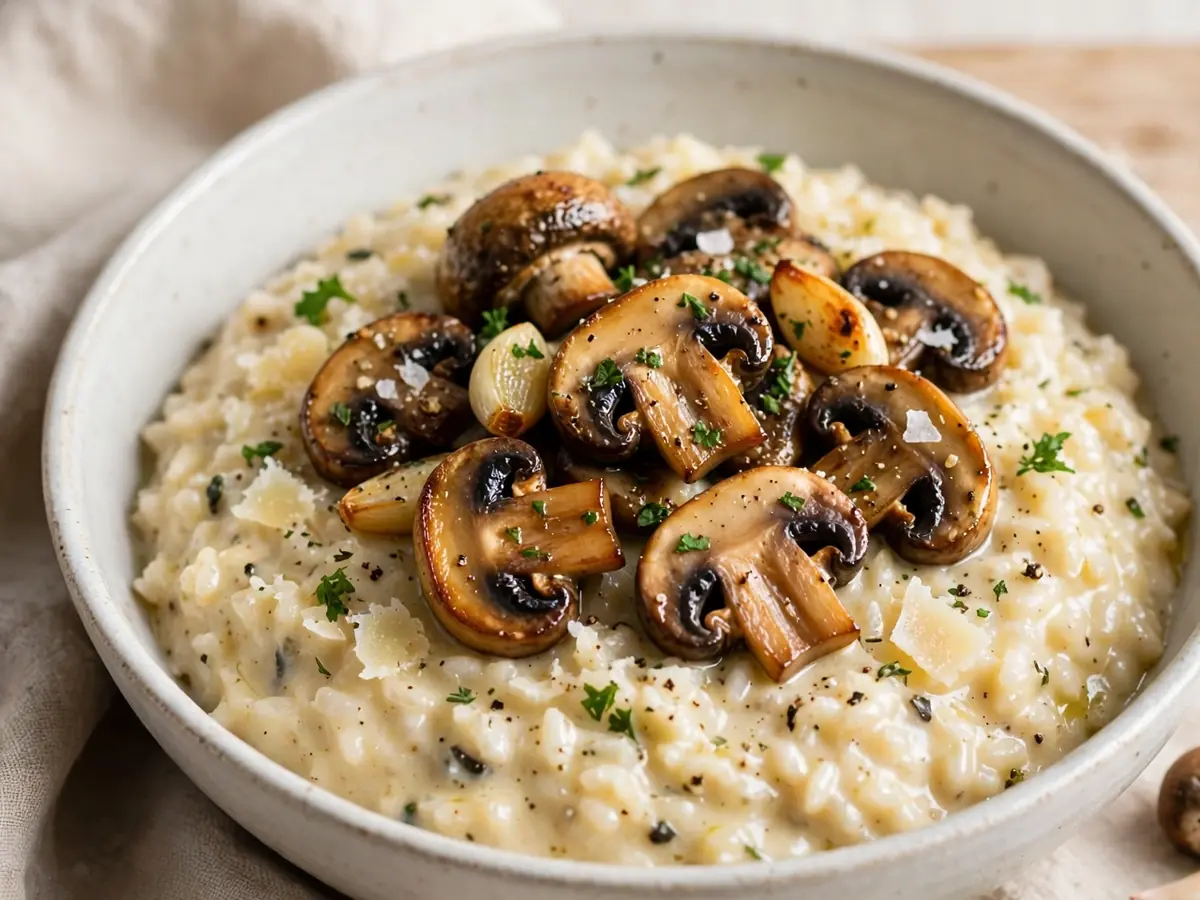
Risotto has a reputation problem. Ask most home cooks why they avoid making it and you’ll hear the same answer: “You have to stand there and stir for half an hour.” That belief keeps a wonderful, adaptable dish off weeknight tables far more often than it should. The truth is that a creamy, garlicky mushroom risotto can be made with only occasional attention — a stir every few minutes rather than a constant, arm-tiring whirl. The result is every bit as silky as the traditional method, with tender grains, deep mushroom flavor, and a sauce that clings to each spoonful.
This article walks through a complete, dependable method for Creamy Garlic Mushroom Risotto Without Constant Stirring, including exact quantities, the equipment that actually matters, a handful of practical substitutions, and clear storage guidance. It also explains why the low-stir approach works, so you can adapt it to your own pot and stove rather than following a script blindly.
Why Constant Stirring Isn’t Strictly Necessary
Traditional risotto instructions call for ladling hot stock into the rice one small addition at a time while stirring continuously. The stirring does two useful things: it rubs the starch off the surface of the rice grains, and it keeps the grains moving so they release that starch into the liquid evenly. That starch is what creates the characteristic creaminess without any actual cream.
What continuous stirring is not doing is cooking the rice. Heat and moisture do that. So if you use a wide, heavy-bottomed pan, keep the liquid hot, and stir firmly but only every two to three minutes, you still agitate the grains enough to release starch while giving yourself time to wipe the counter, set the table, or sauté the mushrooms. A slightly higher ratio of liquid to rice and a lid that is partially on also help maintain an even, gentle simmer, which compensates for the reduced stirring.
The one habit worth keeping from the classic method is the final step: beating in a little cold butter and grated cheese off the heat. That emulsifies the sauce and gives the risotto its glossy, flowing texture. It takes thirty seconds and makes a noticeable difference.
Ingredients
Serves 4 as a main course, or 6 as a side.
- 300 g (about 1½ cups) Arborio or Carnaroli rice
- 400 g (about 14 oz) cremini or button mushrooms, sliced about 5 mm thick
- 3 tablespoons olive oil, divided
- 2 tablespoons unsalted butter, divided (plus 1 extra tablespoon for finishing)
- 1 medium yellow onion, finely diced (about 150 g)
- 4 garlic cloves, minced or finely grated
- 120 ml (½ cup) dry white wine, or dry vermouth, or additional stock
- 1.1–1.2 litres (4½–5 cups) hot vegetable or chicken stock, kept at a bare simmer
- ¾ teaspoon fine sea salt, plus more to taste
- ½ teaspoon freshly ground black pepper
- 1 teaspoon fresh thyme leaves, or ½ teaspoon dried thyme
- 60 g (about ⅔ cup) finely grated Parmesan, plus extra for serving
- 2 tablespoons chopped fresh flat-leaf parsley, for serving (optional)
Notes on quantities: The stock range accounts for differences in pan width and stove strength. Start with 1.1 litres and add the remaining 100 ml only if the rice still looks tight near the end. Have a little extra hot water on hand in case your stock runs out before the rice is tender.
Equipment
- A wide, heavy-bottomed saucepan or Dutch oven, 26–30 cm (10–12 inches) across — width matters more than depth here, because more surface area means more even evaporation with less stirring
- A separate medium saucepan for keeping the stock hot
- A large skillet or frying pan for the mushrooms
- A wooden spoon or sturdy silicone spatula
- A ladle
- A fine grater for the Parmesan and garlic
- A timer
Step-by-Step Instructions
- Prepare your station. Measure the rice into a bowl, dice the onion, mince the garlic, slice the mushrooms, and grate the cheese. Pour the stock into the medium saucepan and set it over low heat so it stays hot but never boils. Total active prep is about 15 minutes, and having everything ready is what makes the low-stir method relaxed rather than frantic.
- Brown the mushrooms. Heat 2 tablespoons of the olive oil in the large skillet over medium-high heat until it shimmers. Add the sliced mushrooms in a single layer and leave them undisturbed for 3 minutes so they take on color. Stir, then continue cooking for another 4–5 minutes until deeply golden and their released moisture has evaporated. Season with a pinch of salt and the thyme, transfer to a plate, and set aside. Resist crowding the pan; work in two batches if your skillet is small.
- Sweat the onion. In the wide saucepan, heat the remaining 1 tablespoon olive oil and 1 tablespoon of the butter over medium heat. Add the onion and ¼ teaspoon of the salt. Cook for 5–6 minutes, stirring occasionally, until soft and translucent but not browned. Add the garlic and cook for 45 seconds, just until fragrant.
- Toast the rice. Add the rice all at once and stir to coat every grain in the fat. Cook for 2 minutes, stirring frequently, until the grains look slightly translucent at the edges with a white dot at the center. This toasting step is what keeps the grains distinct instead of gluey, so don’t skip it.
- Deglaze with wine. Pour in the wine and stir constantly for 1–2 minutes until it has almost entirely absorbed and the sharp alcohol smell has cooked off. If you prefer to skip alcohol, add 120 ml of hot stock instead and proceed.
- Add the first large addition of stock. Ladle in 500 ml (2 cups) of the hot stock, add the remaining ½ teaspoon salt and the black pepper, and stir once. Bring to a gentle simmer, then reduce the heat to medium-low so the surface bubbles lazily rather than vigorously.
- Cook with occasional stirring. Set a timer for 8 minutes. Stir firmly for about 15 seconds every 2–3 minutes, scraping the bottom and corners of the pan where rice tends to catch. Partially cover the pan with a lid, leaving a gap of about 3 cm, between stirs. This traps enough heat for an even simmer without turning the risotto into porridge.
- Add the second addition. After 8 minutes the liquid should be mostly absorbed but the rice still soupy. Add another 400 ml (about 1¾ cups) of hot stock, stir once, and continue cooking for 7 minutes with the same occasional-stir rhythm, keeping the pan partially covered.
- Test and finish the rice. Taste a grain: it should be tender with a faint, pleasant firmness at the core. If it is still chalky, add 100–150 ml more hot stock and cook for 3–4 minutes longer. Total cooking time from the first stock addition is typically 17–20 minutes.
- Fold in the mushrooms and garlic butter flavor. Stir the browned mushrooms back into the pan along with any juices on the plate. Cook for 1 minute so everything is hot and cohesive. If the risotto looks stiff rather than flowing, loosen it with a splash of hot stock — it should spread slowly when you tap the pan.
- Mantecatura (the finishing beat). Remove the pan from the heat. Add the remaining 1 tablespoon cold butter and all of the grated Parmesan. Stir vigorously for 30 seconds until the butter melts and the sauce turns glossy and creamy. Taste and adjust salt and pepper. Serve immediately in warm bowls, scattered with parsley and extra Parmesan.
Tips for the Best Low-Stir Risotto
- Keep the stock genuinely hot. Cold stock drops the pan temperature and stretches the cooking time, which is the fastest route to mushy rice. A bare simmer in a second pot is ideal.
- Choose the right pan. A wide pan with a heavy base is the single biggest factor in success here. Thin pans create hot spots that scorch the rice between stirs.
- Stir with intention, not constantly. Fifteen seconds of firm scraping every few minutes does more for creaminess than a gentle continuous swirl.
- Season the mushrooms separately. Salting them in the pan draws out water and helps browning; adding them at the end keeps their texture intact instead of turning them soft and gray.
- Grate the Parmesan finely. Coarse shreds melt unevenly and can leave the sauce stringy.
- Serve at once. Risotto firms up quickly as it cools. If you must hold it, keep it off the heat with a lid ajar for no more than 10 minutes and loosen with hot stock before serving.
Practical Substitutions
- Rice: Arborio is the most widely available; Carnaroli holds its shape better and is more forgiving of pauses in stirring. Vialone Nano cooks faster and is a good choice if you like a looser texture. Do not substitute long-grain or basmati rice — they will not release enough starch.
- Mushrooms: Shiitake (stems removed), oyster mushrooms, or a mixed wild blend all work. Dried porcini are excellent: soak 20 g in 200 ml hot water for 20 minutes, strain, and use the soaking liquid as part of the stock.
- Stock: Good-quality vegetable stock keeps the dish vegetarian; chicken stock adds richness. If using cubes or concentrate, dilute slightly weaker than the package suggests, since the risotto reduces.
- Wine: Dry vermouth is a fine stand-in. For a no-alcohol version, use extra hot stock plus 1 teaspoon of lemon juice for brightness.
- Butter: Olive oil can replace the cooking butter, but keep at least the finishing tablespoon of butter if possible — it is central to the final texture. For a dairy-free version, use olive oil throughout and a dairy-free grated hard cheese.
- Parmesan: Pecorino Romano gives a sharper, saltier result — reduce the added salt accordingly. Grana Padano is a milder, budget-friendly option.
- Garlic: Roasted garlic mashed into a paste delivers a sweeter, mellower flavor; use 2 roasted cloves in place of the 4 raw ones.
Storage and Reheating
Risotto is at its best straight from the pan, but leftovers keep well when handled properly. Cool the risotto within 1 hour of cooking, transfer it to a shallow airtight container, and refrigerate for up to 3 days. Do not leave it at room temperature for longer than 2 hours.
To reheat, place the risotto in a saucepan over medium-low heat with 2–3 tablespoons of stock or water per serving. Stir gently and cover for 3–4 minutes, breaking up clumps as it warms. The texture will be slightly softer than freshly made, which is normal. Microwaving works in a pinch: cover, heat in 1-minute bursts, and stir between each. Risotto does not freeze well — the grains break down and the sauce separates — so plan portions accordingly.
Leftover risotto also has a delicious second life: spread it about 2 cm thick in an oiled pan, chill until firm, cut into squares, and pan-fry in olive oil until crisp on both sides. These risotto cakes make an excellent side dish or a base for a fried egg.
Frequently Asked Questions
Do I really not need to stir risotto constantly?
Correct. Stirring every 2–3 minutes for about 15 seconds at a time is enough to release the starch that makes risotto creamy, provided you use a wide, heavy-bottomed pan, keep the stock hot, and maintain a gentle simmer with the lid partially on. Continuous stirring speeds up starch release slightly, but it is not required for a good result.
Can I make this creamy garlic mushroom risotto ahead of time?
You can cook it up to the point before the final butter and Parmesan are added, then cool and refrigerate it for up to 24 hours. Reheat gently with a splash of stock, then stir in the cold butter and cheese off the heat just before serving. Fully finished risotto can be refrigerated for up to 3 days and reheated with a little stock, though the texture will be softer.
Why did my risotto turn out gluey or mushy?
The most common causes are too much liquid, too high a heat, or rice that was not toasted properly at the start. Use the lower end of the stock range first, keep the pan at a lazy simmer rather than a rolling boil, and toast the grains in fat for a full 2 minutes before adding liquid. Also check that you are using Arborio, Carnaroli, or Vialone Nano rather than a long-grain rice.
Can I use pre-sliced or frozen mushrooms?
Yes. Pre-sliced fresh mushrooms work directly in the pan, though they release more water, so allow an extra 2–3 minutes for browning. Frozen mushrooms should be thawed and patted dry first, then browned as directed; skipping the drying step will steam them instead of caramelizing them.
How do I make this risotto vegan?
Use vegetable stock, replace the butter with olive oil (including the finishing tablespoon), and finish with a dairy-free grated hard cheese or 2 tablespoons of nutritional yeast plus a small squeeze of lemon. The texture will be slightly less rich but still creamy, thanks to the rice starch and the mushroom juices.
What should I serve with garlic mushroom risotto?
It is substantial enough to serve as a main course with a simple bitter-leaf salad dressed in lemon and olive oil. As a side, it pairs well with roasted chicken, grilled fish, or braised greens. A crisp dry white wine, such as Pinot Grigio or an unoaked Chardonnay, complements the garlic and mushrooms without overpowering them.