Korean Fried Cauliflower Bites Appetizer
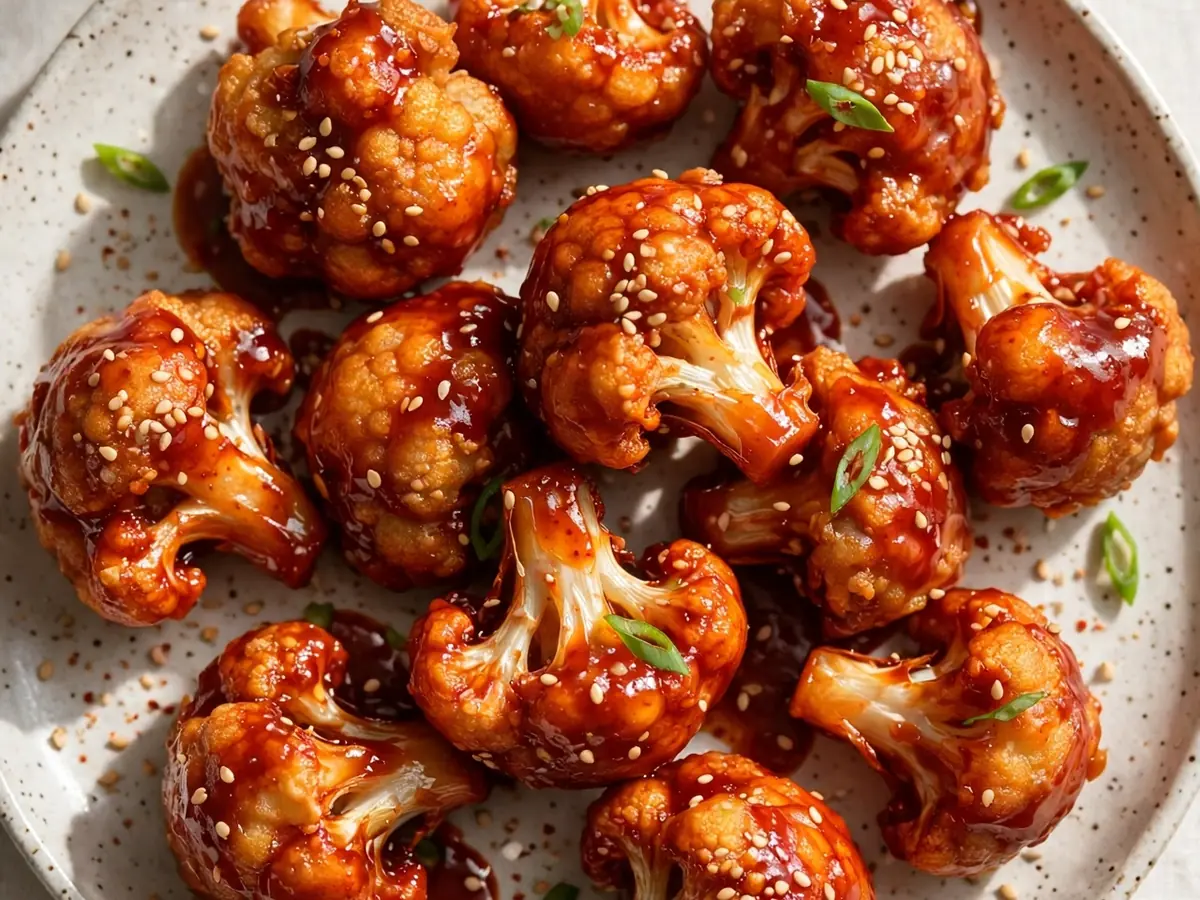
Korean fried chicken has a devoted following for good reason: the double-frying technique produces a shatteringly crisp crust that stays crunchy even after it’s coated in a glossy, sticky sauce. This recipe takes that same approach and applies it to cauliflower, transforming a humble vegetable into a crowd-pleasing appetizer with real texture and bold flavor. The florets are blanched until just tender, dredged in a seasoned cornstarch batter, fried twice for maximum crunch, and then tossed in a sweet-spicy gochujang glaze that clings to every craggy surface.
What makes this version work is the balance of contrasts. The cauliflower stays tender inside without turning to mush, the coating shatters when you bite into it, and the sauce delivers heat, sweetness, and a gentle fermented depth all at once. Sesame seeds and sliced scallions add freshness and visual appeal, and a quick sprinkle of toasted sesame oil at the end ties everything together. Serve these bites as a party appetizer, a game-day snack, or a meatless addition to a rice bowl dinner. They come together in about 45 minutes with pantry-friendly ingredients, and the sauce can be mixed ahead of time for stress-free entertaining.
Why the Double-Fry Method Matters
Frying the cauliflower twice is the single most important step for achieving that signature Korean fried texture. The first fry, at a moderate temperature, cooks the batter through and drives off some of its moisture, setting the crust’s structure. The second fry, at a higher temperature, forces steam out of the coating rapidly, creating tiny bubbles and an ultra-crisp shell. Skipping the second fry yields a coating that softens quickly, especially once the sauce goes on. If you’re short on time, you can fry once and serve immediately, but the texture will be noticeably less durable. The resting period between fries matters too: letting the pieces sit for at least 10 minutes allows residual steam to escape, which keeps the crust from turning soggy from the inside out.
Ingredients
For the cauliflower:
- 1 medium head cauliflower (about 2 pounds / 900 g), cut into 1 1/2-inch florets
- 1 teaspoon fine sea salt, for the blanching water
- 4 cups (960 ml) neutral oil, such as canola or vegetable, for frying (amount depends on pot size; you need about 2 inches of depth)
For the batter:
- 3/4 cup (90 g) cornstarch
- 1/4 cup (30 g) all-purpose flour
- 1/2 teaspoon baking powder
- 1/2 teaspoon garlic powder
- 1/4 teaspoon fine sea salt
- 1/4 teaspoon freshly ground black pepper
- 2/3 cup (160 ml) ice-cold water, plus more as needed
For the gochujang glaze:
- 3 tablespoons gochujang (Korean chili paste)
- 2 tablespoons honey or light brown sugar
- 1 tablespoon soy sauce
- 1 tablespoon rice vinegar
- 1 tablespoon ketchup
- 2 teaspoons toasted sesame oil
- 2 cloves garlic, finely grated or minced
- 1 teaspoon finely grated fresh ginger
For garnish:
- 1 tablespoon toasted sesame seeds
- 2 scallions, thinly sliced on the bias
Yield: Serves 4 as an appetizer
Equipment
- Large pot or Dutch oven (at least 4 quarts) for frying
- Deep-fry thermometer or candy thermometer
- Wire cooling rack set over a rimmed baking sheet
- Large mixing bowls (two)
- Slotted spoon or spider skimmer
- Small saucepan
- Whisk
- Paper towels
Preparation Instructions
- Blanch the cauliflower. Bring a large pot of water to a boil and add 1 teaspoon salt. Add the florets and cook for 3 minutes, until slightly softened but still firm at the core. Drain thoroughly in a colander and spread the florets on a clean kitchen towel or paper towels to dry. Pat the tops dry as well. Let them steam-dry for 10 minutes; surface moisture will make the batter slide off.
- Make the glaze. In a small saucepan, whisk together the gochujang, honey, soy sauce, rice vinegar, ketchup, sesame oil, garlic, and ginger. Warm over low heat for 3 to 4 minutes, stirring, until smooth and slightly thickened. Remove from the heat and set aside. The glaze should be pourable but thick enough to coat the back of a spoon; if it tightens too much as it sits, loosen it with a teaspoon of warm water.
- Heat the frying oil. Pour about 2 inches of neutral oil into a large pot and attach a thermometer. Heat over medium-high heat to 340°F (170°C). Line a wire rack with paper towels and set it nearby.
- Mix the dry batter ingredients. In a large bowl, whisk together the cornstarch, flour, baking powder, garlic powder, salt, and pepper until evenly combined.
- Add the cold water. Pour the ice-cold water into the dry mixture and whisk just until a smooth, thin batter forms, about the consistency of heavy cream. A few small lumps are fine; overmixing will develop gluten and make the coating tough. If the batter thickens while you work, stir in cold water one tablespoon at a time.
- Coat the cauliflower. Working in batches of about 8 to 10 florets, drop them into the batter and turn to coat completely. Lift each piece with a fork or your fingers, letting excess batter drip back into the bowl.
- First fry. Carefully lower the coated florets into the oil, keeping them from crowding; fry in batches of 6 to 8. Cook for 3 to 4 minutes, turning once, until pale golden and crisp. Transfer to the paper towel-lined rack. Repeat with the remaining florets. Let the fried pieces rest for at least 10 minutes before the second fry.
- Second fry. Raise the oil temperature to 375°F (190°C). Return the rested florets to the oil in batches and fry for 1 1/2 to 2 minutes, until deep golden brown and very crisp. Transfer to a clean section of the rack and sprinkle lightly with salt while hot.
- Glaze and garnish. While the final batch is still hot, transfer all the fried florets to a large bowl. Pour the warm glaze over them and toss gently with a spatula until evenly coated. Scatter with sesame seeds and sliced scallions. Serve immediately.
Cook’s Tips for Consistent Results
- Dry the cauliflower thoroughly. Wet florets cause the batter to slip and the oil to spatter. Patting them dry and letting them air-dry for 10 minutes makes a real difference.
- Keep the batter cold. Cold water slows gluten development and helps the coating stay light. Place the batter bowl in a larger bowl of ice water if your kitchen is warm.
- Watch the oil temperature. Adding cold cauliflower drops the oil temperature quickly. Fry in small batches and let the oil return to the target temperature between batches; an instant-read or clip-on thermometer is the most reliable tool here.
- Glaze at the last moment. Toss the florets with sauce only when you’re ready to serve. The coating holds up well, but the crispest texture is always right after glazing.
- Adjust the heat level. Gochujang brands vary in spiciness. Start with 2 tablespoons and taste the warmed glaze before adding the third.
- Don’t skip the salt. Salting the florets immediately after the second fry seasons the crust from the outside, where it counts.
Substitutions and Variations
Cauliflower alternatives: Broccoli florets work well with the same timing, though they may need an extra 30 seconds of blanching. Small cauliflower steaks cut about 1/2 inch thick can be battered and fried, but they require a slightly longer first fry (4 to 5 minutes).
Gluten-free version: Replace the all-purpose flour with an equal weight of rice flour or a gluten-free all-purpose blend, and use tamari instead of soy sauce. The cornstarch base already does most of the crisping work.
Sauce variations: For a soy-garlic glaze, combine 3 tablespoons soy sauce, 2 tablespoons honey, 1 tablespoon rice vinegar, 1 teaspoon grated garlic, and 1 teaspoon toasted sesame oil, then simmer until syrupy. For a milder crowd, swap half the gochujang for mild miso paste. A squeeze of lime juice in the finished glaze adds brightness.
Oven alternative: If you prefer not to deep-fry, arrange battered florets on a well-oiled wire rack over a baking sheet and roast at 450°F (230°C) for 20 to 25 minutes, flipping once, until crisp and browned. The texture will be closer to roasted than fried, but the flavor still works well with the glaze.
Air fryer option: Cook battered florets in a single layer at 400°F (200°C) for 12 to 14 minutes, shaking the basket halfway, then glaze immediately. Spray the basket generously with oil to prevent sticking.
Make-Ahead and Storage Guidance
The glaze can be made up to 5 days ahead and stored in a covered container in the refrigerator; reheat gently over low heat, adding a splash of water if it has thickened. The dry batter mix can be combined up to 1 month ahead and kept in an airtight jar; add the cold water only when you’re ready to fry.
Fried, unglazed cauliflower keeps best. After the second fry, cool the florets completely on the rack, then refrigerate in an airtight container for up to 2 days. To reheat, spread them on a baking sheet and bake at 400°F (200°C) for 6 to 8 minutes, until crisp again, then toss with warmed glaze. Microwaving is not recommended, as it steams the coating and turns it chewy. Glazed leftovers will soften within a few hours and are best eaten the same day; if you must store them, refrigerate for up to 1 day and reheat in a hot oven rather than a microwave. Do not freeze the battered or fried florets, as the coating becomes soggy and loses its structure upon thawing.
Serving Suggestions
These bites shine on an appetizer platter alongside pickled daikon radish, cucumber spears, and a bowl of extra glaze for dipping. For a fuller meal, serve them over steamed jasmine rice with quick-pickled vegetables and a drizzle of the glaze. They also work as a topping for rice bowls or as a meatless filling for lettuce wraps. Keep a stack of napkins nearby; the glaze is sticky in the best way.
Frequently Asked Questions
Can I make Korean fried cauliflower bites ahead of time?
Yes, with a caveat. Fry the florets through the second fry, cool them completely on a wire rack, and refrigerate in an airtight container for up to 2 days. Reheat on a baking sheet at 400°F (200°C) for 6 to 8 minutes until crisp, then toss with warmed glaze just before serving. Glazed bites are best eaten immediately, since the sauce gradually softens the coating.
Why did my batter slide off the cauliflower?
Surface moisture is the usual culprit. After blanching, drain the florets well and spread them on a towel to air-dry for at least 10 minutes before coating. Also make sure the batter is thin enough to cling but not watery; it should coat the back of a spoon lightly. Finally, keep the oil at the correct temperature, since cold oil prevents the batter from setting quickly around the florets.
How spicy is the gochujang glaze?
Gochujang is a fermented chili paste with moderate, rounded heat rather than a sharp burn. The honey, ketchup, and rice vinegar balance it considerably, so the finished glaze lands at a medium heat level. Brands differ, so taste the warmed glaze before tossing and adjust: use 2 tablespoons gochujang for a milder result or up to 4 tablespoons for a hotter one. A spoonful of miso or extra honey can mellow it further.
Can I use frozen cauliflower for this recipe?
Fresh cauliflower is strongly preferred because frozen florets release a lot of water, which makes the batter slide and the coating soggy. If you only have frozen, thaw it completely, squeeze the florets gently in a clean towel to remove excess moisture, and skip the blanching step. Pat dry again before battering, and expect a slightly softer texture.
What can I do with leftover frying oil?
Let the oil cool completely, then strain it through a fine-mesh sieve or cheesecloth into a clean container. Used oil can be reused two or three times for similar frying tasks if it hasn’t darkened or developed an off smell. Store it in a sealed container away from light, and discard it once it becomes dark, foamy, or smells stale. Never pour oil down the sink.
Can this recipe be made gluten-free?
Yes. Swap the all-purpose flour for rice flour or a gluten-free blend in the same amount, and use tamari or a gluten-free soy sauce in the glaze. Check that your gochujang is gluten-free, as some brands include wheat. The cornstarch base still delivers a crisp coating, and the double-fry method works exactly the same way.