Sheet Pan Shrimp Boil for a Crowd
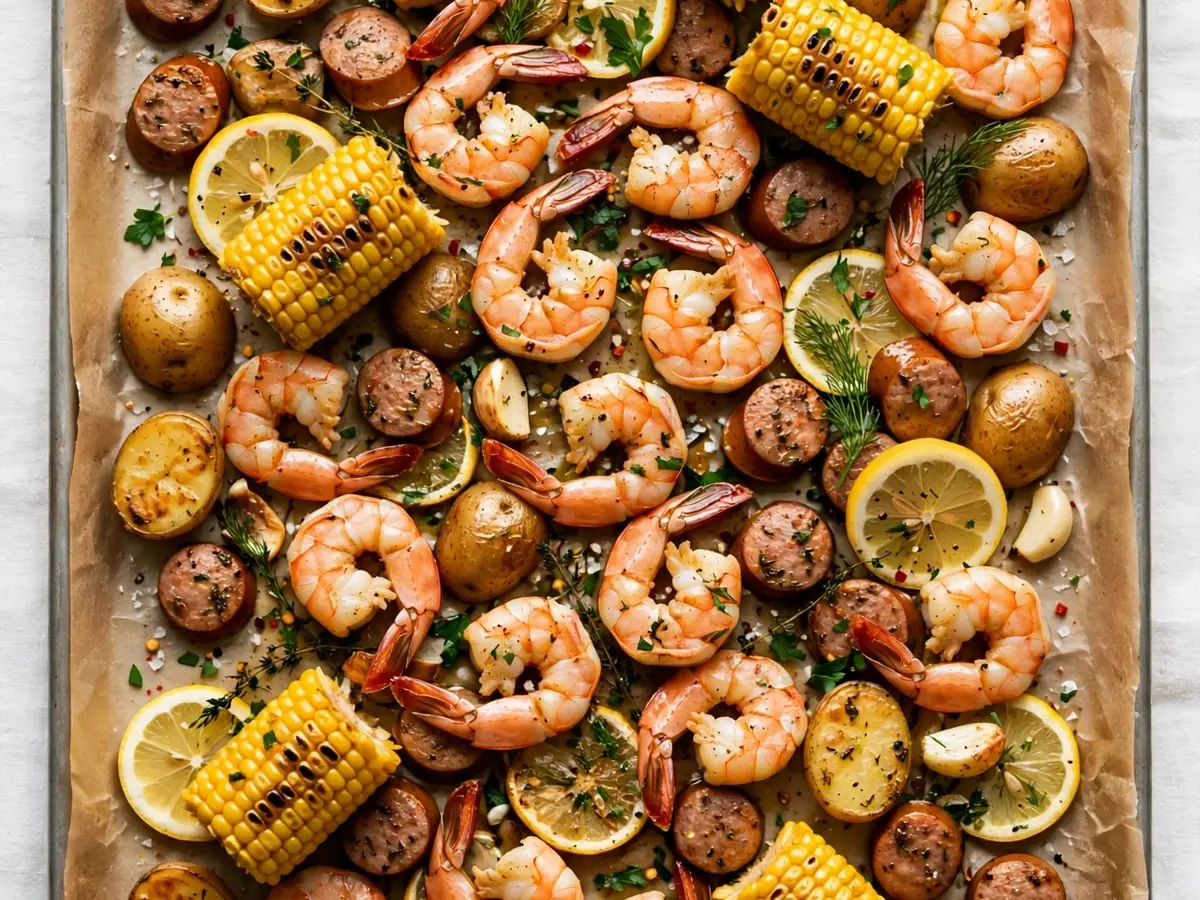
A shrimp boil is one of the most joyful ways to feed a group: piles of juicy shrimp, tender potatoes, sweet corn, and smoky sausage, all seasoned with Old Bay and finished with melted butter. The traditional method involves a giant pot of boiling water, a lot of lifting, and a table covered in newspaper. It’s wonderful — but it’s also heavy, steamy work, and it ties you to the stove right up until serving time.
This sheet pan version keeps everything that makes a shrimp boil fun while making it far more practical for a crowd. Instead of boiling, you roast the potatoes, corn, and sausage on large sheet pans until caramelized and deeply flavored, then add the shrimp for the final few minutes so they stay plump and tender. The result is a dinner you can scale to feed 10 to 12 people, with two pans doing the work of a stockpot — and clean-up that fits in a dishwasher.
Below you’ll find a complete, tested-style formula for a sheet pan shrimp boil for a crowd, including exact quantities, equipment, step-by-step instructions, make-ahead notes, substitutions, and storage guidance. It’s designed for a party, a family gathering, or a casual weekend dinner where everyone eats with their hands and reaches across the table.
Why This Method Works for a Crowd
Boiling a shrimp boil for a dozen people requires an enormous pot, a powerful burner, and a way to drain 15 pounds of food without burning yourself. Roasting solves all three problems at once:
- Better browning and flavor. Potatoes and corn that roast in seasoned butter and sausage drippings develop caramelized edges that boiled versions never get.
- Perfect shrimp every time. Shrimp added in the last 6 to 8 minutes of roasting cook gently and stay juicy instead of turning rubbery.
- Scalable. Two half-sheet pans feed 10 to 12 people comfortably; add a third pan for a bigger group.
- Hands-off. The oven does the work while you set the table, mix drinks, or melt the finishing butter.
If you enjoy the ease of oven-based dinners, you might also like our sheet pan sausage recipe for another low-effort, high-reward meal, and our blog has more crowd-friendly ideas.
Ingredients (Serves 10 to 12)
Use two large half-sheet pans (18 by 13 inches) for this quantity. If your pans are smaller, divide the ingredients across three pans so everything sits in a single layer.
For the Seasoned Butter
- 1 cup (2 sticks / 226 g) unsalted butter, melted
- 3 tablespoons Old Bay seasoning (or a seafood boil blend)
- 1 tablespoon smoked paprika
- 1 tablespoon garlic powder
- 2 teaspoons onion powder
- 1 teaspoon cayenne pepper (adjust to taste)
- 1 teaspoon kosher salt
- 1 teaspoon freshly ground black pepper
- 2 tablespoons fresh lemon juice (about 1 lemon)
For the Pans
- 3 pounds (1.36 kg) baby red or Yukon Gold potatoes, halved if larger than 1½ inches
- 4 ears of corn, husked and cut crosswise into 2-inch rounds (or 6 ears if you love corn)
- 2 pounds (907 g) smoked sausage (andouille, kielbasa, or smoked turkey sausage), cut into 1-inch coins
- 2½ pounds (1.13 kg) large shrimp (21–25 count per pound), peeled and deveined, tails left on
- 2 lemons, cut into wedges, for serving
- ¼ cup chopped fresh parsley, for garnish
- Extra melted butter and Old Bay, for serving
Equipment
- 2 large half-sheet pans (18 by 13 inches) or 3 smaller rimmed baking sheets
- Parchment paper or aluminum foil (optional, for easier cleanup)
- 1 large mixing bowl
- 1 small saucepan or microwave-safe bowl for melting butter
- Pastry brush or large spoon for tossing
- Instant-read thermometer (recommended for checking sausage and shrimp)
- Large serving platter or a clean, paper-covered table for serving
Step-by-Step Instructions
- Preheat and prepare. Preheat the oven to 425°F (220°C). Line both half-sheet pans with parchment paper or foil for easier cleanup. If using foil, lightly grease it.
- Make the seasoned butter. In a small saucepan over low heat, or in a microwave-safe bowl in 20-second bursts, melt the butter. Whisk in the Old Bay, smoked paprika, garlic powder, onion powder, cayenne, salt, pepper, and lemon juice until smooth.
- Par-cook the potatoes. Place the halved potatoes in a large microwave-safe bowl, add 2 tablespoons water, cover, and microwave on high for 5 to 6 minutes, until just fork-tender at the edges. Alternatively, boil them in salted water for 8 to 10 minutes and drain well. This step ensures the potatoes finish roasting at the same time as the corn and sausage.
- Dress the first layer. Divide the potatoes, corn rounds, and sausage coins evenly between the two prepared pans. Drizzle about two-thirds of the seasoned butter over the pans and toss with a large spoon or your hands (careful — the butter is warm) until everything is evenly coated.
- Roast the base. Roast for 20 minutes, then remove the pans and stir the contents, turning the sausage and corn so they brown evenly. Return to the oven and roast another 10 to 12 minutes, until the potatoes are golden at the edges and the sausage is lightly browned, about 32 to 35 minutes total.
- Pat the shrimp dry. While the pans roast, pat the shrimp very dry with paper towels. Dry shrimp are the secret to seasoning that sticks and shrimp that sear rather than steam. Toss the shrimp in the bowl with the remaining seasoned butter.
- Add the shrimp. Remove the pans from the oven and nestle the shrimp among the potatoes, corn, and sausage in a single layer, dividing evenly. Spread everything into an even layer again.
- Finish roasting. Return the pans to the oven and roast for 6 to 8 minutes, until the shrimp are opaque and pink and curl into a loose C shape. An instant-read thermometer inserted into the thickest part of a shrimp should read 145°F (63°C). Avoid overcooking; shrimp go from perfect to rubbery quickly.
- Rest and serve. Let the pans rest for 3 to 5 minutes. Scatter chopped parsley over the top, squeeze fresh lemon wedges over everything, and serve directly from the pans or transfer to a large platter or paper-covered table. Pass extra melted butter and Old Bay at the table.
Total time: about 55 to 60 minutes, including prep. Active time: about 20 minutes.
Tips for the Best Sheet Pan Shrimp Boil
- Dry the shrimp thoroughly. Moisture is the enemy of browning. Pat shrimp dry right before tossing them in butter.
- Don’t crowd the pans. Everything should sit in a mostly single layer. Crowding steams the food instead of roasting it. Use a third pan if needed.
- Par-cook the potatoes. Raw potato halves take 45 minutes or more to roast through; the microwave or a quick boil gets them to the finish line with everything else.
- Cut corn into rounds, not whole ears. Rounds expose more surface area to the seasoned butter and cook faster.
- Season in layers. Toss the base vegetables and sausage in butter before roasting, then toss the shrimp separately. This gives every component direct contact with seasoning.
- Watch the shrimp closely. Six minutes is often enough for large shrimp at 425°F. Check at 6 minutes and add time only if needed.
- Keep it warm for serving. If you’re serving buffet-style, set the pans on trivets or warming trays and serve within 20 minutes for the best texture.
Practical Substitutions
- Sausage: Andouille gives the most authentic flavor; kielbasa is milder and widely available; smoked turkey sausage works well for a lighter option. Chorizo is a flavorful swap if you like spice.
- Shrimp: Use jumbo (16–20 count) shrimp and add 1 to 2 minutes to the cooking time, or medium (31–35 count) shrimp and check at 4 to 5 minutes. Frozen shrimp work well — thaw overnight in the refrigerator and pat very dry.
- Potatoes: Baby gold or red potatoes are ideal. Fingerlings work beautifully; larger potatoes should be cut into 1½-inch chunks.
- Corn: Frozen corn on the cob (thawed) can substitute for fresh. Canned or frozen kernels can be scattered over the pans during the last 10 minutes of roasting, though the texture will differ.
- Butter: For a dairy-free version, use a good-quality plant-based butter or olive oil, though the flavor will be less rich.
- Seasoning: If you don’t have Old Bay, combine 1 tablespoon celery salt, 1 teaspoon paprika, ½ teaspoon ground bay leaf, ½ teaspoon black pepper, ¼ teaspoon dry mustard, and a pinch of ground cloves and allspice.
- Add-ins: Halved Brussels sprouts, thick slices of bell pepper, or chunks of onion can be added with the potatoes; add 5 to 10 minutes to the initial roast if using denser vegetables.
Make-Ahead and Storage Guidance
Make-Ahead
- Up to 1 day ahead: Mix the seasoned butter, cover, and refrigerate. Cut the sausage and corn, and store separately in airtight containers in the refrigerator.
- Up to 2 hours ahead: Par-cook the potatoes and let them cool at room temperature.
- Not recommended: Don’t assemble the full pans with butter more than 1 hour ahead; the butter solidifies and the potatoes can become watery.
Storage
- Cool leftovers within 2 hours and refrigerate in airtight containers for up to 3 days.
- Store shrimp separately from the vegetables if possible, since shrimp reheat faster and can dry out.
- Reheat gently: spread leftovers on a sheet pan, cover loosely with foil, and warm at 350°F (175°C) for 8 to 10 minutes, or until just heated through. Avoid the microwave for shrimp, which can toughen them.
- Leftovers are excellent chopped into a cold potato-and-shrimp salad, folded into pasta, or piled into rolls with extra butter.
Frequently Asked Questions
Sheet Pan Shrimp Boil FAQ
Can I make this sheet pan shrimp boil for a bigger crowd than 12?
Yes. The recipe scales easily. For 18 to 20 people, use three half-sheet pans and multiply the ingredients by 1.5. Roast in batches if your oven can’t hold three pans at once with good air circulation — two pans on the upper-middle and lower-middle racks work best, rotating them halfway through. Keep the finished pans warm in a 200°F (95°C) oven while the last batch roasts, and add the shrimp to each pan only in its final 6 to 8 minutes so nothing overcooks.
Can I use frozen shrimp without thawing them first?
It’s not ideal. Frozen shrimp release a lot of water as they cook, which steams the rest of the pan and dilutes the seasoned butter. If you’re short on time, thaw shrimp quickly by placing them in a colander under cold running water for 8 to 10 minutes, then pat them very dry. Fully thawed and dried shrimp give the best texture and flavor.
Why did my potatoes turn out undercooked?
Potatoes are the densest ingredient on the pan and need either a head start or a par-cook. The recipe calls for microwaving or boiling them for 5 to 10 minutes before roasting, which solves the problem. Also make sure the potato pieces are no larger than 1½ inches and are spread in a single layer — piled-up potatoes roast unevenly and stay firm in the center.
What can I serve alongside a sheet pan shrimp boil?
The pans are already a complete meal, but good additions include warm crusty bread or cornbread for soaking up the butter, a simple green salad with lemon vinaigrette, coleslaw, or a bowl of cocktail sauce for dipping. For drinks, cold beer, lemonade, or a pitcher of iced tea fit the casual, hands-on style of the meal.
How do I keep the shrimp from becoming rubbery?
Two things matter most: timing and temperature. Add shrimp only for the final 6 to 8 minutes of roasting, and pull the pans as soon as the shrimp are opaque and loosely curled into a C shape. A tight O shape means they’re overcooked. An instant-read thermometer reading 145°F (63°C) in the thickest part confirms they’re done. Residual heat will continue cooking them as the pans rest, so err on the side of slightly underdone.
Can I prepare this recipe dairy-free?
Yes. Replace the butter with a high-quality olive oil or a plant-based butter alternative, using about ¾ cup of oil in place of the 1 cup of butter. The flavor will be slightly less rich, but the seasoning blend and lemon juice still deliver the classic shrimp boil taste. Toss the shrimp in a little of the oil mixture before roasting to help the seasoning adhere.