Single-Serve Mug Cinnamon Roll
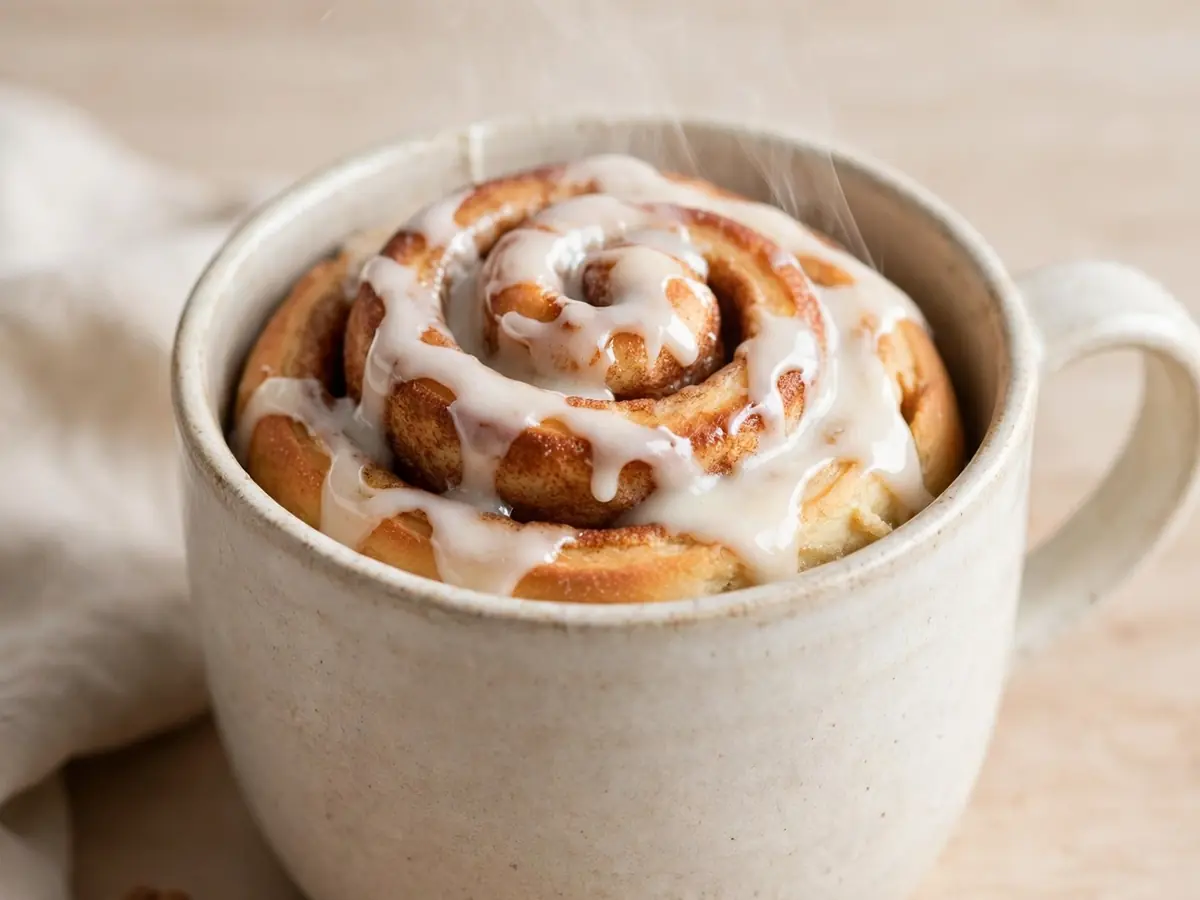
There are evenings when nothing sounds better than a warm, gooey cinnamon roll — but making a whole pan of them for one person is a commitment of time, yeast, and willpower. That’s exactly where the single-serve mug cinnamon roll comes in. It delivers the soft, swirled, cinnamon-sugar comfort of a bakery roll in a portion that fits in a mug, bakes in about a minute, and comes together with pantry ingredients in under ten minutes from start to finish. No yeast, no rising, no leftovers calling your name from the counter.
This article walks through a tested, precisely measured recipe for a single-serve mug cinnamon roll, including the dough, the filling, and a simple cream cheese-style icing that melts into every swirl. You’ll also find practical substitutions, storage guidance, troubleshooting tips, and a set of frequently asked questions so you can adapt the recipe to what’s in your kitchen. Whether you’re craving a quick dessert, a lazy weekend breakfast, or a small-batch treat that doesn’t require a stand mixer, this mug roll is designed to be forgiving and repeatable.
What Is a Single-Serve Mug Cinnamon Roll?
A single-serve mug cinnamon roll is a miniature cinnamon roll made in a mug and cooked in the microwave rather than baked in an oven. Instead of a yeast dough that needs to proof, it uses a simple, soft dough leavened with baking powder. The dough is rolled out briefly on a piece of parchment or a lightly floured counter, spread with a cinnamon-sugar butter filling, rolled into a log, cut into a short spiral, and placed in a mug. In the microwave, the dough steams and puffs around the filling, producing a tender, slightly chewy roll with a gooey center.
The result is not identical to a yeasted bakery cinnamon roll — it’s denser and more like a soft biscuit-cinnamon hybrid — but it captures the same flavors and the same warm, sticky satisfaction. The format is deliberately small: one mug, one serving, one roll. It’s ideal for people cooking for one, for small kitchens without ovens, for dorm rooms, and for anyone who wants dessert without a pan of temptation.
Why This Recipe Works
Three details make the difference between a mug cinnamon roll that’s pleasant and one that’s genuinely good. First, the dough is intentionally soft but not sticky; a dough that’s too wet turns gummy in the microwave, while a dough that’s too dry cracks when rolled. Second, the filling uses softened butter mixed with cinnamon and brown sugar so it spreads evenly instead of clumping. Third, the cooking time is short and controlled — usually 60 to 90 seconds depending on the microwave — because overcooking is the most common cause of a rubbery roll. The icing goes on immediately after cooking so it melts into the hot surface.
Ingredients
For the dough:
- 4 tablespoons (30 g) all-purpose flour, plus 1 to 2 teaspoons extra for dusting
- 1 tablespoon (12 g) granulated sugar
- 1/4 teaspoon baking powder
- Pinch of salt (about 1/16 teaspoon)
- 2 tablespoons (30 ml) whole milk, cold or room temperature
- 1 tablespoon (14 g) unsalted butter, melted and slightly cooled
- 1/8 teaspoon vanilla extract (optional)
For the cinnamon filling:
- 1 tablespoon (14 g) unsalted butter, softened at room temperature
- 1 tablespoon (12 g) packed light brown sugar
- 1/2 teaspoon ground cinnamon
- Pinch of salt
For the icing:
- 1 tablespoon (14 g) cream cheese, softened
- 1 tablespoon (8 g) powdered sugar
- 1 to 2 teaspoons (5 to 10 ml) milk, to thin
- 1/8 teaspoon vanilla extract
Yield: 1 serving (1 mug cinnamon roll). Prep time: 8 minutes. Cook time: 60 to 90 seconds. Total time: about 10 minutes.
Equipment
- One microwave-safe mug with at least 10 ounces (300 ml) capacity and straight sides
- Small mixing bowl
- Fork or small spatula
- Measuring spoons and a small kitchen scale (optional but helpful for accuracy)
- Piece of parchment paper or a lightly floured work surface
- Rolling pin or a clean, straight-sided drinking glass
- Small bowl for the icing
Step-by-Step Instructions
- Make the filling first. In a small bowl, mash the softened butter with the brown sugar, cinnamon, and pinch of salt until it forms a smooth, spreadable paste. Set aside. Mixing this first gives the sugar a moment to dissolve slightly, which prevents a gritty filling.
- Mix the dry ingredients. In a small bowl, whisk together the flour, granulated sugar, baking powder, and salt until evenly combined.
- Add the wet ingredients. Pour in the milk, melted butter, and vanilla if using. Stir with a fork just until a soft dough forms. It should pull away from the sides of the bowl and feel like soft cookie dough — not sticky, not crumbly. If it’s sticky, add flour 1/2 teaspoon at a time. If it’s dry, add milk 1/2 teaspoon at a time.
- Roll out the dough. Lightly dust a piece of parchment paper or your counter with flour. Place the dough on top and press or roll it into a rectangle roughly 5 by 3 inches (13 by 8 cm) and about 1/8 inch (3 mm) thick. Keep the edges as even as you can.
- Spread the filling. Dollop the cinnamon filling across the dough and spread it evenly with the back of a spoon, leaving a 1/4-inch border on the long sides so it doesn’t squeeze out when rolling.
- Roll it up. Starting from one short end, roll the dough into a tight log. Pinch the seam gently to seal it. If any filling escapes, tuck it back in.
- Shape for the mug. Cut the log crosswise into 2 pieces, or leave it whole if your mug is wide enough. Coil the log (or stack the two pieces) into the mug, spiral side up. Gently press down so the roll sits in an even layer. The dough will expand as it cooks, so leave at least 1/2 inch of headroom.
- Microwave. Cook on high power for 60 seconds. Check the roll: it should look puffed and set on top, with no wet dough visible. If the center still looks raw, microwave in 10-second increments, up to 30 seconds more. Do not exceed 90 seconds total for most microwaves — the roll continues cooking as it rests.
- Rest and ice. Let the mug sit for 1 minute. While it rests, stir together the cream cheese, powdered sugar, milk, and vanilla until smooth and pourable. Drizzle the icing over the warm roll, letting it seep into the spiral.
- Serve. Eat immediately with a spoon, ideally while the icing is still melting. The roll is best within a few minutes of cooking.
Tips for the Best Mug Cinnamon Roll
- Weigh your flour if you can. Four tablespoons of flour can vary widely by scooping method. Thirty grams is the target; too much flour makes a tough roll.
- Use a wide mug. A mug with straight sides and at least 10 ounces of capacity gives the roll room to puff. Narrow mugs force the dough upward into a dense column.
- Don’t overmix. Stir the dough just until it comes together. Overworking develops gluten and makes the microwave roll chewy rather than tender.
- Watch the first cook closely. Microwaves vary in wattage. Start at 60 seconds, then add 10-second bursts. A roll that looks slightly underdone at the center is better than one that’s overcooked, because residual heat finishes the job during the rest.
- Ice while hot. The icing is meant to melt. If you let the roll cool first, the icing sits on top instead of soaking in.
- Keep the filling soft. If your butter is cold, the filling will tear the dough. Let it soften at room temperature for 15 to 20 minutes, or microwave it for 5 seconds.
Practical Substitutions
Flour: All-purpose flour is the standard. For a slightly more tender crumb, swap 1 tablespoon of the all-purpose flour for 1 tablespoon of cake flour. Whole wheat pastry flour can replace up to half the all-purpose flour, though the roll will be a bit denser. Gluten-free all-purpose blends work in a 1:1 ratio, but choose a blend that contains xanthan gum and expect a slightly softer dough.
Milk: Whole milk gives the richest result, but 2%, oat milk, soy milk, and almond milk all work. If using a thin plant milk, start with 1 tablespoon plus 2 teaspoons and add more only if needed.
Butter: Salted butter can replace unsalted butter; reduce the added salt in the dough to a tiny pinch. For a dairy-free version, use a plant-based butter stick rather than a tub spread, which contains more water.
Sugar: Light brown sugar in the filling can be replaced with dark brown sugar for a deeper molasses note, or with granulated sugar plus 1/4 teaspoon molasses. Powdered sugar in the icing can be made by blending granulated sugar until fine, though it will be slightly less smooth.
Cream cheese icing: If you don’t have cream cheese, make a simple vanilla glaze with 2 tablespoons powdered sugar, 1 teaspoon milk, and a drop of vanilla. A spoonful of Greek yogurt mixed with powdered sugar also makes a tangy, creamy alternative.
Add-ins: A tablespoon of finely chopped pecans or raisins can be sprinkled over the filling before rolling. A pinch of nutmeg or cardamom in the filling adds warmth. A few mini chocolate chips scattered into the spiral make a cinnamon-chocolate hybrid.
Storage and Reheating Guidance
A single-serve mug cinnamon roll is at its best immediately after cooking, but if you need to store it, follow these guidelines. Let the cooked roll cool completely in the mug, then cover the mug tightly with plastic wrap or transfer the roll to an airtight container. Store at room temperature for up to 1 day, or in the refrigerator for up to 2 days. Keep the icing separate if possible; if it’s already on the roll, it will firm up in the fridge.
To reheat, sprinkle the roll with 1 teaspoon of water, cover loosely with a damp paper towel, and microwave in 15-second bursts until warm, usually 20 to 30 seconds total. The water prevents the dough from drying out. Do not reheat for more than 45 seconds, or the roll will toughen. The unbaked dough can be assembled in the mug, covered, and refrigerated for up to 12 hours before cooking; add 10 to 15 seconds to the cook time if starting from cold. The filling and icing can each be made a day ahead and stored covered in the refrigerator; bring the filling to room temperature before spreading.
For more small-batch dessert inspiration and kitchen-friendly recipes, browse the Kira Recipes blog. If you enjoy indulgent treats, you might also like these cream filled donuts for a weekend project, or this savory meatloaf with Stove Top stuffing for a cozy dinner.
Frequently Asked Questions
Can I make this single-serve mug cinnamon roll in a regular oven instead of a microwave?
Yes. Assemble the roll in an oven-safe ramekin or small mug and bake at 350°F (175°C) for 12 to 15 minutes, until the top is set and a toothpick inserted into the center comes out with moist crumbs. Oven baking produces a slightly drier, more bread-like texture than microwaving, so brush the top with a little melted butter before baking and ice it while hot. Check at 12 minutes to avoid overbaking.
Why did my mug cinnamon roll turn out rubbery or tough?
Rubbery results usually come from one of three causes: overmixing the dough, using too much flour, or overcooking. Stir the dough only until it comes together, measure flour by weight (30 grams) or spoon it lightly into the measuring spoon, and microwave in 60-second increments with 10-second additions rather than cooking for a full 90 seconds at once. Letting the roll rest for a minute after cooking also helps the texture settle.
Can I double or triple this recipe to make more than one mug roll?
You can, but make each roll in its own mug and cook them one at a time. Microwaves heat unevenly when loaded with multiple mugs, so a batch cooked together often leaves one roll underdone and another overcooked. Mix and assemble each roll separately, or scale the dough and filling and portion them into individual mugs before cooking. The recipe multiplies cleanly by two or three.
Is there a way to make this recipe vegan or dairy-free?
Yes. Use a plant-based milk such as oat or soy, a plant-based butter stick in both the dough and filling, and a dairy-free cream cheese for the icing. Choose a butter that lists oil rather than water as the first ingredient, since high-water spreads can make the dough sticky. The cooking time stays the same, but check the roll at 55 seconds because dairy-free doughs can vary in moisture.
Can I prepare the mug cinnamon roll ahead of time and cook it later?
You can assemble the unbaked roll in the mug, cover it tightly, and refrigerate it for up to 12 hours. When you’re ready to cook, microwave it straight from the fridge and add 10 to 15 seconds to the cook time. The filling and icing can also be made a day ahead and stored separately in the refrigerator; let the filling soften at room temperature before spreading so it doesn’t tear the dough.
What size mug works best, and does the mug material matter?
Choose a microwave-safe mug with at least 10 ounces (300 ml) of capacity and relatively straight sides. Ceramic mugs heat evenly and are the most reliable choice. Avoid mugs with metallic paint, gold rims, or cracks, and avoid thin glass mugs that can become very hot. Leave at least 1/2 inch of headroom so the dough has room to expand without spilling over.