Lemon Blueberry Loaf Cake for Afternoon Tea
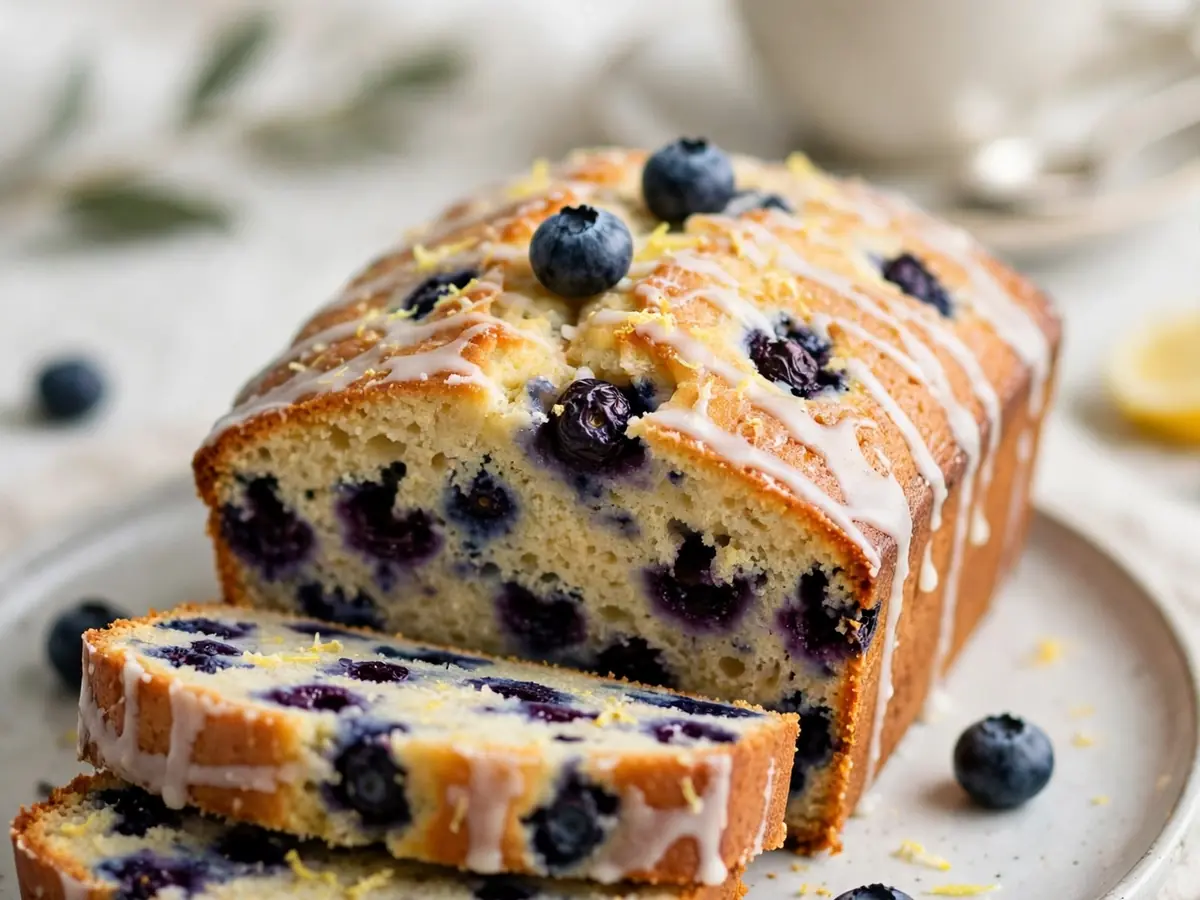
Afternoon tea deserves a cake that looks as inviting as it tastes, and a lemon blueberry loaf cake fits that role beautifully. It is a tender, buttery loaf scented with fresh lemon zest, studded with juicy blueberries, and finished with a simple lemon glaze that crackles faintly when you slice it. Unlike a delicate layer cake that demands fussing, a loaf cake is sturdy enough to bake ahead, wrap well, and carry to a table without losing its charm. It slices cleanly, keeps for days, and pairs equally well with a strong cup of tea or a small espresso.
This article walks through a complete, tested-style recipe with precise quantities, clear equipment notes, numbered instructions, and practical guidance on substitutions and storage. The goal is a loaf that bakes evenly, does not sink in the middle, and has enough lemon presence to feel bright without becoming sour. Blueberries are folded in gently so they stay suspended in the crumb rather than dropping to the bottom, and the glaze is thin enough to soak in slightly rather than sit on top like icing. Whether you are baking for a weekend tea or a quiet weekday treat, this loaf is designed to be forgiving and repeatable.
Why This Loaf Works for Afternoon Tea
Afternoon tea is less about formality and more about a small, satisfying pause. A loaf cake suits that mood because it can be sliced thin for a light tea or thicker for a hungrier crowd. The flavor profile here is deliberately balanced: the lemon zest provides aromatic lift, the blueberries provide moisture and sweetness, and the butter and yogurt keep the crumb tender without making it heavy. A loaf is also easy to transport and serve from a plate or board, which makes it practical for gatherings.
The method is built around a few small details that matter. Blueberries are tossed lightly in flour so they grip the batter instead of sinking. The zest is rubbed into the sugar before creaming, which releases more citrus oil than simply stirring zest into the batter. The loaf is baked at a moderate temperature so the center sets before the crust overbrowns, and a short rest in the pan keeps the crumb from crumbling when turned out. None of these steps are difficult, but together they produce a loaf with a level top, a moist interior, and a clean slice.
Ingredients
Use a standard 9-by-5-inch loaf pan for the quantities below. This makes one loaf, serving 8 to 10 people depending on slice thickness.
For the loaf:
- 180 g (1 1/2 cups) all-purpose flour, plus 1 tablespoon for tossing the blueberries
- 1 1/2 teaspoons baking powder
- 1/2 teaspoon fine salt
- 150 g (3/4 cup) granulated sugar
- Zest of 2 medium lemons (about 2 packed teaspoons)
- 115 g (1/2 cup) unsalted butter, softened at room temperature
- 2 large eggs, at room temperature
- 1 teaspoon vanilla extract
- 120 g (1/2 cup) plain full-fat yogurt or sour cream, at room temperature
- 2 tablespoons fresh lemon juice (about 1 medium lemon)
- 150 g (1 cup) fresh blueberries, rinsed and thoroughly dried
For the lemon glaze:
- 90 g (3/4 cup) powdered sugar, sifted
- 1 to 2 tablespoons fresh lemon juice
- Pinch of fine salt
Equipment
- 9-by-5-inch (23-by-13 cm) loaf pan
- Parchment paper or baking spray with flour
- Digital kitchen scale or measuring cups and spoons
- Microplane or fine zester
- Stand mixer with paddle attachment, or a large bowl and hand mixer
- Two medium bowls and one small bowl
- Whisk and silicone spatula
- Wire cooling rack
- Small bowl and spoon for the glaze
- Toothpick or thin skewer for testing
Preparation Instructions
- Preheat and prepare the pan. Preheat the oven to 350°F (175°C) with a rack in the lower-middle position. Line the loaf pan with a sheet of parchment that overhangs the long sides, or coat the pan evenly with baking spray that contains flour. If using parchment, lightly grease the two short ends so the loaf releases cleanly.
- Combine the dry ingredients. In a medium bowl, whisk together 180 g all-purpose flour, the baking powder, and the salt until evenly distributed. Set aside.
- Release the lemon oils. In a small bowl or on a cutting board, rub the lemon zest into the granulated sugar with your fingertips for about 30 seconds, until the sugar is fragrant, damp-looking, and pale yellow. This step extracts more citrus flavor than adding zest later.
- Cream the butter and lemon sugar. In the bowl of a stand mixer fitted with the paddle, or in a large bowl with a hand mixer, beat the softened butter and lemon sugar on medium speed for 2 to 3 minutes, until lightened in color and fluffy. Scrape down the bowl and paddle.
- Add the eggs one at a time. Beat in the first egg on medium speed until fully incorporated, then the second egg, scraping the bowl between additions. Add the vanilla extract and beat for 10 seconds. The mixture should look smooth and glossy; if it appears slightly curdled, a tablespoon of the flour mixture will bring it back together.
- Alternate the wet and dry ingredients. In a small bowl or measuring jug, stir together the yogurt and lemon juice. With the mixer on low speed, add the flour mixture in three additions, alternating with the yogurt mixture in two additions, beginning and ending with the flour. Mix only until the last streaks of flour disappear. Scrape the bowl and give the batter a final fold by hand with a spatula.
- Prepare and fold in the blueberries. Pat the rinsed blueberries very dry with paper towels, then toss them in the reserved 1 tablespoon of flour in a small bowl. Fold them into the batter with a spatula using three or four gentle turns. Stop as soon as they are distributed; overmixing will crush the fruit and streak the batter.
- Fill the pan. Scrape the batter into the prepared loaf pan and smooth the top with the spatula, pushing the batter slightly up the sides and creating a shallow dip down the center. This helps the loaf rise evenly rather than doming dramatically.
- Bake. Bake on the lower-middle rack for 50 to 60 minutes, rotating the pan once at the 35-minute mark. The loaf is done when the top is golden, the center springs back when pressed gently, and a toothpick inserted into the center comes out with a few moist crumbs but no wet batter. If the top browns faster than the center sets, tent the loaf loosely with foil after 40 minutes.
- Cool in the pan. Transfer the pan to a wire rack and let the loaf cool for 15 minutes. This rest firms the crumb and prevents tearing when unmolded.
- Unmold and cool completely. Run a thin knife along the short ends, then lift the loaf out using the parchment overhang, or invert it onto the rack and turn it right side up. Cool completely, about 1 hour, before glazing so the glaze sets rather than melts into the crust.
- Make the glaze. In a small bowl, whisk the sifted powdered sugar, 1 tablespoon lemon juice, and the pinch of salt until smooth. Add the second tablespoon of lemon juice a teaspoon at a time until the glaze is thick but pourable, with a consistency similar to heavy cream. It should ribbon off the spoon and settle in about 5 seconds.
- Glaze and finish. Set the cooled loaf on the rack over a sheet of parchment or a plate. Spoon the glaze over the top, letting it pool slightly and drip down the sides. Let the glaze set for 20 to 30 minutes before slicing.
- Slice and serve. Slice with a serrated knife using a gentle sawing motion, wiping the blade between cuts for the cleanest slices. Serve at room temperature with tea.
Baking Tips for a Reliable Loaf
- Weigh the flour when possible. Scooping from a bag can pack in up to 25 percent extra flour, which produces a dry loaf. If using cups, spoon the flour into the cup and level it with a knife.
- Bring ingredients to room temperature. Softened butter, room-temperature eggs, and room-temperature yogurt emulsify more easily and produce a finer crumb. Cold ingredients can cause the batter to look curdled.
- Dry the blueberries thoroughly. Surface water makes the fruit sink and can create gummy pockets. Spread them on a paper towel and pat gently; do not rinse again after drying.
- Do not overmix after adding flour. Stop when the flour is just incorporated. A few small lumps are fine and will bake out.
- Check the loaf early the first time. Oven temperatures vary. Start testing at 50 minutes and judge by the toothpick and the spring of the center rather than the clock alone.
- Glaze a fully cooled loaf. Even slight warmth will thin the glaze and make it soak in, which is pleasant but less decorative. For a thicker finish, chill the loaf for 15 minutes before glazing.
Substitutions and Variations
Frozen blueberries: Use the same weight, but do not thaw them. Toss the frozen berries in the tablespoon of flour and fold them in at the last moment; expect 5 to 10 extra minutes of baking time.
Yogurt alternatives: Sour cream, whole-milk Greek yogurt, or buttermilk all work in the same quantity. If using buttermilk, reduce the lemon juice in the batter to 1 tablespoon to avoid excess acidity.
Flour swaps: For a slightly heartier crumb, replace 40 g of the all-purpose flour with whole-wheat pastry flour. Do not substitute bread flour, which will make the loaf tough.
Lemon alternatives: Meyer lemon zest is sweeter and less sharp; use the zest of 2 Meyer lemons and 1 tablespoon of juice. Lime zest and juice can replace lemon for a different citrus profile, though the color of the glaze will be paler.
Add-ins: Up to 40 g of finely chopped white chocolate or 30 g of toasted sliced almonds can be folded in with the blueberries. Poppy seeds, about 1 tablespoon, are a classic addition and do not affect the liquid balance.
Glaze variations: For a thinner drizzle, add lemon juice a teaspoon at a time. For a more opaque finish, replace 1 tablespoon of lemon juice with milk or cream and whisk until thick.
Butter substitute: Salted butter works if you reduce the added salt to 1/4 teaspoon. Do not replace all the butter with oil; the loaf will be moister but less tender and will stale faster.
Storage and Make-Ahead Guidance
At room temperature: Store the glazed loaf in an airtight container or wrapped tightly in plastic wrap at room temperature for up to 3 days. Place a piece of parchment between the glaze and the wrap if you want to preserve the finish.
In the refrigerator: For up to 5 days, wrap the loaf well and refrigerate. Bring slices to room temperature for 15 to 20 minutes before serving, or warm briefly in a toaster oven; refrigeration firms the butter and dulls the flavor when cold.
Freezing: Freeze the unglazed loaf whole, wrapped in plastic wrap and then foil, for up to 2 months. Alternatively, freeze individual slices separated by parchment in a freezer bag for up to 2 months. Thaw the whole loaf overnight at room temperature, then glaze. Thaw slices in the microwave for 20 to 30 seconds or in a toaster oven.
Make-ahead: Bake and cool the loaf up to 1 day ahead, wrap tightly, and glaze just before serving. The glaze can be made up to 2 days ahead and stored covered in the refrigerator; whisk in a few drops of water or lemon juice to loosen before using.
Reviving a dry loaf: A slice microwaved for 15 seconds with a damp paper towel nearby, or warmed in a 300°F (150°C) oven for 5 minutes wrapped in foil, restores moisture without making the crust soggy.
Serving Suggestions
Serve the loaf in thick or thin slices alongside strong black tea, Earl Grey, or a light green tea that will not compete with the lemon. For a fuller afternoon tea spread, add small finger sandwiches, scones, and a dish of clotted cream or whipped mascarpone. A few fresh blueberries and a curl of lemon zest on the plate make a simple garnish. If you enjoy baking for a crowd, you might also like our cream filled donuts treat for a sweeter finish, and more everyday baking ideas are collected on our blog.
Frequently Asked Questions
Why did my blueberries sink to the bottom of the loaf?
Blueberries usually sink when the batter is too thin, the fruit is wet, or the berries are large and heavy. Pat the rinsed berries completely dry, toss them in the tablespoon of flour so the batter grips them, and fold them in gently at the end. A slightly thicker batter, achieved by measuring flour accurately and not overmixing the yogurt mixture, also helps keep the fruit suspended. Small or wild blueberries suspend more easily than very large cultivated ones.
Can I use frozen blueberries without thawing them?
Yes. Use the same weight of frozen berries and fold them in while still frozen, tossed in the reserved flour. Do not thaw, because the released juice will streak the batter and make the crumb gummy. Frozen berries chill the batter, so add 5 to 10 minutes to the baking time and begin testing at 55 minutes. The loaf may take slightly longer to cool, but the flavor and texture are very close to fresh.
How do I know when the loaf is fully baked?
Insert a toothpick or thin skewer into the center; it should come out with a few moist crumbs but no wet batter. The center should spring back when pressed gently with a fingertip, and the loaf should pull slightly away from the short ends of the pan. If the top is golden but the center still looks wet, tent the loaf with foil and continue baking in 5-minute increments. An instant-read thermometer inserted into the center should register about 200°F to 205°F (93°C to 96°C).
Can I bake this recipe as muffins or a round cake instead?
Yes, with timing adjustments. For standard muffins, divide the batter among 12 lined cups and bake at 375°F (190°C) for 20 to 24 minutes. For a 9-inch round cake, bake at 350°F (175°C) for 35 to 45 minutes, checking at 35 minutes. For a bundt pan, double the recipe, grease the pan thoroughly, and bake at 325°F (165°C) for 55 to 65 minutes. In every case, rely on the toothpick test rather than the clock.
Why is my glaze too runny or too thick?
Glaze consistency depends on the ratio of powdered sugar to liquid. If it is too runny, whisk in more sifted powdered sugar a tablespoon at a time. If it is too thick, add lemon juice or water a teaspoon at a time. Sifting the sugar prevents lumps, and adding a pinch of salt balances the sweetness. Glaze a fully cooled loaf; warmth from the cake will thin the glaze and make it soak in rather than set on top.
How should I store leftovers, and how long do they keep?
Wrap the cooled, glazed loaf tightly in plastic wrap or store it in an airtight container at room temperature for up to 3 days. For longer storage, refrigerate for up to 5 days or freeze unglazed for up to 2 months. Bring refrigerated slices to room temperature before serving, and refresh slightly dry slices in the microwave for 15 seconds or in a foil-wrapped packet in a 300°F (150°C) oven for 5 minutes.