Cozy Weekend Steak and Eggs Hash Skillet
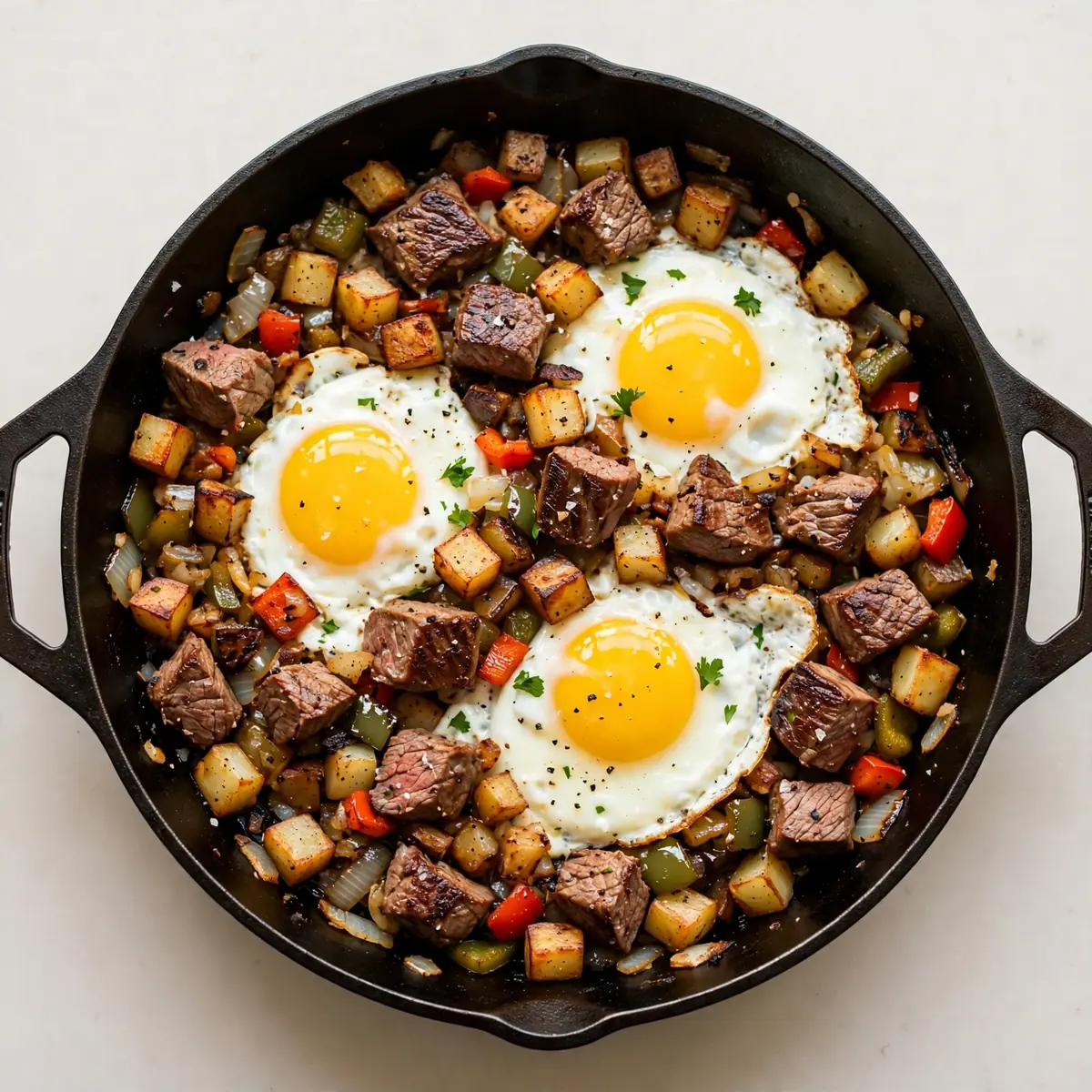
There are some dishes that demand your full attention, and a weekend deserves that kind of dedication. This Steak and Eggs Hash Skillet is my personal project for lazy Saturday mornings when the world can wait and the kitchen becomes a sanctuary of sizzling sounds and fragrant steam.
Recipe Overview
- Prep Time: 20 minutes
- Cook Time: 35 minutes
- Total Time: 55 minutes
- Servings: 4 generous portions
- Difficulty: Medium
Why You’ll Love This Steak and Eggs Hash Skillet
- The one-pan magic: Everything comes together in a single cast-iron skillet, meaning less washing up and more time savouring the results.
- Layers of texture: Crispy golden potatoes contrast beautifully with tender steak and runny egg yolks, creating a symphony of mouthfeel.
- Weekend ritual potential: This isn’t a rushed weekday breakfast; it’s a slow, deliberate process that rewards patience with spectacular flavour.
- Customisable to your fridge: You can swap vegetables, herbs, or spices based on what’s lingering in your crisper drawer.
- Leftovers that shine: If you somehow have any remaining, the hash reheats wonderfully for a quick lunch the next day.

Ingredients You’ll Need
- 500g sirloin steak (about 2.5cm thick)
- 800g waxy potatoes (such as Maris Piper or Desiree)
- 2 tablespoons olive oil
- 1 large brown onion, finely diced
- 2 red bell peppers, seeded and diced
- 3 cloves garlic, minced
- 1 teaspoon smoked paprika
- ½ teaspoon dried thyme
- Salt and freshly ground black pepper
- 4 large free-range eggs
- 2 tablespoons unsalted butter
- Fresh parsley, chopped, for garnish
- Flaky sea salt for finishing
Tip: Use waxy potatoes because they hold their shape during cooking and develop a beautiful golden crust without turning to mush.
How to Make Steak and Eggs Hash Skillet
- Prepare the steak: Remove the sirloin from the fridge 30 minutes before cooking to bring it to room temperature. Pat it dry with kitchen paper — this step is crucial for a good sear. Season generously with salt and pepper on all sides. You should see the salt crystals glistening against the red meat.
- Cook the steak: Heat a large cast-iron skillet over high heat until it’s smoking hot — you’ll see wisps of smoke rising. Add 1 tablespoon of olive oil and swirl to coat. Lay the steak in the pan and listen for that satisfying, aggressive sizzle. Cook for 4 minutes without moving it, until the underside is deep mahogany brown. Flip and cook for another 3-4 minutes for medium-rare (internal temperature 52°C). For medium, aim for 57°C. Transfer the steak to a cutting board, tent loosely with foil, and rest for 10 minutes. The meat will release a rich, beefy aroma as it rests.
- Par-cook the potatoes: While the steak rests, place the whole potatoes in a saucepan, cover with cold salted water, and bring to a boil. Cook for 8 minutes — the potatoes should offer slight resistance when pierced with a knife but not be fully tender. Drain and let them cool until you can handle them, then cut into 2cm cubes. You’ll notice the steam rising and a starchy, earthy scent filling the air.
- Build the hash base: Wipe out the skillet with kitchen paper (leaving any beef fat behind) and add the remaining 1 tablespoon of olive oil over medium-high heat. Add the diced onion and cook for 4 minutes, stirring occasionally, until it becomes translucent and fragrant — the kitchen will smell sweet and savoury. Add the diced red peppers and cook for another 3 minutes until they soften. Stir in the minced garlic, smoked paprika, and dried thyme, cooking for 30 seconds until the garlic releases its aroma.
- Crisp the potatoes: Add the cubed potatoes to the skillet in a single layer. Press them down gently with a spatula — you want maximum contact with the hot pan. Cook undisturbed for 5 minutes, then flip and cook for another 5 minutes. The potatoes should be golden brown and crisp on the outside, soft within. You’ll hear a gentle crackling sound as they fry, and the edges will turn a deep amber colour.
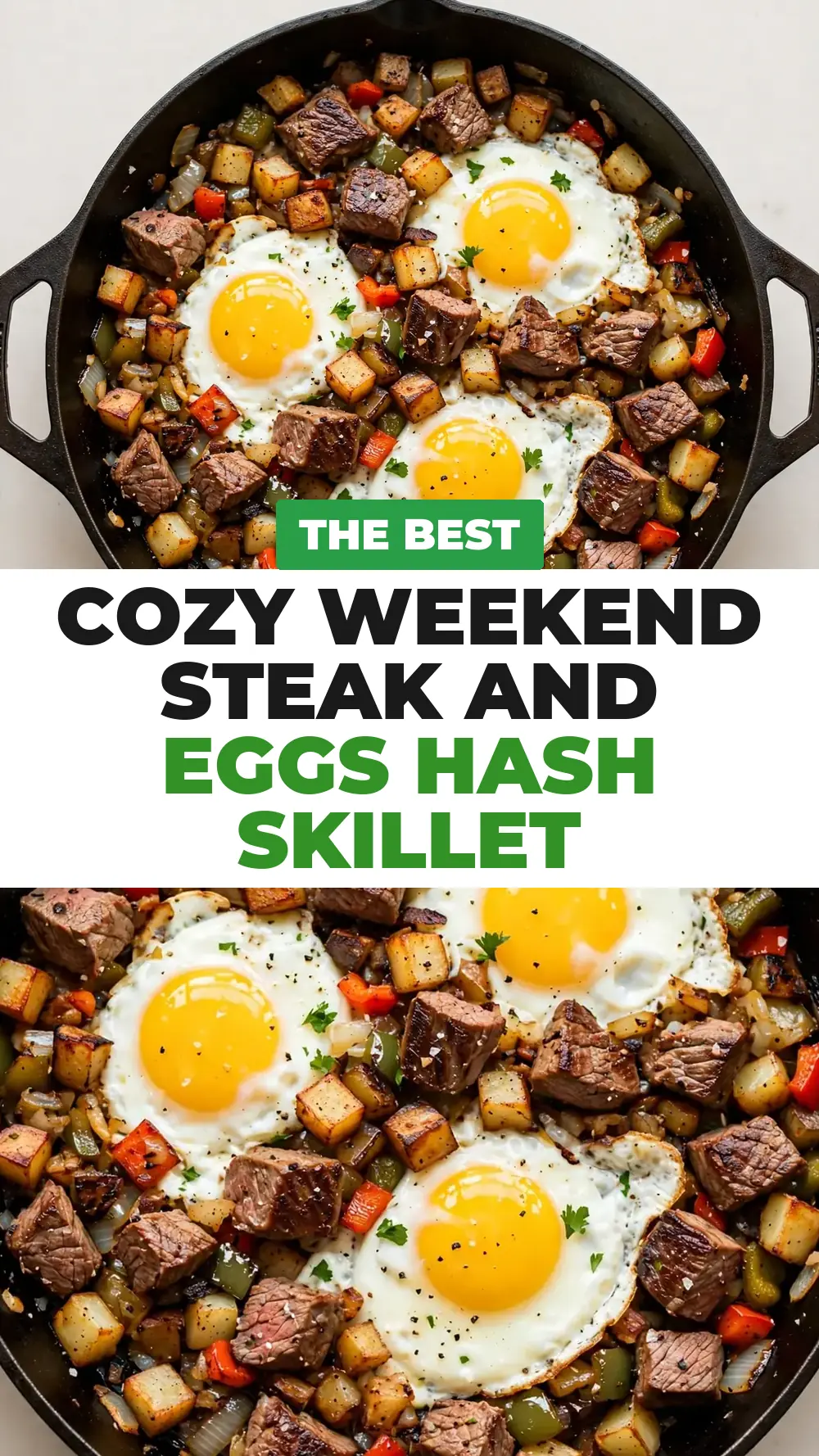
- Slice and combine: Thinly slice the rested steak against the grain into bite-sized strips. Toss the steak slices into the skillet with the potatoes and vegetables. Stir gently to combine, letting the beef juices mingle with the hash. Cook for 1 minute to warm everything through. The colours will be gorgeous — deep brown beef, golden potatoes, red peppers, and pale onion.
- Add the eggs: Make four shallow wells in the hash using the back of a spoon. Crack one egg into each well. Dot the surface with small pieces of butter. Cover the skillet with a lid and cook over medium-low heat for 4-6 minutes, until the egg whites are set but the yolks remain runny and glossy. The butter will melt and create a rich, nutty aroma as it combines with the hash.
- Finish and serve: Remove the lid and sprinkle with chopped fresh parsley and a pinch of flaky sea salt. The yolks should wobble slightly when you gently shake the pan. Serve immediately from the skillet, letting everyone admire the colours before digging in.
Tips From My Kitchen
- Pat the steak bone-dry: Moisture is the enemy of a good sear. If the steak is damp, it will steam rather than brown. After testing this recipe five times, I finally got it just right by using three sheets of kitchen paper to ensure absolute dryness.
- Par-boil potatoes for texture: This step pre-cooks the interior while leaving the exterior firm for crisping. I used to struggle with this dish until I discovered this technique — raw potatoes either burn on the outside or remain crunchy in the middle.
- Rest the steak properly: Cutting into a hot steak releases all its juices onto the cutting board. A 10-minute rest allows the fibres to relax and reabsorb those precious juices, ensuring every bite of steak in your hash is tender and moist.
- Don’t overcrowd the pan: If your skillet seems full, cook the potatoes in batches. Overcrowding lowers the pan temperature, leading to steamed, soggy potatoes instead of crispy ones. A single layer is non-negotiable for crunch.
- Use a lid for the eggs: Covering the skillet traps steam and cooks the egg whites evenly without burning the bottom of the hash. The gentle heat ensures the yolks stay gloriously runny while the whites set completely.
- Season in layers: Salt the steak before cooking, season the vegetables as they sauté, and finish with flaky sea salt at the end. Each layer of seasoning builds complexity rather than a single salty punch.
Equipment You’ll Need
- Large cast-iron skillet (30cm or 12-inch)
- Sharp chef’s knife
- Cutting board
- Kitchen paper
- Meat thermometer
- Tongs
- Lid or baking sheet to cover the skillet
- Spatula
Common Mistakes to Avoid
- Overcrowding the pan: When you add too many potatoes at once, the pan temperature drops dramatically. The potatoes release moisture and steam instead of browning. Work in batches if necessary — your patience will be rewarded with golden, crunchy perfection.
- Wrong temperature: Cooking the steak over medium heat results in a grey, leathery exterior rather than a rich crust. The pan must be smoking hot before the steak hits the surface. Similarly, cooking the eggs over high heat will set the whites before the yolks are warm, creating rubbery edges.
- Skipping the rest time: Cutting into a steak straight from the pan releases up to a quarter of its moisture. That liquid ends up in the hash, making everything soggy. Resting is not optional — it’s the difference between juicy steak and dry, chewy meat.
Delicious Variations to Try
- Spicy Version: Add 1 diced jalapeño with the onions and stir in ½ teaspoon of cayenne pepper with the paprika. For extra heat, drizzle with hot sauce just before serving.
- Vegetarian/Vegan Option: Replace the steak with 400g of firm tofu, pressed and cubed, or 300g of halved chestnut mushrooms. Sear them until deeply browned before building the hash. Omit the eggs for a vegan version and add a tablespoon of nutritional yeast for savoury depth.
- Different Protein: Swap sirloin for lamb leg steak, turkey steak, or even leftover roast chicken. Adjust cooking times accordingly — lamb benefits from a slightly longer rest, while chicken needs to reach an internal temperature of 74°C.
What to Serve With Steak and Eggs Hash Skillet
- A simple green salad with a sharp vinaigrette to cut through the richness
- Buttered toast or crusty sourdough for soaking up runny yolks
- A side of Avocado Toast With Egg Breakfast for extra indulgence
- Fresh fruit or a light Classic Apple Pie Recipe for dessert
- A dollop of sour cream or Greek yogurt to balance the smokiness
Still hungry for ideas? You might also love High Protein Steak And Sweet Potato Skillet 2, Cajun Steak Bites And Cheesy Garlic Shells Skillet from our sister kitchens.
Frequently Asked Questions
Steak and Eggs Hash Skillet
Ingredients
Method
- Prepare the steak: Remove the sirloin from the fridge 30 minutes before cooking to bring it to room temperature. Pat it dry with kitchen paper — this step is crucial for a good sear. Season generously with salt and pepper on all sides. You should see the salt crystals glistening against the red meat.
- Cook the steak: Heat a large cast-iron skillet over high heat until it’s smoking hot — you’ll see wisps of smoke rising. Add 1 tablespoon of olive oil and swirl to coat. Lay the steak in the pan and listen for that satisfying, aggressive sizzle. Cook for 4 minutes without moving it, until the underside is deep mahogany brown. Flip and cook for another 3-4 minutes for medium-rare (internal temperature 52°C). For medium, aim for 57°C. Transfer the steak to a cutting board, tent loosely with foil, and rest for 10 minutes. The meat will release a rich, beefy aroma as it rests.
- Par-cook the potatoes: While the steak rests, place the whole potatoes in a saucepan, cover with cold salted water, and bring to a boil. Cook for 8 minutes — the potatoes should offer slight resistance when pierced with a knife but not be fully tender. Drain and let them cool until you can handle them, then cut into 2cm cubes. You’ll notice the steam rising and a starchy, earthy scent filling the air.
- Build the hash base: Wipe out the skillet with kitchen paper (leaving any beef fat behind) and add the remaining 1 tablespoon of olive oil over medium-high heat. Add the diced onion and cook for 4 minutes, stirring occasionally, until it becomes translucent and fragrant — the kitchen will smell sweet and savoury. Add the diced red peppers and cook for another 3 minutes until they soften. Stir in the minced garlic, smoked paprika, and dried thyme, cooking for 30 seconds until the garlic releases its aroma.
- Crisp the potatoes: Add the cubed potatoes to the skillet in a single layer. Press them down gently with a spatula — you want maximum contact with the hot pan. Cook undisturbed for 5 minutes, then flip and cook for another 5 minutes. The potatoes should be golden brown and crisp on the outside, soft within. You’ll hear a gentle crackling sound as they fry, and the edges will turn a deep amber colour.
- Slice and combine: Thinly slice the rested steak against the grain into bite-sized strips. Toss the steak slices into the skillet with the potatoes and vegetables. Stir gently to combine, letting the beef juices mingle with the hash. Cook for 1 minute to warm everything through. The colours will be gorgeous — deep brown beef, golden potatoes, red peppers, and pale onion.
- Add the eggs: Make four shallow wells in the hash using the back of a spoon. Crack one egg into each well. Dot the surface with small pieces of butter. Cover the skillet with a lid and cook over medium-low heat for 4-6 minutes, until the egg whites are set but the yolks remain runny and glossy. The butter will melt and create a rich, nutty aroma as it combines with the hash.
- Finish and serve: Remove the lid and sprinkle with chopped fresh parsley and a pinch of flaky sea salt. The yolks should wobble slightly when you gently shake the pan. Serve immediately from the skillet, letting everyone admire the colours before digging in.
Notes
This Steak and Eggs Hash Skillet has become my go-to weekend project, a dish that rewards every minute spent in the kitchen with layers of flavour and texture. I’d love to hear how yours turns out — drop a comment below and share your own twist on this cosy, one-pan feast.