Thai Basil Beef Stir-Fry
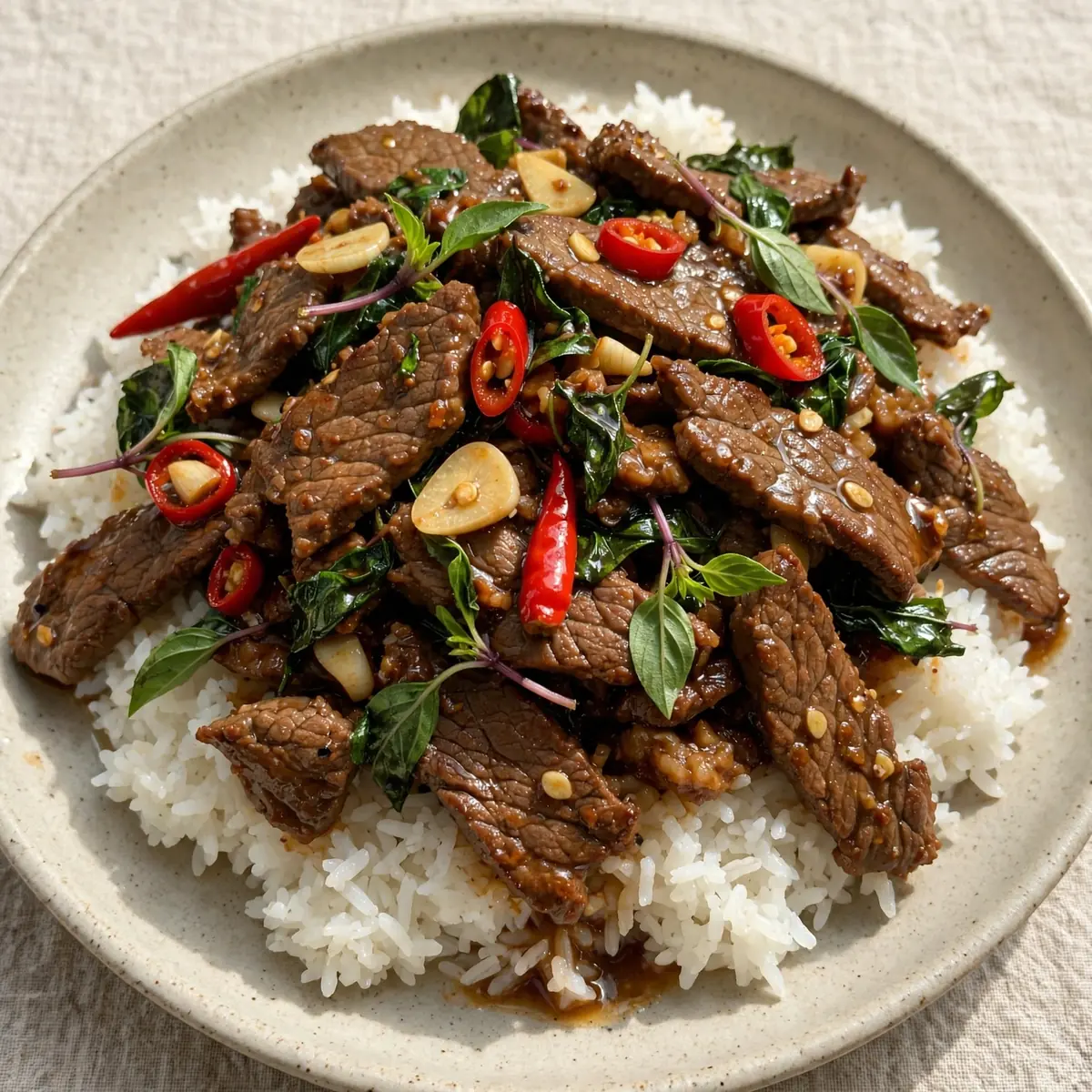
Forget everything you think you know about midweek stir-fries. This Thai Basil Beef Stir-Fry isn’t a thrown-together weeknight scramble; it’s a dish designed to dazzle, plated with the kind of precision that makes guests believe you’ve been hiding a professional chef’s toque. I’m going to show you the small, deliberate touches that elevate this from a simple bowl of noodles to a stunning, restaurant-quality centrepiece that tastes as magnificent as it looks.
Recipe Overview
- Prep Time: 15 minutes
- Cook Time: 10 minutes
- Total Time: 25 minutes
- Servings: 4
- Difficulty: Easy
Why You’ll Love This Thai Basil Beef Stir-Fry
- It’s a show-stopping dish that comes together in under half an hour, leaving you more time with your guests and less time in the kitchen.
- The flavours are bold and authentic, built on a foundation of fresh aromatics and a punchy, savoury sauce that clings beautifully to every slice of beef.
- With a few tweaks to your preparation and plating, you can achieve that coveted wok-hei aroma and glossy finish that defines restaurant cooking.
- It’s incredibly versatile; you can adjust the heat, swap the protein, or serve it with rice, noodles, or even lettuce cups for a low-carb option.
- This recipe has been a cornerstone of my cooking for over 5 years, and it never fails to elicit gasps of delight from everyone who tries it.
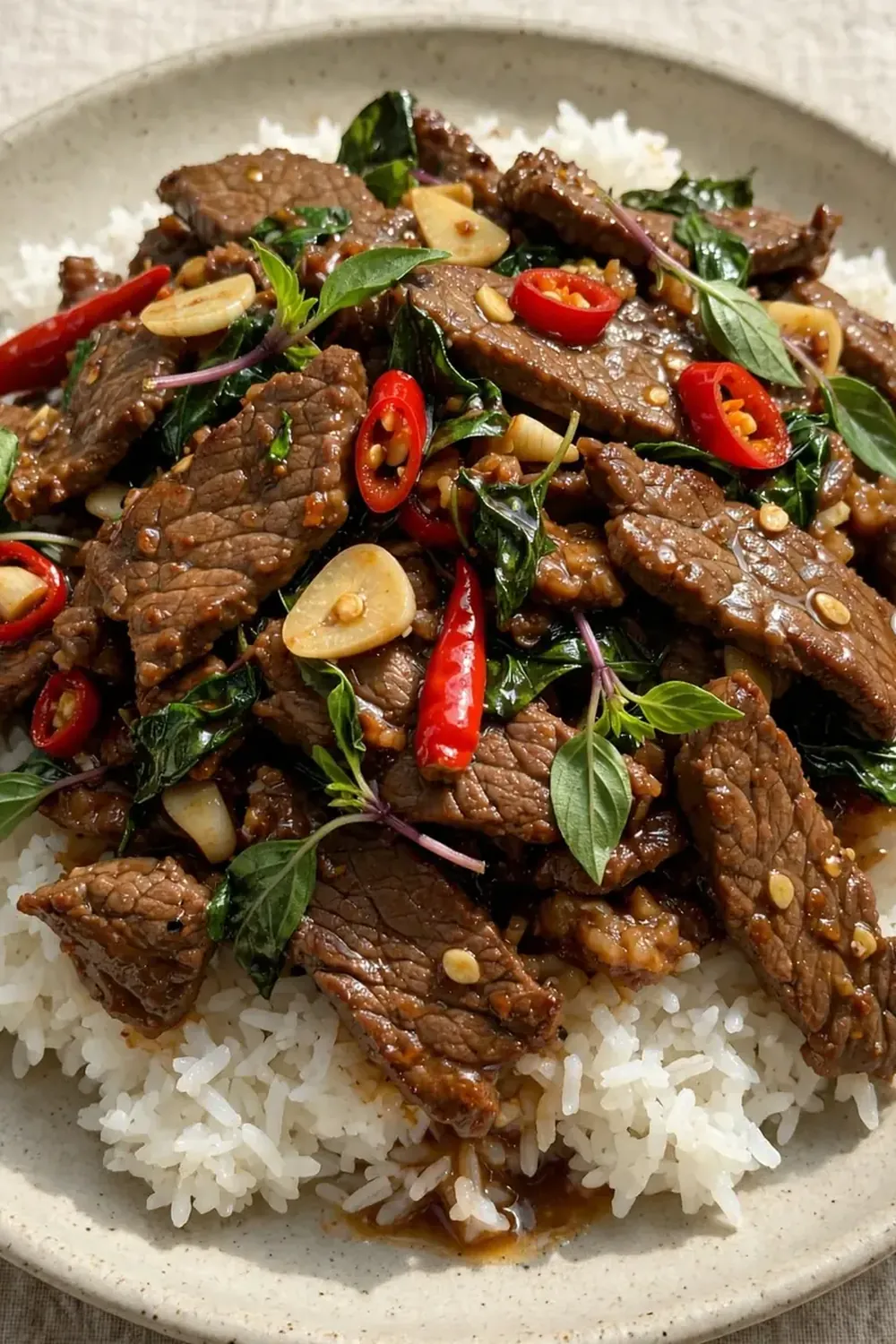
Ingredients You’ll Need
- 500g beef sirloin or rump steak, sliced thinly against the grain
- 4 cloves garlic, finely minced
- 2-3 fresh red bird’s eye chillies, finely sliced (adjust to your spice preference)
- 1 large handful of fresh Thai holy basil leaves (or sweet basil in a pinch)
- 2 tablespoons vegetable or sunflower oil
- 1 tablespoon fish sauce
- 1 tablespoon dark soy sauce
- 1 tablespoon light soy sauce
- 1 teaspoon brown sugar or palm sugar
- 1 tablespoon water
- 1 teaspoon cornflour mixed with 2 tablespoons water (for the sauce)
- 1 small onion, thinly sliced
- 1 red bell pepper, thinly sliced
- Steamed jasmine rice, to serve
- Fresh coriander and lime wedges, for garnish
Tip: For the most tender stir-fry, freeze the beef for 20 minutes before slicing. This firms it up, allowing you to cut paper-thin slices with ease.
How to Make Thai Basil Beef Stir-Fry
- Prepare the sauce: In a small bowl, whisk together the fish sauce, dark soy sauce, light soy sauce, brown sugar, water, and the cornflour slurry. Set aside. You’ll notice the sauce looks dark and glossy — that’s the promise of a beautiful glaze.
- Prepare the beef: Pat the sliced beef dry with kitchen paper. This is crucial for achieving a good sear. Season it lightly with a pinch of white pepper. You should feel the beef is completely dry to the touch, which will help it brown rather than steam.
- Get the pan screaming hot: Place your large frying pan or wok over the highest heat for a good two minutes. Add the oil and swirl it around. The oil should shimmer and just begin to smoke — that’s your cue that it’s hot enough. You’ll hear an immediate, sharp sizzle when the beef hits the pan.
- Sear the beef in batches: Add half the beef in a single layer. Do not overcrowd the pan. Let it sear undisturbed for 45-60 seconds until the underside is deeply browned and caramelised. The smell will be rich and savoury. Flip and cook for another 30 seconds. Transfer to a plate. Repeat with the remaining beef. The beef should look beautifully browned, not grey or watery.
- Cook the aromatics: Reduce the heat to medium-high. Add a tiny splash more oil if needed. Tip in the sliced onion and bell pepper. Stir-fry for 2 minutes until they soften and the onion becomes translucent. The aroma will be sweet and mellow. Add the minced garlic and sliced chillies. Stir-fry for just 30 seconds until fragrant — the garlic will release a wonderful, heady perfume.
- Combine and sauce: Return the seared beef and any resting juices to the pan. Give the sauce a quick stir and pour it in. Toss everything together for 1-2 minutes until the sauce thickens and glazes each piece of beef and each vegetable. The sauce will bubble and become sticky, clinging to everything in a rich, dark coating.
- Finish with basil: Turn off the heat. Add the fresh basil leaves and toss gently until they wilt from the residual heat. The leaves should turn a vibrant, dark green and release a wonderfully peppery, anise-like fragrance. Serve immediately.
Tips From My Kitchen
- Master the high heat: A stir-fry is a race against time. Your pan must be screaming hot before you add any ingredient. This creates the Maillard reaction that gives the beef its deep, savoury crust and prevents it from stewing in its own juices. If your pan isn’t hot enough, you’ll end up with grey, tough meat.
- Slice against the grain, always: Beef contains long muscle fibres. Slicing against the grain means you’re cutting these fibres short, making the meat easier to chew. Look for the lines in the meat and cut perpendicular to them. This is the single most important step for tender beef.
- Don’t skip the cornflour slurry: This isn’t just for thickening. The cornflour helps the sauce cling to the beef and vegetables, creating that glossy, restaurant-quality finish. It also lightly coats the beef, protecting it from the intense heat and keeping it moist.
- Use fresh basil, not dried: Dried basil will not work here. The fresh leaves are essential for their bright, peppery flavour and their ability to wilt beautifully into the hot sauce. Holy basil has a slightly spicier, more complex flavour than sweet basil, but sweet basil is a fine substitute.
- Prepare everything before you start: This is the cardinal rule of stir-frying. Have your sliced beef, minced garlic, sliced chillies, sauce mixture, and vegetables all within arm’s reach. Once the heat is on, there is no time to chop. This is called mise en place, and it’s the secret to a stress-free, successful cook.
Equipment You’ll Need
- Large frying pan or skillet
- Sharp knife and cutting board
- Mixing bowls
- Wooden spoon or spatula
- Measuring spoons
Common Mistakes to Avoid
- Overcrowding the pan: Adding too much beef at once lowers the pan’s temperature dramatically, causing the meat to steam rather than sear. You’ll end up with grey, tough, and watery beef. Cook in batches to maintain that intense heat and achieve a beautiful brown crust.
- Wrong temperature: Stir-frying requires the highest heat your hob can produce. A medium heat will result in a soggy, flavourless dish. The pan must be smoking hot before you add the oil, and the oil must shimmer before you add the aromatics or meat. This is non-negotiable.
- Skipping the rest time: After searing the beef, let it rest for a minute on the plate. This allows the juices to redistribute, ensuring the meat stays tender and moist when you return it to the pan. If you skip this, you’ll lose those precious juices into the sauce, making it watery.
Delicious Variations to Try
- Spicy Version: For an extra fiery kick, add a teaspoon of chilli flakes or a dollop of sriracha to the sauce. You can also use more bird’s eye chillies, or include the seeds of one or two for an intense heat that builds slowly.
- Vegetarian/Vegan Option: Replace the beef with firm tofu or a meaty mushroom like king oyster or shiitake. Tofu should be pressed and cubed, then seared until golden. Use a vegan fish sauce made from seaweed or soy, and substitute the honey with maple syrup.
- Different Protein: This recipe works beautifully with sliced chicken breast, pork tenderloin (halal-friendly), or even prawns. Adjust cooking times accordingly: chicken and pork need a minute or two longer, while prawns will only need a minute in total.
What to Serve With Thai Basil Beef Stir-Fry
- Steamed jasmine rice — the classic, fluffy base that soaks up the sauce.
- Quick pickled cucumber and carrot ribbons for a refreshing, acidic contrast.
- A simple green papaya salad or a light Asian slaw with a lime and sesame dressing.
- For a low-carb option, serve in large lettuce cups with a side of steamed broccoli.
Still hungry for ideas? You might also love Chinese Beef And Broccoli Stir Fry, Easy Chicken Stir Fry Recipe from our sister kitchens.
Frequently Asked Questions
Thai Basil Beef Stir-Fry
Ingredients
Method
- Prepare the sauce: In a small bowl, whisk together the fish sauce, dark soy sauce, light soy sauce, brown sugar, water, and the cornflour slurry. Set aside. You’ll notice the sauce looks dark and glossy — that’s the promise of a beautiful glaze.
- Prepare the beef: Pat the sliced beef dry with kitchen paper. This is crucial for achieving a good sear. Season it lightly with a pinch of white pepper. You should feel the beef is completely dry to the touch, which will help it brown rather than steam.
- Get the pan screaming hot: Place your large frying pan or wok over the highest heat for a good two minutes. Add the oil and swirl it around. The oil should shimmer and just begin to smoke — that’s your cue that it’s hot enough. You’ll hear an immediate, sharp sizzle when the beef hits the pan.
- Sear the beef in batches: Add half the beef in a single layer. Do not overcrowd the pan. Let it sear undisturbed for 45-60 seconds until the underside is deeply browned and caramelised. The smell will be rich and savoury. Flip and cook for another 30 seconds. Transfer to a plate. Repeat with the remaining beef. The beef should look beautifully browned, not grey or watery.
- Cook the aromatics: Reduce the heat to medium-high. Add a tiny splash more oil if needed. Tip in the sliced onion and bell pepper. Stir-fry for 2 minutes until they soften and the onion becomes translucent. The aroma will be sweet and mellow. Add the minced garlic and sliced chillies. Stir-fry for just 30 seconds until fragrant — the garlic will release a wonderful, heady perfume.
- Combine and sauce: Return the seared beef and any resting juices to the pan. Give the sauce a quick stir and pour it in. Toss everything together for 1-2 minutes until the sauce thickens and glazes each piece of beef and each vegetable. The sauce will bubble and become sticky, clinging to everything in a rich, dark coating.
- Finish with basil: Turn off the heat. Add the fresh basil leaves and toss gently until they wilt from the residual heat. The leaves should turn a vibrant, dark green and release a wonderfully peppery, anise-like fragrance. Serve immediately.
Notes
This isn’t just a recipe; it’s a performance. The sizzle of the pan, the fragrant cloud of garlic and chilli, the final, dramatic wilt of the basil – it’s a sensory experience that will have your guests leaning in, asking for seconds before they’ve even finished their first. I hope you feel inspired to take this dish into your own kitchen and make it your own. I’d love to hear how you get on with your plating – did you pile it high on a bed of rice, or serve it on a slate tile with a sprinkle of chilli flakes? Let me know in the comments below.