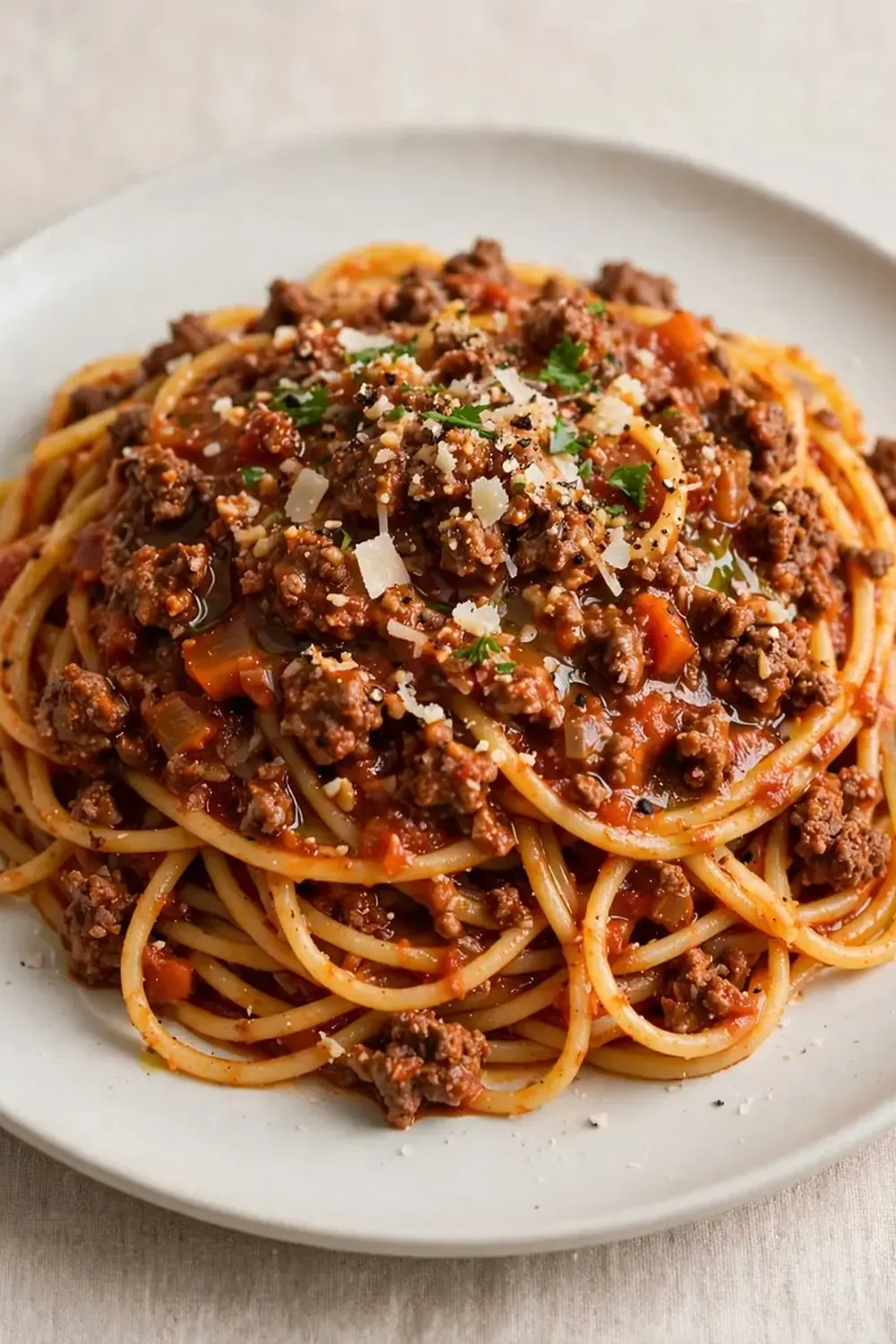
Classic Beef Bolognese Pasta

There’s a moment of quiet before guests arrive, the table set and the candles lit, when the scent of a slowly simmered Classic Beef Bolognese Pasta fills the kitchen with a promise of something extraordinary. I’ve spent years perfecting this dish, not just for the deep, savoury flavour, but for the way it transforms a simple pasta night into a restaurant-quality experience right at home.
Recipe Overview
- Prep Time: 20 minutes
- Cook Time: 2 hours 30 minutes
- Total Time: 2 hours 50 minutes
- Servings: 6 generous portions
- Difficulty: Medium
Why You’ll Love This Classic Beef Bolognese Pasta
- Impressive Presentation: The rich, glossy sauce clings perfectly to the pasta, creating a stunning, elegant plate that rivals any Italian trattoria.
- Deep, Layered Flavour: Slow simmering allows the beef, tomatoes, and aromatic vegetables to meld into a complex, deeply satisfying sauce with no shortcuts.
- Make-Ahead Magic: This sauce tastes even better the next day, making it a stress-free choice for entertaining where you can focus on your guests.
- Restaurant-Quality Touches: Simple techniques like finishing the pasta in the sauce and using fresh herbs elevate this dish from everyday to memorable.
- Consistently Reliable: After testing this recipe five times, I finally got it just right. Every step has a purpose, ensuring a perfect result every time.
Ingredients You’ll Need
- 2 tablespoons olive oil
- 1 large onion, finely diced
- 2 celery sticks, finely diced
- 2 carrots, finely diced
- 4 garlic cloves, minced
- 500g beef mince (15-20% fat)
- 250g chicken livers, finely chopped (optional, for depth)
- 2 tablespoons tomato purée
- 800g tinned chopped tomatoes
- 250ml beef stock
- 2 tablespoons balsamic vinegar
- 1 teaspoon dried oregano
- 1 bay leaf
- 200ml whole milk
- 500g dried tagliatelle or pappardelle
- Freshly grated Parmesan cheese, for serving
- Fresh basil leaves, for garnish
- Salt and freshly ground black pepper, to taste
Tip: For the most luxurious texture, seek out tagliatelle or pappardelle. Their broad, flat ribbons provide the perfect surface for the sauce to cling to, creating that beautiful, twirled presentation on the plate.
How to Make Classic Beef Bolognese Pasta
- Sauté the Aromatics: Heat the olive oil in a large, heavy-bottomed pot over a medium heat. Add the diced onion, celery, and carrot. Cook for 8-10 minutes, stirring occasionally, until the vegetables are softened and translucent. You’ll notice the kitchen filling with a sweet, earthy fragrance as they gently sweat.
- Brown the Meat: Increase the heat to high and add the beef mince. Break it up with a wooden spoon and cook for 5-7 minutes, until it is deeply browned all over. Listen for the satisfying sizzle and look for the dark, caramelised crust forming on the bottom of the pot—this is where the flavour lives. If using, add the chopped chicken livers now and cook for 2 minutes until they lose their pink colour.
- Build the Base: Stir in the tomato purée and cook for 2 minutes, scraping up the browned bits from the bottom of the pot. The purée will darken and smell intensely concentrated. Add the tinned tomatoes, beef stock, balsamic vinegar, dried oregano, and bay leaf. Bring the sauce to a gentle simmer—look for small, lazy bubbles breaking the surface, not a rolling boil.
- The Long Simmer: Reduce the heat to low, partially cover the pot, and let the sauce simmer for 1 hour 30 minutes. Stir every 20 minutes, noticing how the sauce thickens and deepens in colour from a bright red to a rich, dark mahogany. The aroma will become more complex and mellow.
- Add the Milk: Pour in the whole milk and stir to combine. Continue to simmer, uncovered, for another 30 minutes. The milk will tenderise the meat and add a subtle sweetness, balancing the acidity of the tomatoes. The sauce should now be thick, glossy, and coat the back of a spoon.
- Cook the Pasta: About 10 minutes before the sauce is ready, bring a large pot of generously salted water to a rolling boil. Cook the tagliatelle according to the package instructions until al dente—tender but with a slight bite at the centre. Reserve a mug of pasta cooking water before draining.
- Marry the Pasta and Sauce: Remove the bay leaf from the sauce. Add the drained pasta directly to the pot of sauce, along with a splash of the reserved pasta water. Toss everything together over a low heat for 1-2 minutes. Watch as the sauce clings to every ribbon of pasta, becoming silky and emulsified. The pasta will absorb some of the sauce, creating a cohesive, luxurious dish.
- Plate and Serve: Using tongs, twirl a generous portion of pasta into a neat nest in the centre of each warmed bowl. Spoon a little extra sauce over the top. Finish with a shower of freshly grated Parmesan cheese and a few fresh basil leaves. Serve immediately, while the pasta is still hot and the aromas are at their peak.
Tips From My Kitchen
- Use a Heavy-Bottomed Pot: A heavy pot, like a Dutch oven, distributes heat evenly and prevents the sauce from scorching during the long simmer. This ensures a smooth, consistent flavour without any burnt bits ruining the final dish.
- Don’t Rush the Browning: The deep, savoury foundation of this sauce comes from the browned meat and vegetables. Be patient and let the mince develop a rich, dark crust. This adds complexity that no amount of seasoning can replicate.
- Grate Your Own Parmesan: Pre-grated cheese often contains anti-caking agents that prevent it from melting smoothly. Grating a block of Parmesan fresh ensures it melts into the sauce and creates a beautiful, creamy finish on the plate.
- Reserve Plenty of Pasta Water: The starchy pasta water is liquid gold. It helps to bind the sauce and pasta together, creating a silky, restaurant-quality texture. Add it a little at a time until the sauce reaches the perfect consistency.
- Warm Your Serving Bowls: A cold bowl will instantly cool down your carefully prepared pasta. Pop your bowls in a low oven (about 100°C) for a few minutes before serving. This small touch keeps the dish hot and the flavours vibrant until the last bite.
- Let the Sauce Rest: After simmering, let the sauce sit off the heat for 10 minutes before adding the pasta. This allows the flavours to settle and the sauce to thicken slightly, resulting in a more cohesive and polished final dish.
Common Mistakes to Avoid
- Overcrowding the pan: Adding too much mince at once causes it to steam rather than brown. Cook the mince in batches if necessary, ensuring each piece has direct contact with the hot pot. The reward is a deep, caramelised flavour that forms the backbone of the sauce.
- Wrong temperature: A Bolognese sauce demands a gentle, low simmer—not a rapid boil. Boiling can toughen the meat and cause the sauce to reduce too quickly, becoming bitter. Maintain a steady, low bubble, and you’ll be rewarded with a tender, velvety sauce.
- Skipping the rest time: Resting the finished sauce off the heat for 10 minutes is crucial. This brief pause allows the flavours to meld and the sauce to thicken to the ideal consistency. It also prevents the sauce from being too thin when you toss it with the pasta.
Delicious Variations to Try
- Spicy Version: Add 1-2 finely chopped red chillies along with the garlic, or stir in 1 teaspoon of chilli flakes during the simmer. The heat cuts through the richness beautifully and adds an unexpected, vibrant kick.
- Vegetarian/Vegan Option: Replace the beef mince with 400g of finely chopped mushrooms (chestnut or portobello) and 200g of cooked green lentils. Sauté the mushrooms until all their moisture has evaporated and they begin to brown. The result is a hearty, umami-rich sauce that mimics the texture of the original.
- Different Protein: Swap half the beef mince with minced lamb or turkey for a different flavour profile. Lamb adds a slight gamey richness, while turkey creates a leaner, lighter sauce. Both work beautifully with the same aromatic base and slow-cooking method.
What to Serve With Classic Beef Bolognese Pasta
- A crisp green salad dressed with a simple lemon vinaigrette to cut through the richness.
- Garlic bread or crusty sourdough to mop up every last bit of sauce.
- Roasted seasonal vegetables, such as asparagus or courgettes, for a touch of colour.
- For a lighter starter, try our Simple Avocado Toast Recipe to begin the meal with a fresh, clean note.
- Finish with a simple dessert, like our Easy French Toast Sticks Breakfast for a playful sweet ending.
Still hungry for ideas? You might also love Simple Creamy Ground Beef Bowtie Pasta, Cheesy Ranch Beef Pasta Casserole from our sister kitchens.
Frequently Asked Questions
Classic Beef Bolognese Pasta
Ingredients
Method
- Sauté the Aromatics: Heat the olive oil in a large, heavy-bottomed pot over a medium heat. Add the diced onion, celery, and carrot. Cook for 8-10 minutes, stirring occasionally, until the vegetables are softened and translucent. You'll notice the kitchen filling with a sweet, earthy fragrance as they gently sweat.
- Brown the Meat: Increase the heat to high and add the beef mince. Break it up with a wooden spoon and cook for 5-7 minutes, until it is deeply browned all over. Listen for the satisfying sizzle and look for the dark, caramelised crust forming on the bottom of the pot—this is where the flavour lives. If using, add the chopped chicken livers now and cook for 2 minutes until they lose their pink colour.
- Build the Base: Stir in the tomato purée and cook for 2 minutes, scraping up the browned bits from the bottom of the pot. The purée will darken and smell intensely concentrated. Add the tinned tomatoes, beef stock, balsamic vinegar, dried oregano, and bay leaf. Bring the sauce to a gentle simmer—look for small, lazy bubbles breaking the surface, not a rolling boil.
- The Long Simmer: Reduce the heat to low, partially cover the pot, and let the sauce simmer for 1 hour 30 minutes. Stir every 20 minutes, noticing how the sauce thickens and deepens in colour from a bright red to a rich, dark mahogany. The aroma will become more complex and mellow.
- Add the Milk: Pour in the whole milk and stir to combine. Continue to simmer, uncovered, for another 30 minutes. The milk will tenderise the meat and add a subtle sweetness, balancing the acidity of the tomatoes. The sauce should now be thick, glossy, and coat the back of a spoon.
- Cook the Pasta: About 10 minutes before the sauce is ready, bring a large pot of generously salted water to a rolling boil. Cook the tagliatelle according to the package instructions until al dente—tender but with a slight bite at the centre. Reserve a mug of pasta cooking water before draining.
- Marry the Pasta and Sauce: Remove the bay leaf from the sauce. Add the drained pasta directly to the pot of sauce, along with a splash of the reserved pasta water. Toss everything together over a low heat for 1-2 minutes. Watch as the sauce clings to every ribbon of pasta, becoming silky and emulsified. The pasta will absorb some of the sauce, creating a cohesive, luxurious dish.
- Plate and Serve: Using tongs, twirl a generous portion of pasta into a neat nest in the centre of each warmed bowl. Spoon a little extra sauce over the top. Finish with a shower of freshly grated Parmesan cheese and a few fresh basil leaves. Serve immediately, while the pasta is still hot and the aromas are at their peak.
Notes
I’d love to hear how this Classic Beef Bolognese Pasta turns out for you. Did it impress your guests? Did you try any of the variations? Please share your thoughts and experiences in the comments below—every story makes this dish even more special.